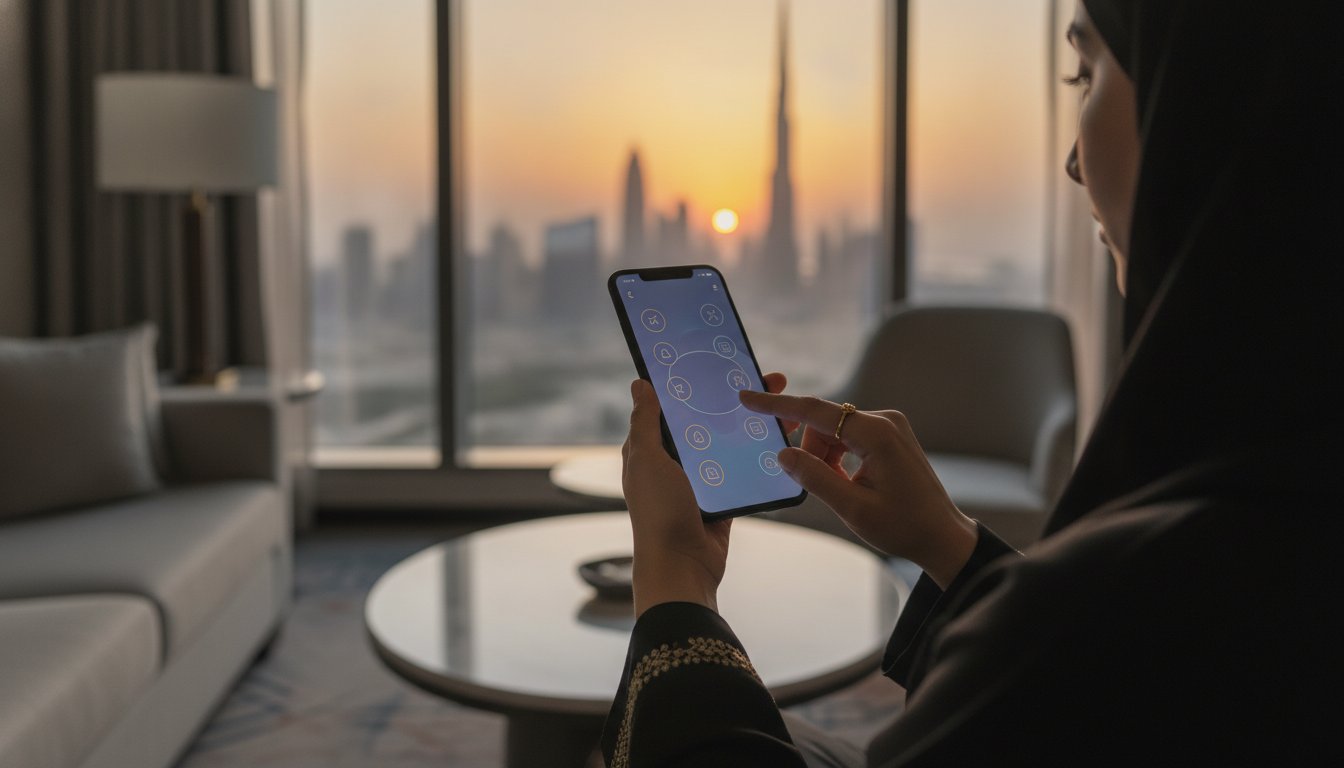
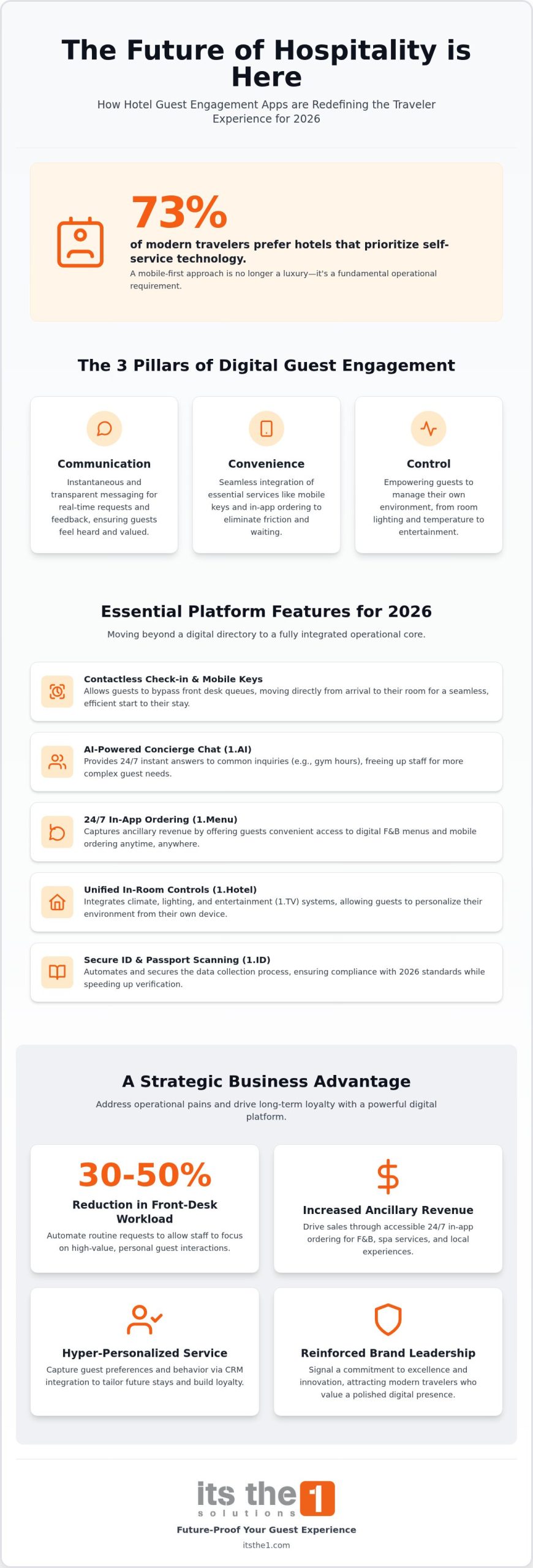
73% of modern travelers now prefer hotels that prioritize self-service technology over traditional front-desk interactions. This shift indicates that a mobile-first approach is no longer an optional luxury but a fundamental operational requirement for the 2026 landscape. We understand that hospitality leaders face a complex balancing act between rising labor costs and the persistent demand for hyper-personalized service. It’s clear that a robust hotel guest engagement app is now the primary strategy for addressing these challenges while maintaining the high standards your brand represents.
This guide explores how sophisticated digital tools bridge the gap between guest convenience and operational excellence. By integrating modular solutions like 1.Hotel with 1.AI and 1.TV, properties can transform the guest journey from a series of transactions into a seamless, high-value experience. You’ll discover how established global expertise and research-driven technology empower your team to capture better guest data and drive significant ancillary revenue. We will preview the transition toward unified ecosystems that simplify complex technical needs while fostering long-term guest loyalty through reliable, automated support.
Key Takeaways
- Define the strategic role of a high-performing hotel guest engagement app in centralizing communication and meeting the “on-demand” expectations of modern travelers.
- Explore essential features like contactless check-in and integrated 1.Menu functionality that streamline the guest journey while maximizing ancillary revenue opportunities.
- Gain insights into achieving operational excellence by synchronizing guest-facing interfaces with backend support modules like 1.Support and 1.AI.
- Navigate the complexities of 2026 compliance standards, focusing on secure data environments and automated passport scanning through 1.ID.
- Learn how to build a future-proof digital infrastructure using a modular suite of proprietary software that scales with your property’s strategic objectives.
Why Hotel Guest Engagement Apps are Essential in 2026
A hotel guest engagement app is a centralized digital platform that consolidates hotel services, communication, and room controls into a single, intuitive interface. By 2026, the hospitality industry has moved past the era of static digital directories. Guests no longer accept PDF menus or printed binders that quickly become outdated. They demand an interactive ecosystem that responds to their needs instantly. This shift toward “on-demand” service is the new standard. It requires a transition from passive information sharing to active, real-time engagement that bridges the gap between guest expectations and operational delivery.
Mobile-first technology plays a critical role in this evolution by reducing physical touchpoints and eliminating traditional friction. Whether it is bypassing a crowded lobby through digital check-in or ordering a late-night meal without a phone call, the goal is seamlessness. Modern travelers value their time above all else. They view digital convenience as a hallmark of a professional, well-managed property. For hoteliers, this technology isn’t just a perk. It’s a fundamental tool for maintaining relevance in a competitive global market.
The Core Pillars of Digital Guest Engagement
Effective engagement is built on three essential pillars: communication, convenience, and control. Communication must be instantaneous and transparent. Through real-time messaging, guests can send requests or provide feedback that staff can act upon immediately. Convenience is achieved by integrating essential services like mobile keys and 1.Menu directly into the guest’s device. This removes the need for physical keys or paper menus that can be lost or damaged. Finally, control empowers the guest to manage their own environment. Using the 1.Hotel interface, guests can adjust room lighting, set the temperature, or browse entertainment options on 1.TV. This level of autonomy ensures the room feels like a personal sanctuary rather than a generic space.
The Business Case for Modern Engagement Platforms
Implementing a sophisticated platform is a strategic business decision that addresses significant operational pains. High labor costs and staffing shortages are manageable when routine guest requests are automated. Research shows that digital platforms can reduce front-desk workloads by 30% to 50%, allowing your team to focus on high-value guest interactions. These platforms also serve as a powerful engine for data collection. By integrating guest interactions with customer relationship management (CRM) systems, hotels can capture specific preferences and behaviors. This data allows for hyper-personalized service during future stays, which is a proven driver of brand loyalty. A polished digital presence reinforces your status as an industry leader, signaling to guests that their comfort is backed by established expertise and a commitment to excellence.
Essential Features of a High-Performing Guest Experience Platform
A high-performing hotel guest engagement app must function as more than a simple digital directory. It acts as the primary interface between the guest and the property’s operational core. One of the most critical requirements for 2026 is the elimination of the front desk bottleneck. Mobile keys and contactless check-in protocols allow guests to bypass traditional queues, moving directly from arrival to their room. This efficiency is mirrored in food and beverage services through 1.Menu. By providing 24/7 access to digital menus and mobile ordering, hotels capture revenue that might otherwise migrate to external delivery apps. These features don’t just add convenience; they redefine the guest’s perception of a modern, professional stay.
Integration with in-room technology is another cornerstone of a sophisticated platform. According to 2026 hotel guest app trends, the demand for a unified control experience has become the industry standard. Guests expect to manage climate, lighting, and entertainment systems through their personal devices. Concierge chat powered by 1.AI provides instant answers to common inquiries, such as gym hours or breakfast times. This ensures guests receive immediate attention without taxing the front desk team. By automating these repetitive interactions, your staff can dedicate their energy to complex guest needs that require a human touch.
Bridging the Gap with 1.TV and Digital Signage
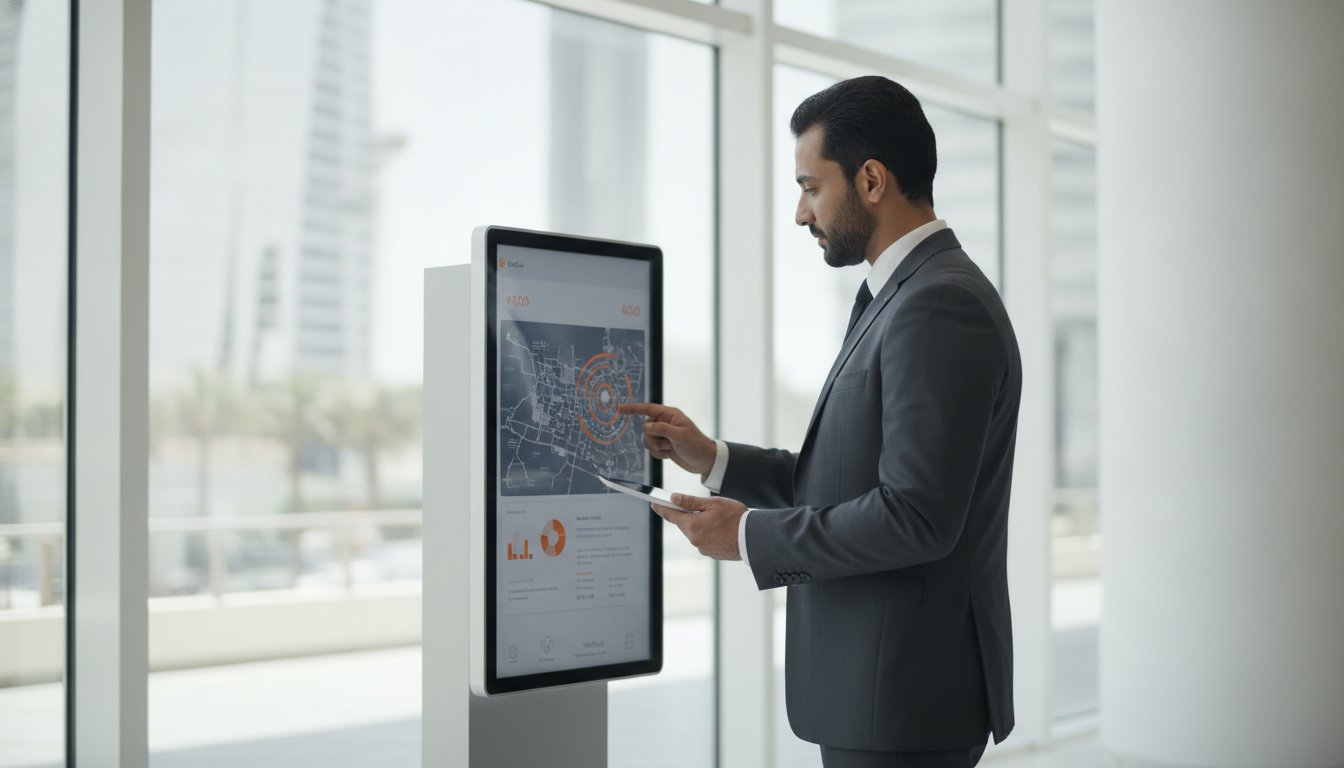
The synergy between the guest app and in-room entertainment is a significant differentiator that many legacy systems fail to address. The 1.Hotel app functions as an advanced remote for 1.TV (IPTV) systems, allowing guests to cast content or browse local services on the large screen. This ecosystem extends to the lobby and common areas by syncing digital signage through 1.DSMM with the app’s live event calendar. When a guest views a conference schedule or a dining special on a public screen, they can immediately book or save that event within their personal app. This creates a unified visual identity across every digital touchpoint, reinforcing your brand’s commitment to technological excellence.
Personalization and Upselling Capabilities
Data-driven insights allow the app to serve as a personalized concierge that anticipates guest needs. Push notifications can be strategically timed to offer spa treatments during low-occupancy hours or dining specials based on previous orders. The interface itself should be dynamic, displaying different options for a corporate traveler compared to a family on vacation. Integrating loyalty programs ensures that point redemption is frictionless, which is a proven driver of repeat bookings. To see how these modular components work in tandem to drive results, you can explore our integrated hospitality solutions. Tailoring the digital experience to the individual guest profile ensures that every interaction feels intentional and high-value.
Operational Synergy: Connecting Guests, Staff, and AI
True digital transformation occurs when the guest-facing interface is perfectly synchronized with backend operational systems. While the guest sees a polished hotel guest engagement app, the property’s success depends on the “hidden half” of the platform: the staff-side tools that manage fulfillment. Without this connection, digital requests often become lost in fragmented communication channels, leading to service failures and guest frustration. By centralizing these interactions, hotels ensure that every guest need is documented, assigned, and resolved with professional precision, maintaining the high standards expected of a global hospitality leader.
Integrating 1.Support into the hospitality ecosystem allows properties to treat guest requests as trackable tickets. This systematic approach is essential for transforming the modern hotel guest experience into a model of reliability and trust. When a guest requests a late checkout or extra amenities, the system automatically routes the task to the correct department. Staff members use 1.AI as a strategic helper to prioritize these tickets and access immediate solutions for common issues, significantly reducing resolution times. This real-time synchronization creates a feedback loop that allows management to identify and rectify service gaps before they impact the property’s public reputation on platforms like TripAdvisor.
Empowering Staff with 1.AI and 1.Support
The primary objective of 1.AI is to alleviate the burden of repetitive tasks, enabling your team to focus on high-value interactions that require a human touch. The system can summarize guest preferences for front-of-house teams, ensuring staff are prepared with relevant insights before the guest even arrives. For example, if a guest frequently requests extra pillows or specific dietary items, 1.AI ensures this information is readily available to the housekeeping and dining teams. By streamlining internal communication, response times are reduced across all departments. This disciplined approach to technology ensures that digital evolution supports, rather than replaces, the personalized service that defines luxury hospitality.
Data-Driven Decision Making
A sophisticated hotel guest engagement app serves as a continuous source of operational intelligence. By analyzing request patterns, management can optimize staff scheduling to meet peak demand periods, such as breakfast rushes or late-night room service peaks. This reduces unnecessary labor costs while ensuring service quality remains consistent. Analytics also reveal which amenities and services resonate most with your specific demographic, allowing for more precise capital investment in the future. This data-driven strategy ensures that marketing efforts are refined based on actual guest behavior, driving long-term growth through informed decision-making and strategic alignment with guest needs.
Security, Compliance, and Technical Implementation
Security is the foundation of digital trust. In 2026, a hotel guest engagement app must prioritize data integrity as much as guest convenience. As cyber threats evolve, adhering to national security and international cybersecurity standards is a non-negotiable requirement for protecting guest PII (Personally Identifiable Information). Compliance with PCI DSS 4.0 is now mandatory. It requires stricter validation and phishing-resistant multi-factor authentication for all administrative access to cardholder data environments. These standards ensure that your property remains a secure harbor for guest information in an increasingly complex digital landscape.
Choosing the right infrastructure is a strategic decision that impacts both stability and speed. Cloud services offer superior scalability and are often the preferred choice for global operations. However, some properties still opt for on-premise solutions to maintain absolute control over local connectivity. Integrating IPTV with hotel PMS and other modern interfaces with legacy Property Management Systems remains a common technical hurdle. It requires a partner with established expertise in complex system architecture to ensure a seamless flow of data between the app and the hotel’s core operational software.
Secure Identity and Check-In Standards
Automating the check-in process requires a secure, reliable method for identity verification. The 1.ID module addresses this by automating passport and ID scanning while maintaining strict compliance with regional data regulations. Research indicates that automating data capture can reduce check-in times by up to 60%. This efficiency significantly improves the arrival experience and prevents manual entry errors. By integrating 1.ID directly into your hotel guest engagement app, you provide a professional, high-security environment. This builds guest trust from the moment they arrive at your property.
The Roadmap to Successful Implementation
A successful rollout begins with a comprehensive audit of your existing IT infrastructure. This ensures the network can support increased traffic from mobile keys, room controls, and IPTV streaming. Staff training is equally vital. Your team must be proficient in managing the digital journey to support guests effectively. For large-scale resorts, a phased rollout strategy is often the most disciplined approach. This allows for meticulous testing and optimization of each module before full deployment. Strategic planning ensures that the transition to a digital-first model is stable, purposeful, and aligned with your long-term business goals.
If you are ready to secure your property’s digital future, you can consult with our technical experts at ITSthe1 Solutions to design a compliant, high-performance ecosystem.
Implementing a Future-Proof Strategy with ITSthe1 Solutions
Transitioning to a digital-first model is a complex undertaking that requires a partner with a long-term perspective and established reliability. ITSthe1 Solutions provides a proprietary, modular family of software that scales according to your property’s specific operational timeline and strategic goals. By starting with a foundational hotel guest engagement app like 1.Hotel, hoteliers can gradually expand their digital capabilities to include 1.TV for entertainment, 1.AI for staff assistance, and 1.Support for helpdesk ticketing. This methodical approach ensures that each component is fully tested and performing at peak efficiency before the next layer is added. Our global head office coordinates these research-driven implementations across the region, ensuring that every deployment adheres to our high standards of operational excellence and technical stability.
Why a Unified Ecosystem Beats Fragmented Tools
Integration fatigue is a significant operational risk when properties attempt to manage multiple vendors for disparate digital services. A unified ecosystem eliminates this complexity by providing a single point of accountability for your entire hospitality infrastructure. When modules like 1.Menu and 1.ID are part of the same software family, data flows seamlessly without the need for custom, high-maintenance patches between third-party tools. This creates a consistent UI/UX for both guests and staff, significantly reducing the training burden and simplifying ongoing technical support. Our professional services team acts as a strategic guide, ensuring that your digital tools function as a cohesive ecosystem rather than a collection of isolated silos. This unified approach is the hallmark of a disciplined, research-based strategy that prioritizes long-term value over short-term fixes.
Take the Next Step in Digital Evolution
Every hotel requires a strategy that reflects its unique brand identity and guest profile. Whether you operate a luxury resort or a corporate-focused property, our global expertise and national UAE focus provide a reliable framework for achieving digital maturity. We invite you to explore how our modular hospitality suite can serve your overarching business goals through disciplined execution and meticulous research. Choosing a hotel guest engagement app within a unified family of products is the most effective way to ensure a polished and professional guest experience that remains secure and compliant. You can Transform your guest experience with ITSthe1 Solutions by requesting a tailored consultation to assess your property’s specific infrastructure and map out a cost-effective path to digital transformation.
Securing Your Property’s Digital Future in 2026
The transition toward a unified digital ecosystem represents a fundamental change in how properties deliver value. We have explored how a high-performing hotel guest engagement app serves as the bridge between guest convenience and operational excellence. Success in the 2026 landscape requires more than just standalone tools; it demands a synchronized family of software that connects guest requests directly to staff-side AI and support modules. By prioritizing security and modular flexibility, you ensure your property remains resilient in an evolving market.
ITSthe1 Solutions has provided professional IT consulting and stable software families since 1999. Our global presence and research-driven approach empower you to implement a cost-effective digital transformation. With a modular suite including 1.Hotel, 1.TV, and 1.AI, we act as a steady guide through your property’s technical evolution. We’re committed to helping you achieve higher guest satisfaction through disciplined execution and established expertise. Discover how ITSthe1 Solutions can revolutionize your guest journey and start your transition toward a more streamlined, data-driven operation today.
Frequently Asked Questions
Do guests actually use hotel guest engagement apps?
Yes, adoption is high when the value proposition is clear. Research indicates 73% of travelers prefer self-service technology over traditional desk interactions. Usage peaks when the app provides tangible benefits like mobile keys, room controls, or real-time service tracking. A well-designed hotel guest engagement app reduces friction in the guest journey. Properties that offer a polished, intuitive interface consistently report better digital uptake across all guest demographics and higher overall satisfaction scores.
How does a guest app integrate with my existing PMS?
Integration is achieved through secure APIs that allow the app to communicate directly with your Property Management System. This synchronization ensures that guest data, room assignments, and billing information are updated in real time. Our modular software family is designed to bridge the gap between modern digital interfaces and legacy backend systems. This process requires a thorough IT audit to ensure stability and data integrity. It ensures that your operational core remains the single source of truth.
Is a web app or a native mobile app better for hotel guests?
The choice depends on your property’s specific goals, though many hotels now utilize a hybrid approach. Native apps offer superior performance for features like mobile keys. Web apps, or “app-less” solutions, reduce friction by allowing guests to access services via a secure link without a download. We provide flexible deployment options to ensure your digital hospitality strategy isn’t restricted by platform limitations. This ensures your technology aligns with the professional standards of your guests.
Can a guest engagement app help increase room service revenue?
Yes, digital ordering systems typically see higher average order values compared to traditional phone orders. By integrating 1.Menu, guests can browse high-quality images and detailed descriptions at their convenience. The app also enables strategic upselling through timed push notifications and personalized recommendations. These features encourage guests to explore on-site dining and spa services. This directly contributes to increased ancillary revenue and improved operational efficiency for the food and beverage team across your entire property.
What are the security risks associated with hotel guest apps?
Primary risks include data breaches of personally identifiable information (PII) and unauthorized access to room controls. To mitigate these, we adhere to strict national and international cybersecurity standards, including PCI DSS 4.0 compliance. Secure identity verification through 1.ID ensures that only authorized guests can access room keys or billing details. Our commitment to research-driven security protocols provides a stable and reliable environment. This protects both the guest and the property from evolving digital threats.
How does 1.Hotel work with in-room IPTV systems like 1.TV?
The 1.Hotel app functions as an advanced remote control and content hub for the 1.TV system. Guests can cast their own content, browse local attractions, or view their bill directly on the large screen using their personal device. This deep integration creates a unified entertainment ecosystem that enhances the in-room experience. It eliminates the need for multiple physical remotes. It provides a consistent interface for guests to manage their stay and entertainment from a single device.
What is the typical ROI timeline for implementing a guest app?
Most properties observe a measurable return on investment within 12 to 18 months of full implementation. ROI is driven by reduced labor costs through automation, increased ancillary revenue from digital menus, and higher guest satisfaction scores. By automating routine tasks with 1.AI and 1.Support, hotels can optimize staff scheduling and reduce operational overhead. This cost-effective hotel guest engagement app strategy ensures long-term profitability while maintaining the high standard of professional service your brand represents.
Can the app be used for staff communication as well?
Yes, the platform includes dedicated modules for internal staff coordination and task management. While guests use the 1.Hotel interface, staff utilize backend tools like 1.Support and 1.AI to track requests. This operational synergy ensures that guest needs are communicated clearly across departments. Staff don’t have to navigate multiple systems to resolve issues. Centralizing both guest and staff interactions within a single ecosystem creates a more disciplined and efficient hospitality environment for your whole team.
20 Comments on “The Evolution of Digital Hospitality: A Guide to Hotel Guest Engagement Apps in 2026”