Operational excellence in the modern hospitality landscape is not defined by what you remove, but by how effectively you integrate your digital ecosystem. You likely recognize that rising labor turnover and escalating utility expenses are squeezing margins more than ever. It’s frustrating when fragmented technology stacks add more work to your staff’s day instead of simplifying it.
This guide demonstrates how to implement sophisticated strategies for reducing hotel operating costs by utilizing integrated hospitality technology to eliminate friction. You’ll discover how to boost profitability without compromising the high standards your guests expect. We will explore how modular solutions like 1.ID and 1.Hotel can lower your Cost Per Occupied Room while simultaneously elevating staff productivity and protecting your physical assets through better inventory management. By aligning your operational goals with purposeful technology, you can ensure long term stability and growth.
Key Takeaways
- Identify high-friction manual tasks and eliminate data entry errors by automating guest registration and passport scanning with 1.ID.
- Transition from costly paper-based collateral to dynamic digital ecosystems using 1.Menu to reduce administrative and room service overhead.
- Quantify the “hidden drain” of asset loss and implement 1.Asset to protect physical inventory while ensuring predictable budgeting through maintenance agreements.
- Master comprehensive strategies for reducing hotel operating costs by integrating modular technology that empowers staff and enhances the guest experience.
Optimising Labour and Administrative Overhead
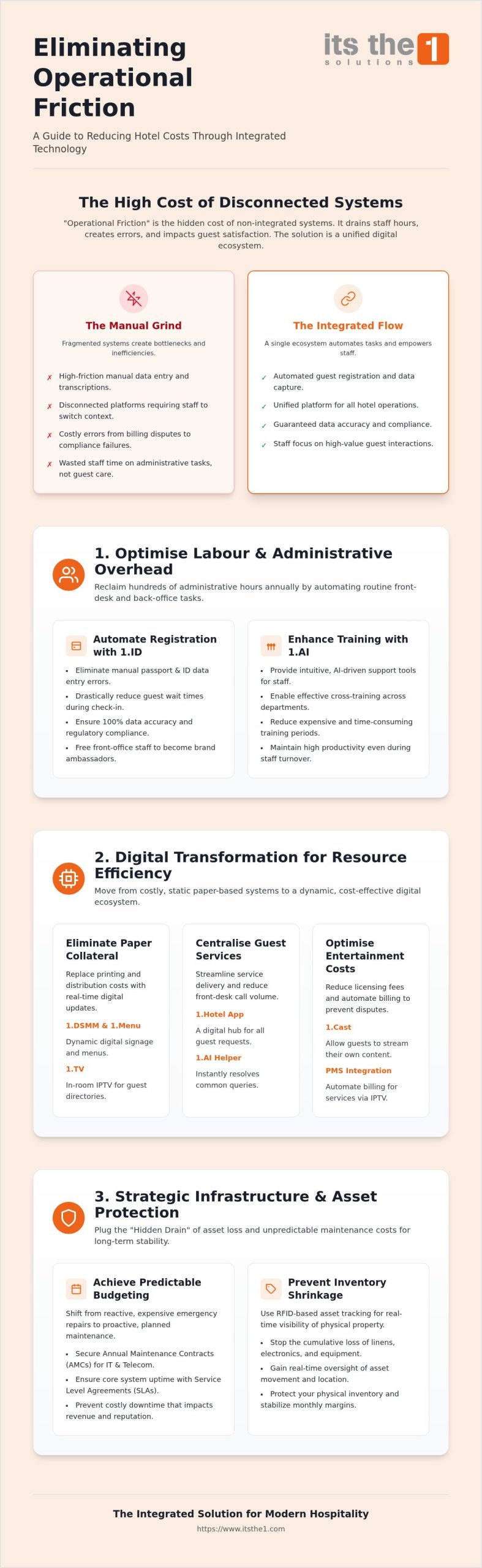
Labour often represents the largest portion of a hotel’s expenditure. True efficiency isn’t just about scheduling; it’s about removing “Operational Friction,” which we define as the hidden cost of non-integrated hospitality systems. When staff must jump between disconnected platforms, they lose valuable minutes that aggregate into significant overhead. These high-friction manual tasks, such as transcribing guest details or managing physical keys, drain staff hours daily and distract from guest engagement.
Implementing integrated strategies for reducing hotel operating costs requires a shift from manual oversight to technical precision. Manual data entry errors in guest registration don’t just slow down the lobby. They carry a heavy economic impact through billing disputes, lost loyalty data, and potential compliance failures. By adopting these strategies for reducing hotel operating costs, properties can reclaim hundreds of administrative hours annually. Utilizing tools like 1.AI enhances cross-training efforts across your entire team. Intuitive, AI-driven staff support tools allow employees to handle diverse queries across departments without extensive, expensive training periods. This flexibility ensures that your workforce remains productive even during high turnover periods.
Automating Guest Registration with 1.ID
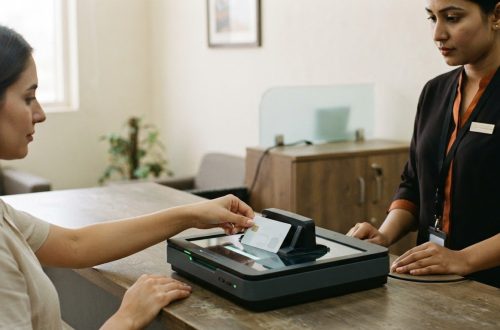
Manual passport and ID data entry is a primary bottleneck during peak check-in hours. By deploying 1.ID, you eliminate these manual touchpoints, drastically reducing front-desk wait times. This solution integrates automated scanning directly with your Property Management System (PMS), ensuring data accuracy and regulatory compliance. It allows your front-office team to transition from administrative clerks to brand ambassadors. For a deeper look at check-in efficiency, explore our guide on mobile passport scanning for hotels. Integrating 1.Support also ensures that any technical queries are resolved through a structured ticketing system, further reducing administrative lag.
Digital Transformation for Resource Efficiency
Digital transformation represents a fundamental shift in how properties manage physical resources. Traditional paper-based collateral is a recurring expense that requires constant manual updates and distribution. By transitioning to dynamic digital signage via 1.DSMM, you eliminate printing costs and ensure real-time communication across your property. Integrated digital menus through 1.Menu further reduce room service overhead by allowing instant updates to offerings and pricing without reprinting physical cards.
Leveraging 1.TV (IPTV) to deliver guest information directly to the in-room screen removes the need for bulky printed directories. This is one of the most effective strategies for reducing hotel operating costs while maintaining a modern, premium aesthetic. Additionally, deploying the 1.AI helper allows guests to resolve common queries instantly. This automation reduces the volume of calls to the front desk, freeing your team for high-value interactions. You can explore our integrated ecosystem to see how these modules work in tandem.
Centralising Guest Services via 1.Hotel
Efficiency is achieved when you move guest requests from traditional phone lines to a centralized hotel guest engagement app like 1.Hotel. This digital hub streamlines service delivery and reduces administrative lag. To further optimize entertainment costs, 1.Cast allows guests to stream their own content, which effectively eliminates expensive Video-on-Demand (VOD) licensing fees. Finally, integrating IPTV with hotel PMS automates billing for services, significantly reducing checkout disputes and manual reconciliation errors. These integrated strategies for reducing hotel operating costs ensure that your digital infrastructure serves as a profit center rather than a cost center.
Strategic Infrastructure and Asset Protection
Asset protection represents a critical yet frequently overlooked component of sustainable profitability. Many properties suffer from a “Hidden Drain” where the cumulative cost of lost or stolen linens, electronics, and kitchen equipment erodes monthly margins. Addressing this requires more than just manual audits; it demands proactive network infrastructure management to reduce emergency repair premiums. By securing Annual Maintenance Contracts (AMC) for IT and Telecom, you shift from reactive spending to a model of predictable budgeting. These contracts, backed by Service Level Agreements (SLAs), ensure that your core systems remain operational, preventing the costly downtime that often accompanies hardware failure.
RFID-based asset tracking prevents inventory shrinkage by providing real-time visibility into the movement and location of physical property across the hotel. This level of oversight is essential for any property looking to implement sophisticated strategies for reducing hotel operating costs while maintaining high service standards.
Real-Time Inventory Management with 1.Asset
Implementing 1.Asset allows you to deploy RFID and QR code tracking for high-value items, transforming how your team manages physical stock. This precision extends to technical reliability across your entire footprint. Using 1.Support streamlines technical assistance, ensuring maximum hardware uptime and consistent guest satisfaction. To maintain long-term digital resilience, it’s essential to follow an enterprise cybersecurity 2026 guide. These integrated strategies for reducing hotel operating costs protect your physical and digital assets simultaneously. By consolidating these functions within a single ecosystem, you build a foundation for operational excellence that withstands the complexities of the modern market.
Achieving Operational Stability Through Integration
Sustained profitability in the modern hospitality landscape requires a transition from fragmented manual processes to a unified digital ecosystem. By automating high-friction tasks like guest registration and replacing physical collateral with dynamic digital displays, you can effectively implement long-term strategies for reducing hotel operating costs. It’s essential to protect your physical assets through real-time tracking while securing your infrastructure with predictable maintenance agreements that prevent costly emergency repairs.
With over 20 years of hospitality technology expertise, ITSthe1 Solutions provides the reliability and global reach required for complex digital transformations. Our unified product family, featuring 1.TV, 1.ID, and 1.Hotel, ensures your property meets rigorous brand standards while maintaining predictable budgets through comprehensive AMC and SLAs. Partner with ITSthe1 Solutions to optimise your hotel operations today. We are ready to act as your trusted advisor in navigating the future of hospitality technology with confidence.
Frequently Asked Questions
What is the most effective way to reduce hotel labor costs in 2026?
The most effective way to reduce labor costs is by replacing manual friction with integrated technology that empowers your existing team. By deploying 1.Hotel for guest requests and 1.AI for staff assistance, you reduce the need for administrative bloat. These strategies for reducing hotel operating costs allow you to maintain high service standards with a leaner, more productive workforce that focuses on guest engagement.
How does digital signage help in lowering hotel operating expenses?
Digital signage significantly lowers expenses by eliminating the recurring costs associated with printing and distributing paper collateral. Solutions like 1.DS allow for instantaneous updates to wayfinding, event schedules, and safety information across the entire property. This transition reduces physical waste and administrative hours spent updating static boards, ensuring your communication remains dynamic and cost-effective while aligning with your property’s modern brand standards.
Can an IPTV system actually provide a return on investment for hotels?
A sophisticated IPTV system like 1.TV provides a measurable return by acting as a central revenue hub. It integrates with 1.Menu to drive in-room dining sales and utilizes 1.Cast to eliminate expensive Video-on-Demand licensing fees. By consolidating guest information and entertainment into a single interface, you reduce physical directory costs and create new opportunities for targeted internal promotions and upsells to every room.
How does automated passport scanning improve hotel profitability?
Automated scanning through 1.ID improves profitability by drastically shortening check-in times and eliminating the financial risks of manual data entry errors. Accurate data capture ensures better billing precision and regulatory compliance, preventing potential fines. These strategies for reducing hotel operating costs allow front-desk staff to process more guests in less time, directly lowering the cost per check-in while enhancing the initial guest experience.