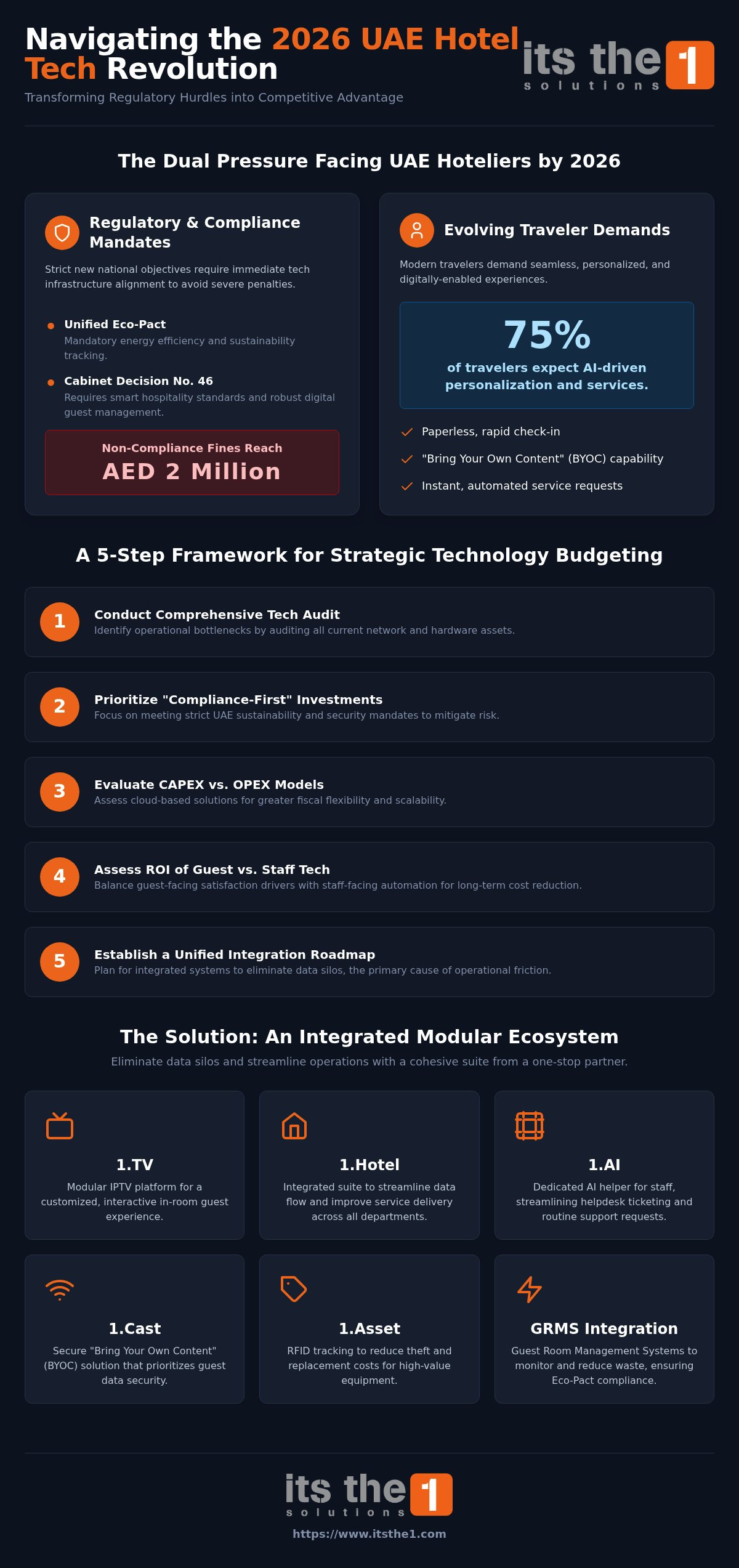
With non-compliance fines for the UAE’s Unified Eco-Pact reaching up to AED 2 million, your 2026 technology budget is no longer just a line item for guest comfort; it’s a critical compliance shield. You likely feel the pressure of balancing these strict regulatory mandates with a guest base where 75% of travelers now expect AI-driven personalization. It’s difficult to manage fragmented legacy systems that don’t communicate, especially when the 2026 roadmap feels increasingly complex.
By mastering the current hotel technology investment trends UAE, you can transform these operational hurdles into a clear competitive advantage. This guide provides a strategic framework to align your spending with national innovation objectives and the National Tourism Strategy 2031. We’ll explore how to integrate modular IPTV, AI-powered staff assistants, and automated sustainability tracking into a cohesive ecosystem that drives measurable ROI.
Key Takeaways
- Align your property’s infrastructure with the Unified Eco-Pact and Cabinet Decision No. 46 to mitigate regulatory risks and avoid substantial non-compliance fines.
- Implement a structured five step framework to evaluate hotel technology investment trends UAE, ensuring your 2026 capital expenditure focuses on high ROI network upgrades.
- Replace fragmented legacy systems with integrated modular suites such as 1.TV and 1.Hotel to streamline data flow and improve service delivery across all departments.
- Leverage advanced automation and AI driven guest services to satisfy evolving traveler demands while maintaining lean, efficient operations.
Navigating the 2026 UAE Hospitality Tech Landscape and Regulatory Mandates
The year 2026 marks a decisive shift in Tourism in the United Arab Emirates, as legacy systems no longer suffice for modern regulatory demands. Understanding current hotel technology investment trends UAE is essential for properties aiming to align with Cabinet Decision No. 46. This mandate accelerates the adoption of smart hospitality standards, requiring robust digital guest management and verifiable energy efficiency protocols. It’s clear that the Dubai 2040 Urban Plan, which emphasizes sustainable urban growth, has shifted infrastructure priorities toward integrated, data-driven environments. Hotels that don’t transition from fragmented legacy systems to smart connectivity now risk falling behind both competitors and legal requirements.
Meeting UAE National Sustainability and Innovation Objectives
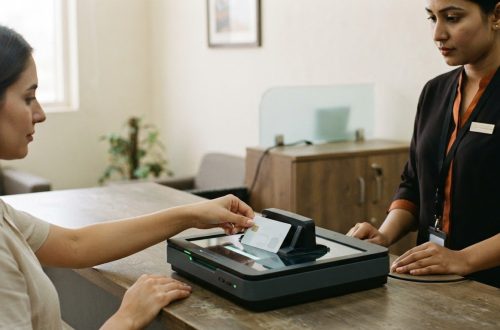
Compliance with the mandatory Unified Eco-Pact is a primary driver for 2026 budget allocation. Hoteliers must implement energy-efficient solutions, such as Guest Room Management Systems (GRMS), to monitor and reduce waste in real-time. These systems integrate with IPTV and automation platforms to ensure operational excellence. Additionally, security regulations now necessitate advanced digital onboarding. Utilizing mobile passport scanning for hotels allows teams to meet these requirements through automated ID data capture. This transition to paperless guest registration minimizes human error and speeds up the check-in process. By moving away from outdated hardware toward modular software, hotels can avoid steep non-compliance fines, which can reach AED 2 million, while simultaneously enhancing the guest journey. This shift represents a fundamental change in how properties manage their technical assets.
A 5-Step Framework for Allocating Your 2026 Technology Budget
Effective financial planning for the upcoming fiscal year requires a transition from reactive purchasing to strategic foresight. To stay ahead of hotel technology investment trends UAE, hoteliers must adopt a structured five step methodology. First, conduct a comprehensive technology audit of all current network and hardware assets to identify operational bottlenecks. Second, prioritize “Compliance First” investments. This ensures your property meets the strict sustainability and security mandates established by UAE authorities. Third, evaluate CAPEX versus OPEX models for cloud based hospitality solutions, as this shift provides the fiscal flexibility needed for rapid scaling.
Fourth, assess the ROI of guest facing versus staff facing technologies. While guest tools drive satisfaction, staff automation reduces long term labor costs and improves retention. Finally, establish a roadmap for unified system integration to eliminate data silos. Fragmented systems remain the primary cause of operational friction in luxury properties. If you’re looking to refine your digital strategy, a consultation with an established technology partner can provide clarity on these complex transitions.
Calculating ROI: Beyond the Initial Investment
True value is measured by long term operational impact rather than just the purchase price. For instance, implementing hotel guest engagement apps can significantly boost ancillary revenue by pushing personalized offers directly to a traveler’s device. On the back end, our 1.Asset management module uses RFID tracking to reduce theft and replacement costs for high value equipment. Reliability is further secured by factoring in Annual Maintenance Contracts (AMC) and Service Level Agreements (SLAs). These agreements ensure your infrastructure remains functional without unexpected downtime or hidden repair fees.
Maximizing Efficiency with Integrated Modular Solutions
Selecting a “One-Stop Partner” for IT, telecom, and hospitality solutions minimizes the friction often associated with multi-vendor environments. This strategy is a cornerstone of hotel technology investment trends UAE for 2026, as properties seek more cohesive operational frameworks. Modular suites like 1.TV and 1.Hotel effectively eliminate data silos, allowing for a unified flow of information between departments. These solutions are designed to integrate directly with existing PMS systems, ensuring that guest data remains accurate and accessible. To address labor challenges, 1.AI acts as a dedicated helper for hospitality staff, streamlining helpdesk ticketing and routine support requests. This automation allows your team to prioritize the human element of service. For guest entertainment, 1.Cast offers a secure “Bring Your Own Content” (BYOC) solution. It prioritizes data security by ensuring no guest credentials or viewing histories are stored on the hardware.
The Future of Guest Entertainment and Digital Signage
Modern hospitality demands that every screen serves a purpose beyond basic broadcasting. Implementing hotel digital signage software provides dynamic wayfinding and real-time revenue generation opportunities through targeted advertising. The guest experience becomes truly bespoke when integrating IPTV with hotel PMS, as the system can deliver personalized messages and services based on individual profiles. Transitioning to interactive television systems that align with corporate branding standards reinforces property prestige while simplifying internal workflows. This integrated approach ensures that technology remains a supportive, unobtrusive presence that enhances the overall stay.
Securing Your Property’s Future in a Digital First Market
Preparing for 2026 requires more than just capital; it demands a strategic alignment with evolving hotel technology investment trends UAE. By prioritizing regulatory compliance and transitioning toward modular system architectures, your property can successfully meet the high expectations of the modern traveler. Integrating solutions like the proprietary 1.TV and 1.Hotel ecosystem ensures that your operations remain both efficient and scalable. With our Dubai Head Office established in 2003 and over 20 years of IPTV expertise, we provide the stability and local support necessary for complex digital transformations.
Consult with our Dubai-based experts to plan your 2026 technology roadmap and ensure your infrastructure is ready for the next era of hospitality. Your investment today builds the foundation for sustained excellence in a competitive global market.
Frequently Asked Questions
What are the main requirements of Cabinet Decision No. 46 for UAE hotels?
Cabinet Decision No. 46 mandates that hospitality properties adopt smart technology standards to improve operational transparency and resource management. Key requirements include the implementation of digital guest management systems and verifiable energy efficiency protocols. These regulations aim to align the sector with national innovation goals. Properties must ensure their infrastructure supports real-time reporting to avoid significant non-compliance penalties.
How much should a hotel allocate to technology investment in 2026?
Budget allocation varies based on property size, but current hotel technology investment trends UAE suggest that leading properties are dedicating a larger portion of their capital expenditure to digital infrastructure. It’s recommended to prioritize compliance-related upgrades and scalable cloud solutions. A balanced approach focuses on high-impact areas like network security and guest-facing automation to ensure long-term operational resilience.
Can I integrate new IPTV systems with my existing hotel PMS?
Yes, our proprietary 1.TV middleware is designed for seamless integration with existing hotel Property Management Systems (PMS). This connectivity allows for automated guest greetings, real-time billing updates, and personalized content delivery. Since 1.TV is compatible with any TV brand, hotels can upgrade their guest entertainment experience without the need for extensive hardware replacements, ensuring a cost-effective digital transformation.
What is the benefit of using a modular guest engagement app like 1.Hotel?
The 1.Hotel app provides a unified platform for both guests and staff, effectively eliminating data silos across different departments. Guests benefit from mobile check-in and digital service requests, while staff can manage tasks through an integrated dashboard. This modular approach allows hotels to scale their digital services according to specific needs, improving overall service efficiency and enhancing the guest journey.
How does automated passport scanning improve check-in times?
Automated passport scanning using 1.ID reduces manual data entry, which can significantly accelerate the check-in process for front-desk teams. By capturing accurate ID data instantly, staff can focus on welcoming guests rather than administrative tasks. This technology also ensures full compliance with national security regulations by providing secure and verifiable digital records, which is a key component of modern hospitality.
Is guest data safe when using Chromecast solutions like 1.Cast?
Data security is a fundamental feature of the 1.Cast solution. Unlike standard residential devices, this “Bring Your Own Content” (BYOC) system ensures that no guest credentials or viewing histories are stored or logged on the TV system. Guests can stream their preferred content from their mobile devices with total privacy, providing a secure and familiar entertainment experience that matches the highest luxury standards.