What if the most advanced room technology isn’t the best choice for your hotel? Smart room technology for hotels delivers value when guest-facing features and hotel systems are planned together, rather than added as separate tools. Guests need simple ways to interact with room technology, while staff need solutions that fit daily operations and the property’s existing systems.
This guide covers the main components of a smart hotel room, including Guest Room Management Systems (GRMS), interactive television, mobile applications and TV casting. It explains how to assess usability, integration and operational requirements before setting priorities. You’ll also find questions to ask a potential technology partner, helping you plan a connected environment rather than a collection of disconnected systems.
Key Takeaways
- Identify the guest-facing features and hotel systems that make up smart room technology for hotels, then prioritise what serves your property.
- Assess guest and staff needs before selecting technology, and map your existing systems to clarify integration requirements.
- Check proposed integrations against your hotel’s actual PMS, HSIA, IPTV and Digital Access Key environment.
- Explore how ITSthe1’s Guest Room Management Systems (GRMS), 1.TV, 1.Hotel and 1.Cast may support a connected guest experience.
What Does Smart Room Technology for Hotels Include?
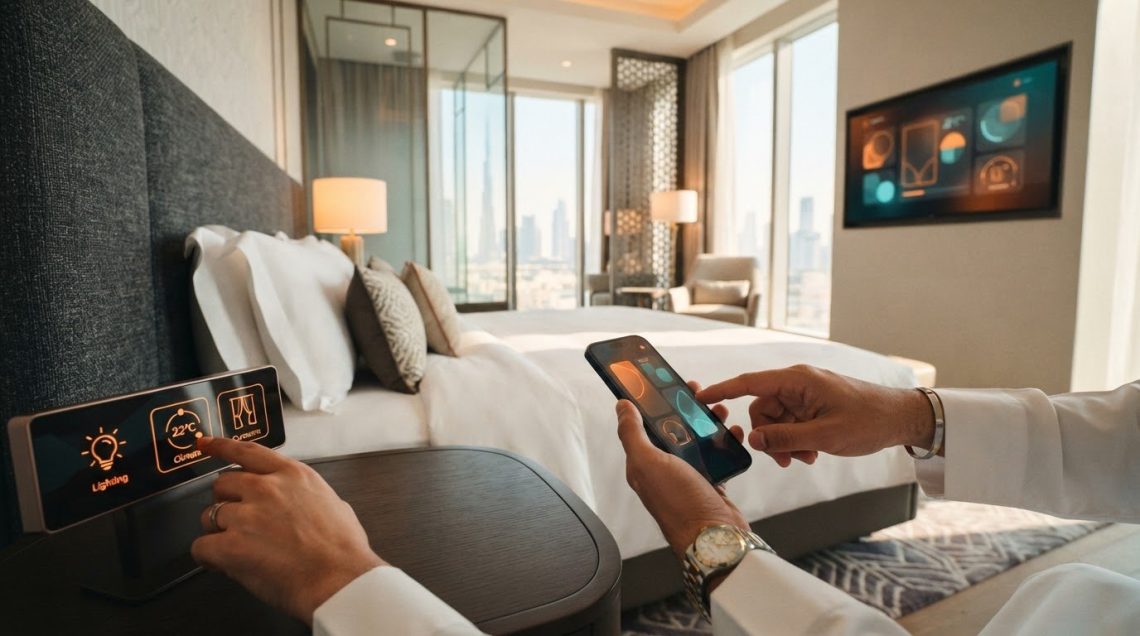
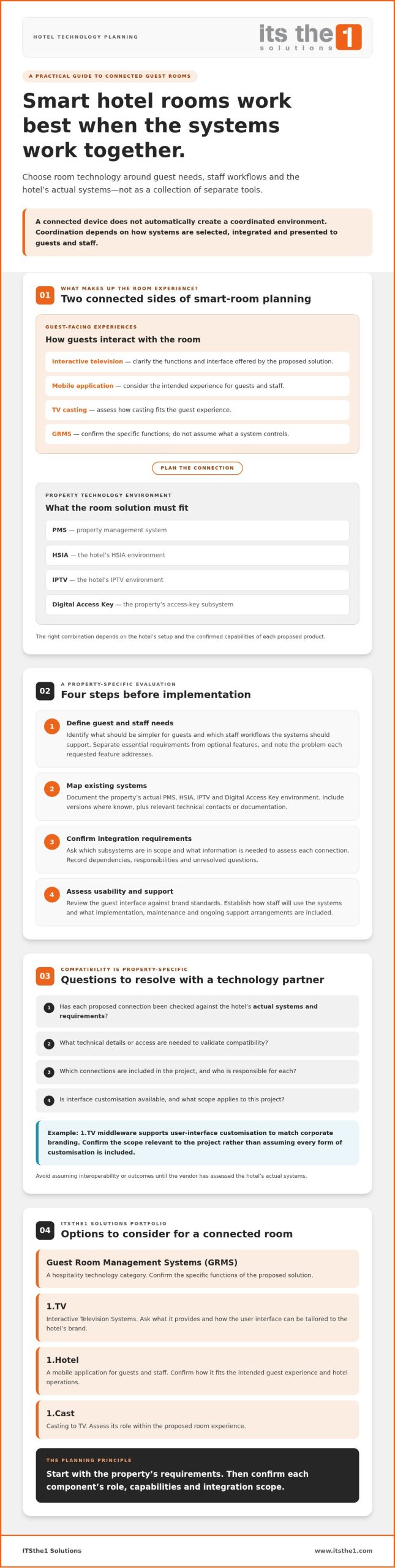
Smart room technology for hotels brings together digital systems that support the guest’s in-room experience and the hotel’s operation of those services. Guest-facing components may include interactive television, a hospitality mobile application or casting to the TV. The wider technology environment may also involve the property’s existing PMS, HSIA, IPTV and Digital Access Key subsystems. The right combination depends on the hotel’s setup and the confirmed capabilities of each proposed product.
Building automation offers useful background on how connected systems can coordinate building functions. See this overview of building automation systems. For hotels, the practical question is how room technology relates to the property’s systems. Don’t assume that every room includes the same controls or that a product category describes the features available in a specific solution.
A room with connected devices isn’t necessarily a coordinated technology environment. Coordination depends on how systems are selected, integrated and presented to guests and staff.
Which systems can contribute to a smarter hotel room?
Guest Room Management Systems (GRMS) are a hospitality technology category, but confirm the proposed solution’s specific functions instead of assuming what it controls. Interactive Television Systems such as 1.TV, the guest and staff app 1.Hotel, and 1.Cast for casting to TV can each contribute to the wider room experience. Ask the provider to explain the role and confirmed capabilities of each component in your proposed setup.
Separate guest-facing interfaces from the subsystems that support the property’s technology environment. Then consider which components address actual guest and staff needs. For example, if interactive television is a priority, clarify what 1.TV will provide and how its user interface can be tailored to your brand. If you are considering an app or casting, ask how each fits into the intended guest experience. Confirm how proposed components relate to your actual PMS, HSIA, IPTV and Digital Access Key systems before deciding how to assemble the room experience.
How Can Hotels Evaluate Smart Room Technology Before Implementation?
A practical assessment connects technology choices to guest expectations, staff workflows and the property’s existing environment. Cornell University’s research on the future of hospitality technology provides wider context for thinking about how technology relates to changing guest expectations. Use the following steps to turn that context into a property-specific evaluation:
- 1. Define guest and staff needs. Identify which parts of the room experience should be simpler for guests and which staff workflows the proposed systems should support. Separate essential requirements from optional features, and record the problem each requested feature is meant to address.
- 2. Map existing systems. Document the hotel’s actual PMS, HSIA, IPTV and Digital Access Key environment. Include the systems and versions currently in use where known, along with any relevant technical contacts or documentation.
- 3. Confirm integration requirements. Ask vendors which subsystems are in scope and what information they need to assess each connection. Record dependencies, responsibilities and unresolved questions before selection.
- 4. Assess usability and support. Review the guest-facing interface against the hotel’s brand standards. Ask how staff will interact with the proposed systems and establish what implementation, maintenance and ongoing support arrangements are included.
How should a hotel check compatibility and integration?
Ask for confirmation against the specific hotel environment, not just a general statement that systems integrate. Hotels should check each proposed connection against their own system requirements. Ask what technical details or access are needed for validation, which connections are included in the project, and whether interface customisation is available. For example, 1.TV middleware supports user-interface customisation to match corporate branding. Confirm the scope relevant to your project rather than assuming every form of customisation is included. Avoid assuming interoperability or outcomes until the vendor has assessed the actual systems.
For a property-specific discussion, hotels can review ITSthe1’s hospitality technology and use these questions to frame an initial evaluation.
How Can an Integrated Hospitality Technology Partner Support Smart Rooms?
Planning smart room technology for hotels means considering the room experience alongside the hotel’s existing systems. ITSthe1 Solutions’ hospitality portfolio includes Guest Room Management Systems (GRMS), Interactive Television Systems through 1.TV, the 1.Hotel mobile application for guests and staff, and 1.Cast for casting to TV. These offerings give hotels options to consider when defining a connected room experience. The goal is to select technology around the property’s requirements and the guest experience.
A partner’s portfolio can support connected room planning when its components are assessed against the hotel’s brand standards, existing subsystems and operational requirements.
ITSthe1 documents consultancy, turnkey implementation, maintenance contracts and ongoing support. Before moving forward, clarify what each arrangement covers and how proposed components relate to your PMS, HSIA, IPTV and Digital Access Key environment. Request confirmation for the specific property, since a product category or general capability alone does not establish that an integration is suitable for your setup.
What should hotels clarify with a potential technology partner?
Before selecting a solution, ask how the guest-facing experience can align with brand standards and whether interface customisation is available. Confirm the implementation scope, which existing subsystems are being considered, and what information is required to validate each proposed integration. Clarify maintenance and ongoing support arrangements, including responsibilities for the hotel and the provider. These discussions help define the project and surface open questions before deployment.
For additional planning context, explore this hotel guest engagement app guide and the hotel IPTV and PMS integration guide. They offer related perspectives on guest applications and system connections to help inform partner discussions.
Plan Your Next Step with Confidence
Successful smart room technology for hotels starts with a clear purpose: identify guest and staff needs, understand existing systems, and confirm proposed integrations for your property. A considered technology mix can create a more coherent room experience without adding features that don’t serve your priorities.
ITSthe1 brings more than 20 years of expertise in IPTV and related hospitality technology. Its documented consultancy, turnkey implementation, maintenance contracts and ongoing support can help hotels plan and manage their technology environment. Confirm the scope of each service for your property.
Set out your requirements and integration questions before selecting a solution. To discuss your hotel’s priorities, contact ITSthe1 about your hotel’s hospitality technology requirements. A clear brief gives your team and technology partner a practical foundation for planning a guest experience that fits your hotel.
Frequently Asked Questions
What is smart room technology for hotels?
Smart room technology for hotels is a set of digital systems planned to support the guest’s in-room experience and the hotel’s related operations. Standalone devices may work independently, while a connected setup is selected with the roles and relationships of its components in mind. The scope varies by property, so verify each component’s capabilities and decide how it fits the hotel’s existing environment.
What technology is commonly used in a smart hotel room?
Common categories include Guest Room Management Systems (GRMS), interactive television and guest mobile applications. These are technology types, not a standard package. Confirm a GRMS’s specific functions instead of assuming what it controls. ITSthe1’s documented hospitality portfolio includes GRMS, Interactive Television Systems through 1.TV, and the 1.Hotel guest and staff mobile application. Ask which functions are proposed for your project.
Can smart room technology integrate with a hotel’s existing systems?
Integration depends on the hotel’s specific systems and the proposed requirements. Relevant subsystems may include the PMS, HSIA, IPTV and Digital Access Key environment. ITSthe1 documents integration with these subsystem categories, but that does not establish universal compatibility. Ask the vendor to assess the property’s actual environment and confirm which connections are in scope before making a selection.
How should a hotel choose smart room technology?
Start by identifying the guest experience and staff workflows the technology should support. Map the hotel’s current systems, then ask vendors to validate each proposed integration against the property’s requirements. Assess whether the interfaces are usable and can align with brand standards. Before selecting a solution, clarify implementation scope, maintenance arrangements and ongoing support so responsibilities are understood.