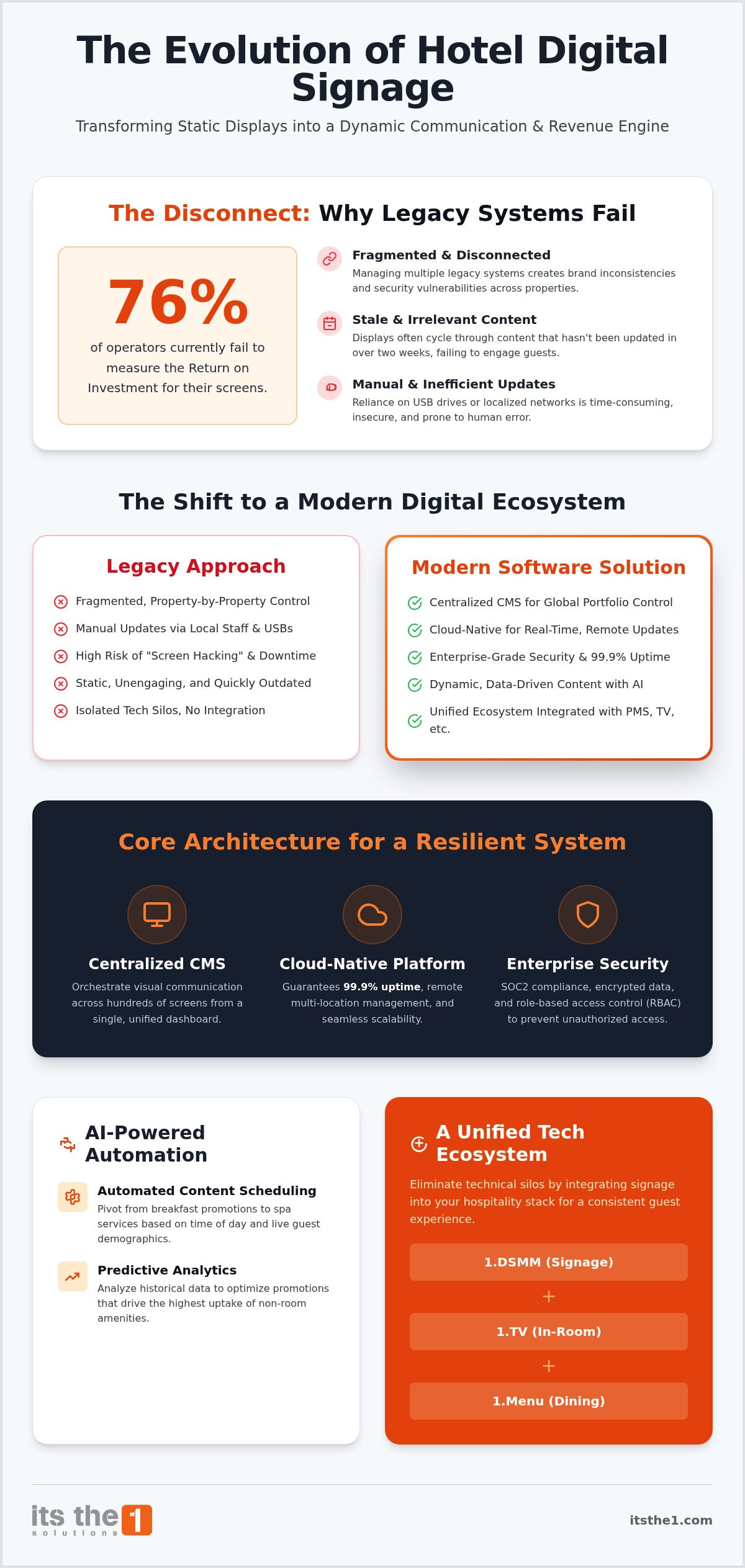
Over 76% of digital signage operators currently fail to measure the return on investment for their screens, often leaving displays to cycle through content that hasn’t been updated in over two weeks. You likely recognize the frustration of managing fragmented legacy systems and outdated hotel digital signage software that feels more like a security vulnerability than a guest service tool. It’s difficult to drive meaningful engagement when your displays remain static and disconnected from your property’s technology stack. This disconnect often leads to missed opportunities for promoting amenities and streamlining operations.
This guide demonstrates how modern software transforms these screens into a central nervous system for real-time communication and non-room revenue growth. By adopting a modular approach with solutions like our proprietary 1.DSMM module, you can achieve centralized control and secure content delivery. Drawing on our global presence and expertise since 1999, we’ll explore the shift toward AI-driven personalization, the mandatory 2026 ADA accessibility standards, and how a security-first approach to cloud-native platforms ensures excellence across your entire national portfolio. Discover how to integrate your displays into a cohesive digital ecosystem that prioritizes both guest experience and operational stability.
Key Takeaways
- Transition from fragmented legacy systems to a centralized CMS to ensure 99.9% uptime and enterprise-grade security across your entire property.
- Deploy modern hotel digital signage software to automate guest wayfinding and streamline lobby operations through interactive, real-time data integration.
- Eliminate technical silos by integrating your signage with 1.TV and 1.Menu modules for a unified and consistent hospitality tech ecosystem.
- Leverage professional consulting and managed IT support to move beyond simple software installation toward a long-term digital transformation strategy.
The Evolution of Hotel Digital Signage Software in 2026
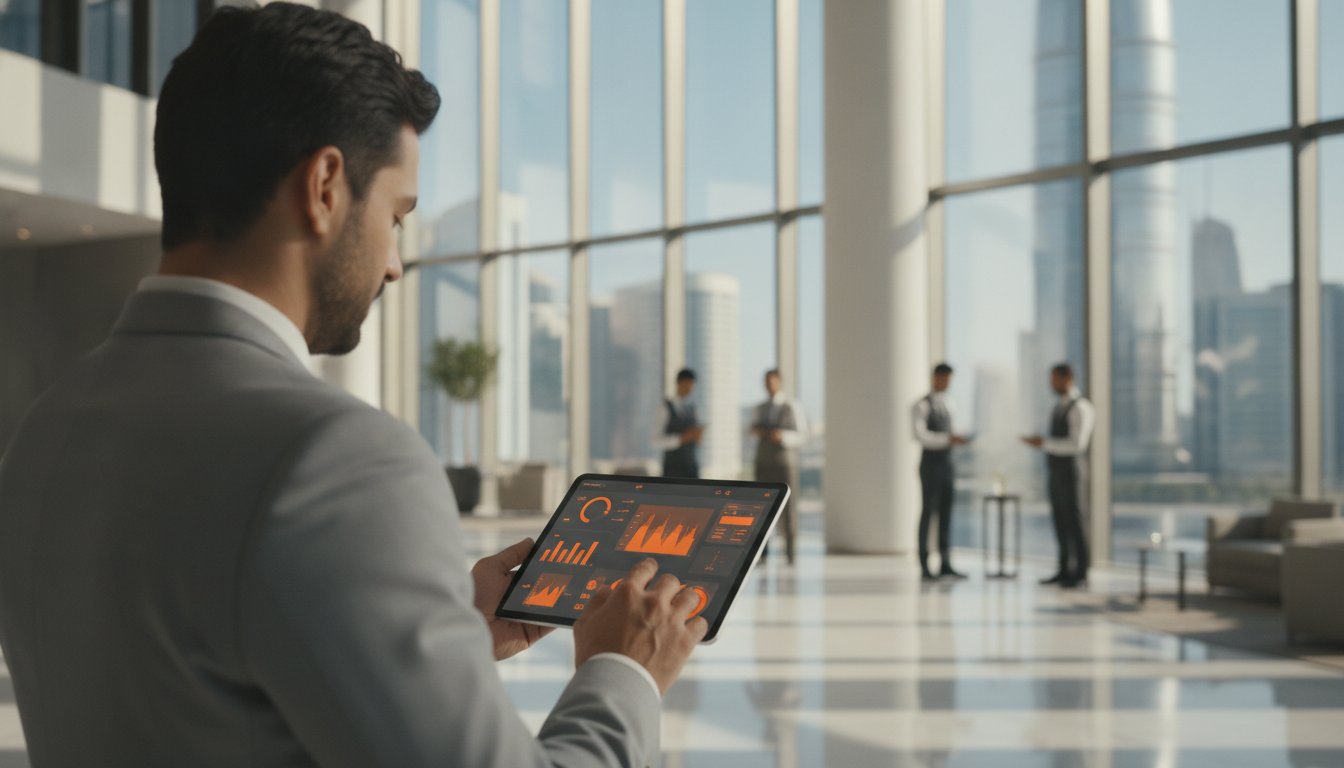
In 2026, Digital signage has transitioned from a passive display medium to a critical component of the hospitality technology stack. Modern hotel digital signage software functions as a centralized Content Management System (CMS), allowing operators to orchestrate visual communication across hundreds of screens from a single interface. Unlike legacy systems that relied on static images and local server hosting, contemporary platforms like 1.DSMM utilize cloud-native architecture to deliver real-time, data-driven content. This shift ensures 99.9% uptime and provides the robust security required for enterprise-level deployments.
Older systems often required manual updates via USB drives or localized networks, leading to fragmented messaging and security risks. Today’s dynamic displays integrate directly with hotel property management systems (PMS) to reflect live data. For national hotel portfolios, this scalability is vital. It allows a central corporate team to push global brand updates while giving local managers the flexibility to highlight regional amenities. This balance ensures that every display remains relevant and professional.
Why Modern Hospitality Demands Centralised Content Control
Maintaining brand consistency across multiple properties is a significant challenge for growing hospitality groups. Centralized control eliminates the risk of outdated or off-brand content appearing in lobbies. It also significantly reduces operational overhead. Staff no longer spend hours manually updating individual displays. Instead, they manage the entire ecosystem through a unified dashboard. Beyond marketing, this connectivity is essential for safety. In the event of an emergency, real-time communication protocols allow for property-wide alerts to be broadcast instantly, ensuring guest safety through coordinated visual instructions.
The Role of AI and Automation in 2026 Guest Communication
The most transformative development in 2026 is the integration of AI within hotel digital signage software. While some providers focus solely on remote management, high-performance platforms now use AI to automate content scheduling based on guest demographics and time of day. For example, screens can automatically pivot from breakfast promotions to spa services as the morning progresses. AI-assisted layout design ensures that every graphic meets high-visibility standards for guest engagement. Predictive analytics further refine this process, analyzing historical performance data to optimize which promotional content will drive the highest uptake of non-room amenities. This data-driven approach replaces guesswork with measurable operational excellence.
Core Architecture: CMS, Cloud, and Enterprise Security
The Content Management System (CMS) acts as the operational brain of any robust hotel digital signage software deployment. It provides the interface where content is created, scheduled, and distributed across a property’s visual network. In 2026, the shift toward cloud-native SaaS platforms has become the industry standard. These platforms offer centralized multi-location management and remote access, ensuring that a single corporate office can maintain oversight of a global portfolio without the need for extensive on-site hardware. This centralized approach is essential for managing the estimated 110 million connected screens worldwide, where consistency and speed are paramount.
Transitioning to the cloud provides a baseline of reliability, with enterprise solutions targeting 99.9% uptime. This stability is essential for maintaining guest trust and operational flow. However, speed and uptime are only part of the equation. As hospitality groups expand, the need for encrypted data transmission and SOC2 compliance becomes non-negotiable. Managed IT services play a critical role here, ensuring that software remains updated against emerging vulnerabilities through rigorous testing and consistent patching. If you’re looking to audit your current infrastructure, our experts provide comprehensive managed IT services to ensure your digital evolution is both secure and scalable.
Prioritising Cybersecurity in Public-Facing Displays
Public displays are high-value targets for “screen hacking,” which can lead to significant brand damage and guest distress. Secure endpoint management is the primary defense against unauthorized access at the hardware level. To further fortify the system, administrators must implement role-based access control (RBAC). This ensures that content editors only have access to the specific modules or screens necessary for their duties, preventing accidental or malicious property-wide changes. Effective network segmentation isolates signage traffic from guest Wi-Fi and critical property management systems to minimize the attack surface.
Cloud vs. On-Premise: Making the Strategic Choice
When evaluating the Total Cost of Ownership (TCO), cloud models typically offer lower entry costs by reducing upfront capital expenditure on local servers. While on-premise solutions provide maximum control over internal data, they often incur higher long-term maintenance and energy costs. Bandwidth management is another vital consideration, especially for high-definition video streaming. Smart caching techniques allow media players to download content during off-peak hours, reducing the strain on the property’s network. For resorts with intermittent connectivity, a hybrid model offers the best of both worlds by combining local storage with cloud-based management. This architecture ensures that your hotel digital signage software remains functional even if the primary internet connection is temporarily lost.
Strategic Use Cases for High-Impact Guest Engagement
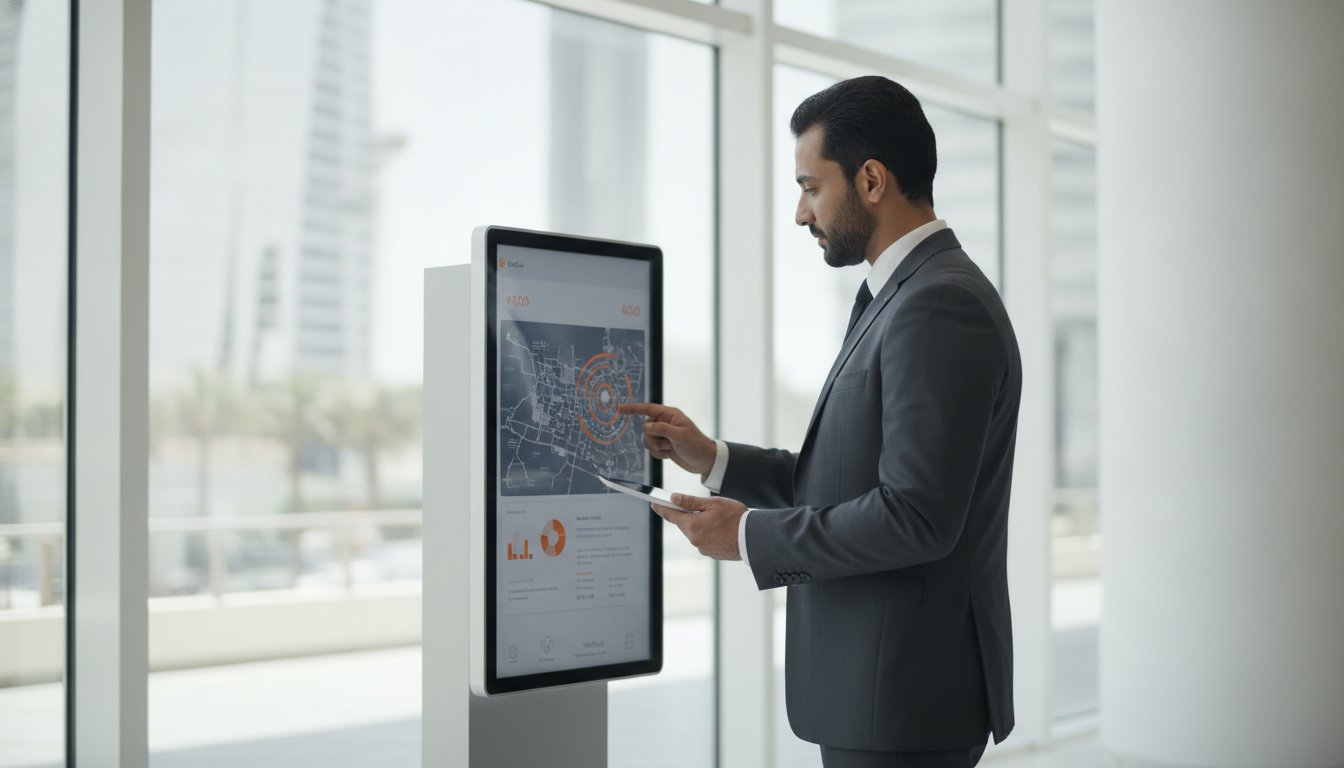
The deployment of hotel digital signage software serves as a strategic bridge between operational efficiency and the guest journey. In the lobby, screens provide clear instructions that streamline the check-in process, which reduces perceived wait times. Personalized welcome messages for VIP guests or groups foster an immediate sense of belonging. Beyond the reception area, interactive wayfinding solutions are indispensable for large-scale resorts. These digital maps allow guests to navigate complex layouts with ease, significantly reducing friction and the need for staff intervention.
Meeting spaces benefit from dynamic scheduling displays that pull data directly from booking systems. This ensures that room status is always accurate, preventing double bookings and confusion. The integration extends into the guest room itself. By bridging the gap between public displays and the guest room TV via the 1.TV module, hotels can provide a cohesive information ecosystem. This ensures that a promotion seen in the elevator is reinforced when the guest enters their room, creating a seamless narrative throughout the stay.
Maximising Non-Room Revenue with Digital Menus and Promotions
Revenue optimization relies on delivering the right message at the peak moment of engagement. Integrating the 1.Menu module with your hotel digital signage software allows for real-time promotion of food and beverage outlets. Displays can transition automatically from breakfast specials to late-night lounge offerings. Dynamic pricing features enable properties to highlight happy hours or seasonal events instantly. This flexibility extends to high-margin services like spa treatments and local tours. By showcasing available slots during high-traffic periods, hotels can measurably increase amenity uptake without additional marketing spend. To understand how this technology is evolving into a full revenue engine, explore the future of digital menus for hotels and the strategic ROI they deliver in 2026.
Enhancing the MICE Experience with 1.DSMM Meeting Room Signage
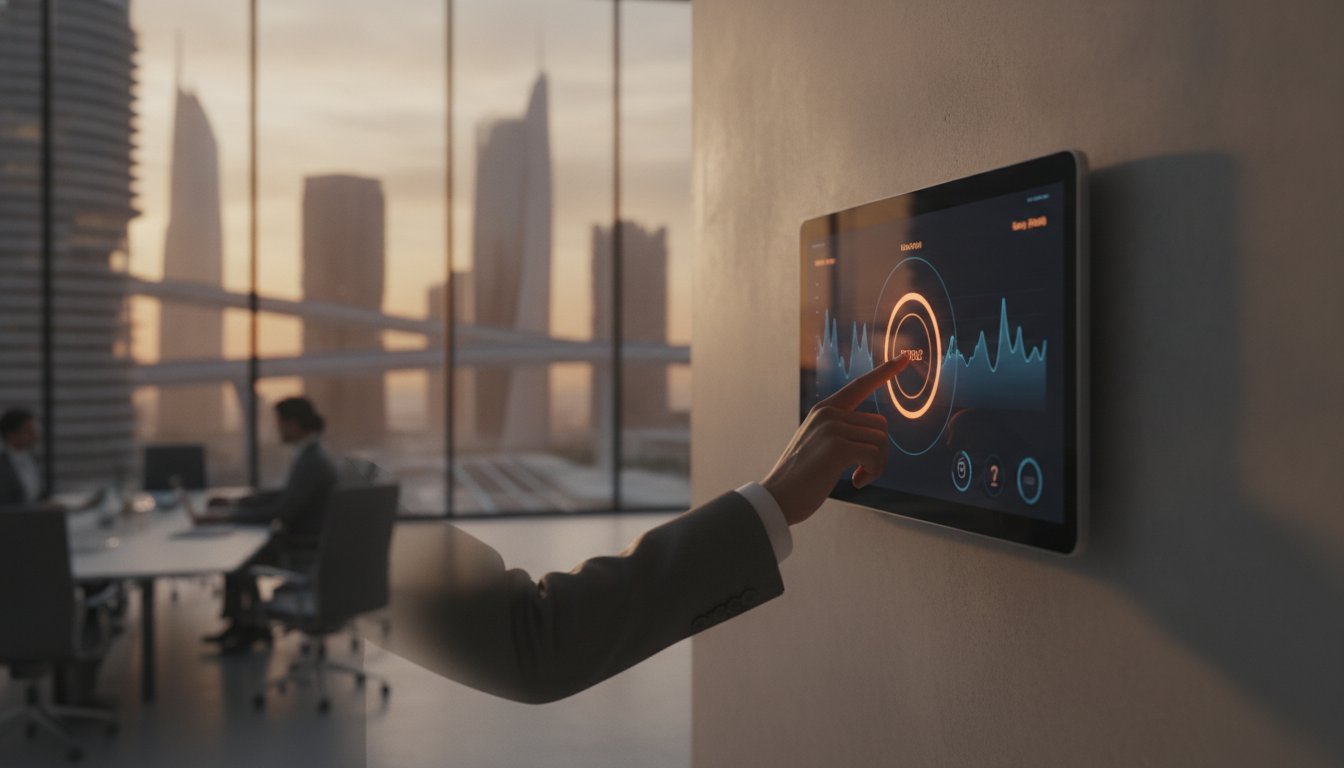
The Meetings, Incentives, Conferences, and Exhibitions (MICE) sector requires precision and professional presentation. Our 1.DSMM module automates event schedules, which drastically reduces the administrative burden on event coordinators. Corporate clients appreciate the ability to feature custom branding on dedicated screens, reinforcing their own corporate identity within the hotel’s environment. Interactive touchpoints further enhance this experience by allowing attendees to view agendas or register for specific sessions directly from the display. This level of sophistication positions the property as a forward-thinking partner for global business events.
Integration: Creating a Unified Hospitality Tech Ecosystem
Siloed software remains the primary barrier to digital transformation in the hospitality sector. When hotel digital signage software operates in isolation, it creates a disjointed experience for both staff and guests. Operational teams often find themselves entering the same event data into multiple platforms, which increases the likelihood of human error. For the guest, encountering conflicting information between a lobby kiosk and an in-room display erodes trust in the property’s professionalism. A unified ecosystem eliminates these friction points by synchronizing every digital touchpoint through a centralized backend.
The synergy between 1.DSMM and 1.TV (IPTV) ensures that messaging remains consistent throughout the property. If a guest views a promotion for a signature spa treatment on a lobby screen, that same offer should be readily accessible on their in-room television. Integrating these systems with the Property Management System (PMS) allows for a level of personalization that was previously impossible. Displays can trigger personalized greetings or acknowledge loyalty status as guests move through the property. Adding real-time data feeds, such as local weather updates or live flight departures, provides guests with immediate utility, positioning the hotel as a supportive guide during their stay. To see how these modules work together, you can explore our integrated hospitality suite to streamline your property’s digital operations.
Connecting Signage to 1.TV and Guest Apps
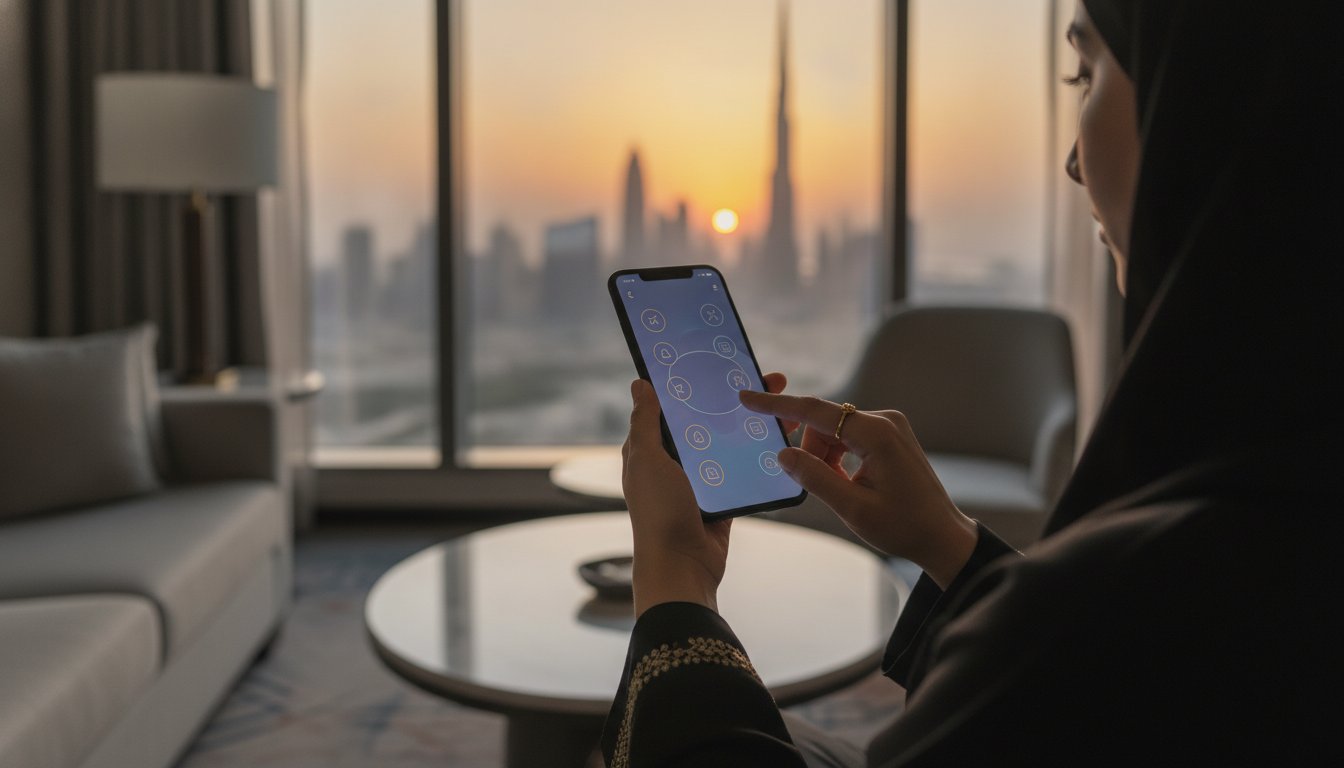
Synchronizing public screen content with in-room guest entertainment creates a seamless narrative across the guest journey. By pushing signage promotions directly to the 1.Hotel guest app, properties can reach guests on their personal devices even when they are off-site. This strategy establishes a “single source of truth” for all property information. Whether a guest is looking at a hallway display, their room TV, or a smartphone app, the details regarding restaurant hours or event locations remain identical. This consistency reduces guest confusion and lessens the burden on front-desk staff.
The Technical Advantage of API-First Signage Software
Open APIs are essential for future-proofing your technology stack against rapid industry changes. An API-first approach allows your hotel digital signage software to communicate with third-party platforms without the need for costly custom development. This flexibility enables the integration of local transport data for real-time guest utility, such as live updates on nearby train or bus schedules. Automation further enhances efficiency by using PMS data to trigger specific content. For instance, the system can automatically transition from “Welcome” messages to “Safe Travels” and express check-out instructions based on the guest’s scheduled departure time, ensuring the content is always relevant to the current audience.
Implementation and Managed Services: The ITSthe1 Approach
ITSthe1 Solutions operates as a strategic partner rather than a mere software vendor. We recognize that large-scale national deployments require more than just a license. Successful implementation of hotel digital signage software demands a meticulous integration into the existing operational fabric of the property. Our approach prioritizes stability and high-level value, ensuring that your digital evolution remains in capable hands. We provide a steady, grounded delivery that emphasizes global reach and long-term performance.
Consulting for Digital Transformation and Cloud Migration
Before any hardware is installed or software is deployed, our team conducts a comprehensive audit of your current infrastructure. This methodical process includes evaluating network capacity and performing cybersecurity audits to identify potential vulnerabilities. We then customize the 1.DSMM module to align with your specific property workflows. This ensures that the technology serves your business goals rather than complicating them. We also verify that all digital content meets national cybersecurity and data standards, providing a secure foundation for your guest engagement strategy.
The Value of Long-Term Managed IT Support
Maintaining excellence across a national hotel chain requires consistent Service Level Agreements (SLAs). Our managed IT services reduce the burden on your in-house teams by providing proactive monitoring and network maintenance. If an issue arises, the 1.Support helpdesk ticketing system allows for rapid troubleshooting and resolution. This structured support model ensures that your screens remain operational and secure, regardless of the property’s location. Our hardware-agnostic design further future-proofs your investment, allowing for seamless updates as technology evolves.
Key components of our managed support include:
- Proactive monitoring of network health to prevent downtime.
- Standardized SLAs for national hotel portfolios to ensure service consistency.
- Hardware-agnostic design for maximum flexibility in equipment selection.
- Regular software updates to address emerging security threats and add new features.
Scaling these solutions across multiple regions requires a disciplined execution strategy. By choosing a partner like ITSthe1 Solutions, with a global presence since 1999, you gain access to a well-connected ecosystem that values research and performance. Our hotel digital signage software is designed to be a long-term asset that grows with your property, ensuring that your technical needs are managed with professional competence and serious business intent.
Securing Your Property’s Digital Future
Adopting advanced hotel digital signage software is a fundamental shift toward operational excellence and enhanced guest engagement. We’ve examined how cloud-native architecture and AI-driven content scheduling drive non-room revenue while streamlining property navigation. By integrating the 1.DSMM module with 1.TV and 1.Hotel, you establish a reliable ecosystem that eliminates data silos and strengthens brand consistency across your entire portfolio.
ITSthe1 Solutions has served as a trusted advisor to global hospitality brands since 1999. Our commitment to excellence includes comprehensive cybersecurity audits and managed IT support, ensuring your technical infrastructure remains resilient against emerging threats. It’s time to transition from fragmented legacy displays to a sophisticated, unified communication network. Explore our 1.DSMM solutions and request a professional consultation to begin your property’s digital transformation. We’re ready to help you deliver a superior guest experience through disciplined execution and innovative technology.
Frequently Asked Questions
What is the difference between consumer-grade and hotel-grade digital signage software?
Hotel-grade software provides centralized management, enterprise-level security, and deep integration with hospitality systems. Consumer-grade options lack the scalability and robust scheduling needed for large properties. Our 1.DSMM module offers specialized tools that support complex workflows, such as automated meeting room updates and digital menus. This professional software ensures content remains secure and compliant with 2026 ADA standards, which basic consumer tools can’t guarantee for public-facing displays.
Can hotel digital signage software integrate with our existing PMS?
Yes, modern hotel digital signage software is designed with an API-first architecture to facilitate seamless integration with your Property Management System. This connectivity allows for real-time data synchronization, enabling automated guest greetings and personalized content based on live occupancy data. By linking 1.DSMM with your PMS, you eliminate manual data entry and ensure that information, such as event schedules or VIP welcomes, is always current across all property displays.
How does digital signage software help in increasing hotel revenue?
High-quality hotel digital signage software increases non-room revenue by promoting on-site amenities during peak engagement hours. Integration with the 1.Menu module allows you to showcase real-time F&B specials and happy hour promotions. By using data-driven scheduling, you can highlight spa services or local tours when guests are most likely to book. This targeted approach replaces static posters with dynamic calls-to-action, measurably increasing the uptake of high-margin services property-wide. A modern digital menu for hotels plays a central role in this strategy by transforming F&B displays into AI-powered, data-driven revenue tools.
Is cloud-based digital signage software secure for corporate hotels?
Cloud-based platforms are highly secure when they include enterprise-grade protocols such as SOC2 compliance and encrypted data transmission. 1.DSMM utilizes a security-first approach, isolating signage traffic from guest networks to prevent unauthorized access. Regular security audits and proactive monitoring through managed IT services ensure that the system remains resilient against vulnerabilities. This architecture provides the stability and reliability required for corporate hotel portfolios managing public-facing digital communication across multiple regions.
What hardware is required to run 1.DSMM software?
Our 1.DSMM software is designed to be hardware-agnostic, providing maximum flexibility for your property. It typically runs on professional media players or smart TVs with built-in system-on-a-chip (SoC) technology. For high-performance video streaming, we recommend dedicated enterprise media players that support secure, 24/7 operation. During the initial consulting phase, our team audits your existing hardware to determine compatibility or recommends specific components that align with your property’s long-term digital strategy.
Can I manage multiple hotel properties from a single dashboard?
Centralized multi-location management is a core feature of our cloud-native platform. You can oversee your entire national portfolio from a single dashboard, pushing global brand updates or emergency alerts instantly. This structure allows corporate teams to maintain brand consistency while granting local managers specific access to update regional content. It’s an efficient way to scale operations without increasing administrative overhead, ensuring every property meets established performance standards and delivers a cohesive experience.
How does digital signage improve the guest check-in experience?
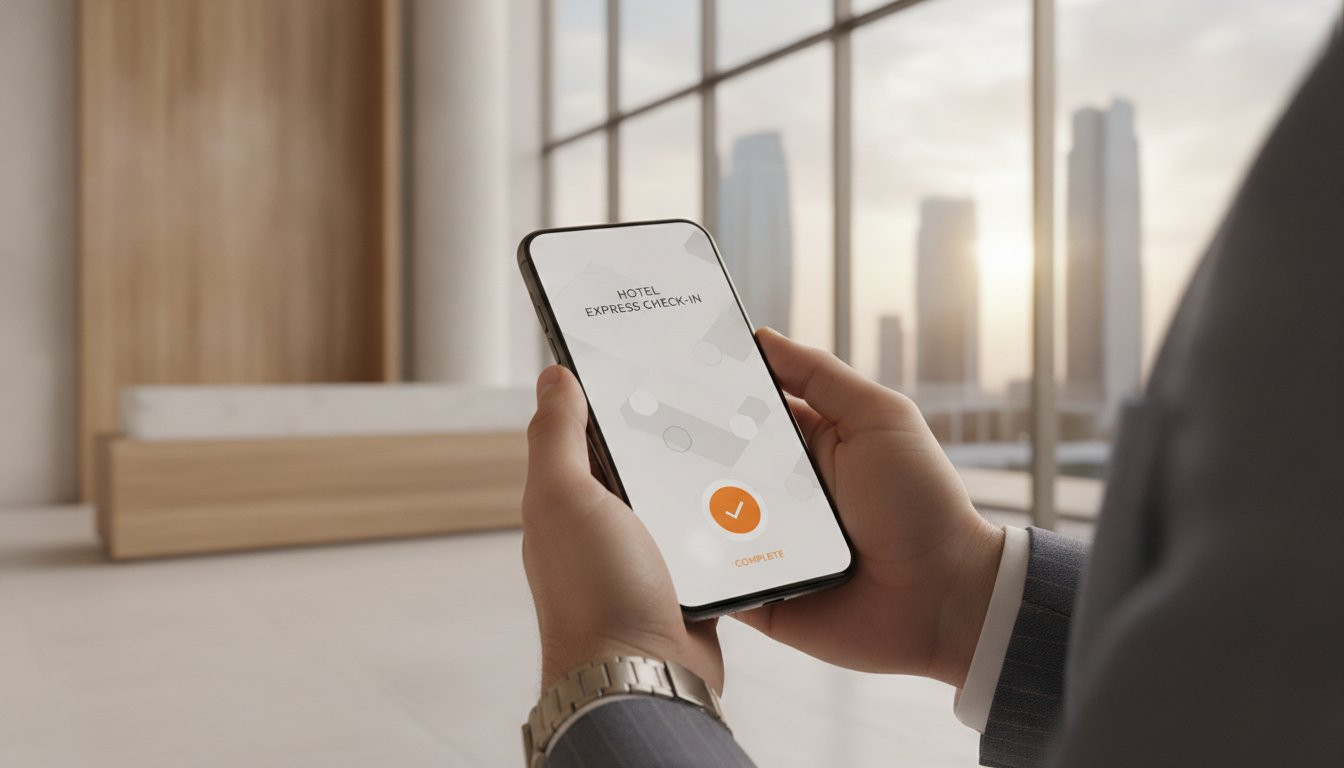
Digital signage improves the check-in process by providing clear visual instructions and real-time wait-time estimates. This reduces perceived wait times and lowers guest anxiety during peak arrival periods. By displaying QR codes for mobile check-in via the 1.Hotel app, you can divert traffic from the front desk. Interactive kiosks and wayfinding displays also help guests navigate to their rooms independently, creating a smoother and more professional first impression of your property’s service standards.
What are the benefits of integrating digital signage with IPTV systems?
Integrating signage with our 1.TV module creates a unified information ecosystem across public areas and guest rooms. This synergy ensures that promotions seen in the lobby are reinforced on the guest room television, creating a consistent narrative throughout the stay. It provides a single source of truth for all property information, reducing staff burden and guest confusion. This integrated approach maximizes the impact of your communication strategy and enhances the overall guest journey through intentional technology design.
14 Comments on “The Comprehensive Guide to Hotel Digital Signage Software in 2026”