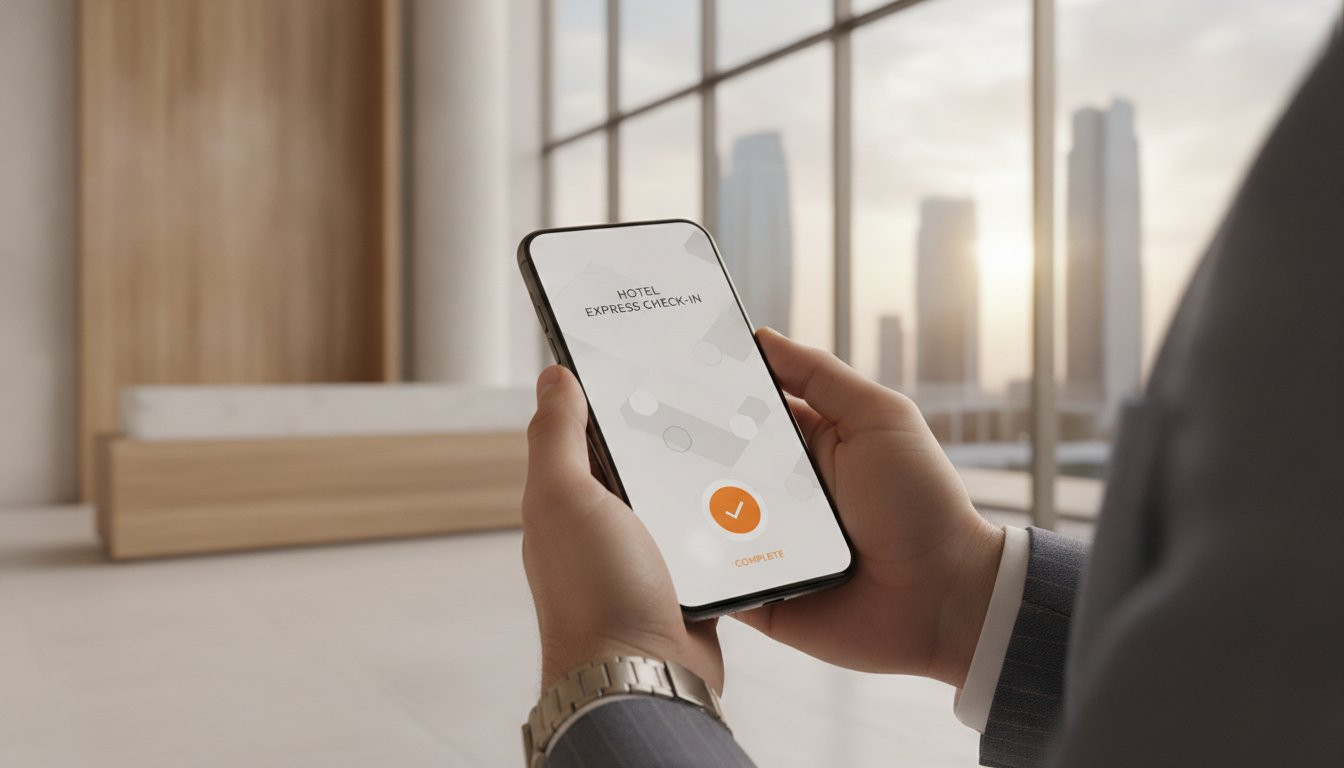
Did you know that guests who wait longer than 10 minutes at your reception desk typically spend 23% less during the remainder of their stay? In an era where guest satisfaction is the primary driver of revenue, lobby congestion isn’t just an operational hurdle; it’s a direct threat to your bottom line. Many operators struggle with high staff turnover and manual data entry errors that prolong the registration process. Implementing effective reduce guest check-in time solutions is no longer a luxury but a strategic necessity for maintaining a competitive edge in the global hospitality market.
We understand that managing a front desk during peak arrival windows requires a delicate balance between speed and precision. This article provides a comprehensive framework to eliminate bottlenecks through integrated technology and automated data capture. You’ll discover how tools like 1.ID and the 1.Hotel guest app can transform your lobby into a seamless, paperless environment. We’ll explore the move toward 100% accuracy in identity verification and how to significantly reduce the administrative workload on your staff, ensuring every guest begins their stay with a positive, efficient experience.
Key Takeaways
- Understand the direct correlation between front-desk wait times and total guest spend during their stay.
- Explore how reduce guest check-in time solutions like 1.ID automate passport scanning to eliminate manual entry errors and ensure regulatory compliance.
- Evaluate the advantages of mobile-first registration via the 1.Hotel app compared to traditional kiosks for higher guest adoption rates.
- Follow a structured five-step implementation plan to audit your current registration flow and integrate modular technology with your existing PMS.
- Learn how to transition saved operational time into high-value guest rapport and seamless in-room entertainment through 1.TV.
Why Reducing Guest Check-in Time is Critical for Hotel ROI
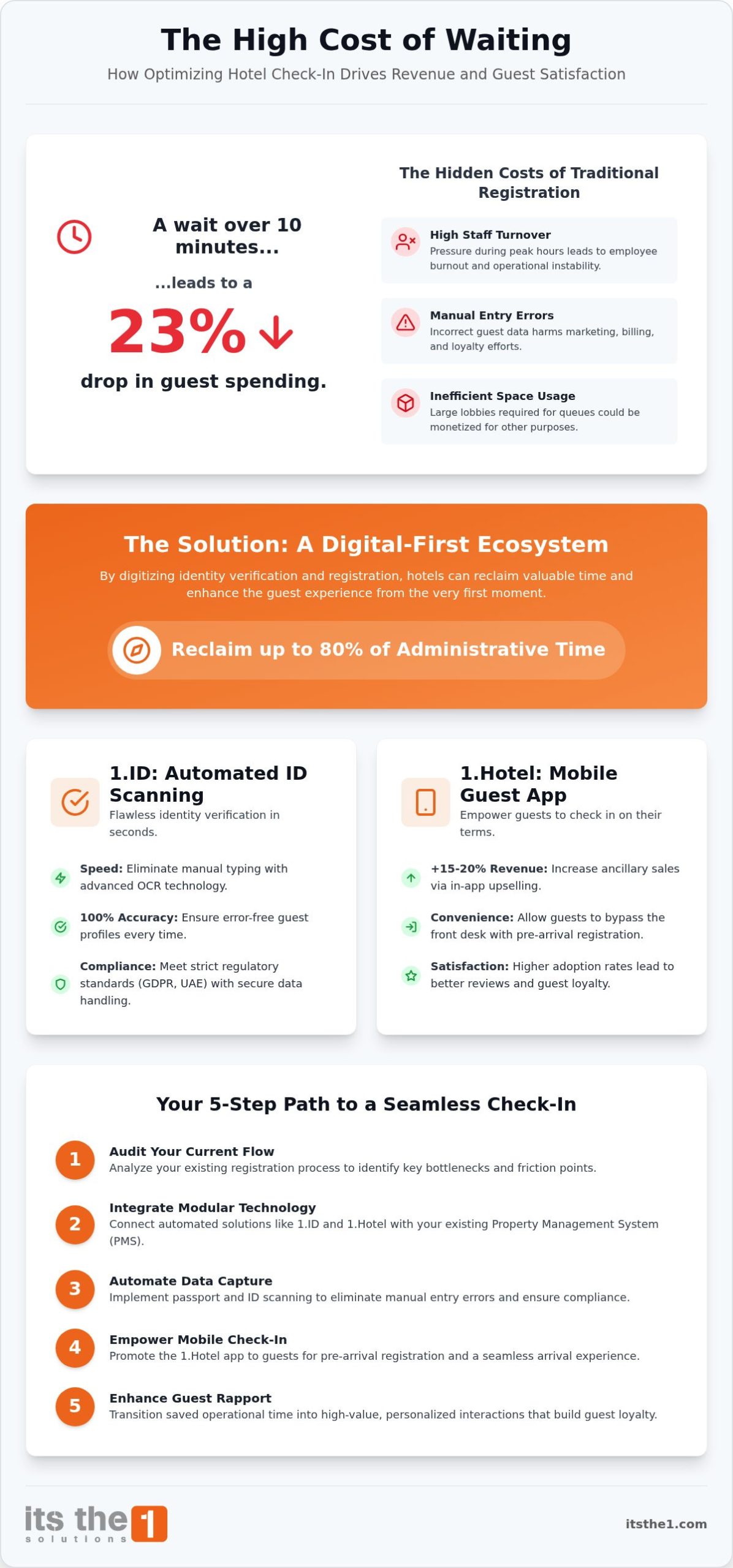
Lobby congestion represents more than just a logistical inconvenience; it’s a critical friction point that determines a guest’s long-term value to your property. This friction point is defined as the temporal gap between a guest’s arrival on-site and their eventual entry into their room. Modernizing the check-in process is no longer optional for hotels aiming to preserve their margins. Research from 2026 indicates that guests who wait more than 10 minutes at reception spend 23% less during their stay. This immediate drop in ancillary revenue highlights why seeking robust reduce guest check-in time solutions is a priority for stakeholders focused on operational excellence.
Beyond the guest experience, manual registration flows place an immense burden on front-desk personnel. During peak arrival windows, the pressure to process guests quickly while maintaining accuracy leads to high staff turnover and burnout. By implementing automated support, such as 1.AI to assist staff with repetitive queries, hotels can stabilize their workforce. A more composed and professional environment isn’t just better for employees; it’s essential for maintaining the high-level service standards that guests expect from an industry leader.
The Hidden Costs of Traditional Registration
The financial impact of manual registration extends far beyond visible queues. Repetitive manual typing into a Property Management System (PMS) consumes thousands of labor hours annually. These are hours that your team could redirect toward high-value guest interactions. Manual entry is also inherently prone to human error. Incorrect guest profiles lead to failed marketing campaigns, billing discrepancies, and lost loyalty data. There is also the matter of physical real estate. Properties that rely on manual flows often require larger lobby footprints to accommodate queues. This is a significant overhead in a competitive market where every square meter of floor space must generate maximum value.
Regulatory Compliance and Data Security
In the current regulatory environment, meeting national standards for guest identity verification is a non-negotiable requirement. Manual handling of sensitive documents like passports or national IDs increases the risk of data breaches and non-compliance with global standards like GDPR. Modern reduce guest check-in time solutions, such as 1.ID, provide a secure path forward. These tools allow for high-speed, 100% accurate data capture while ensuring that guest information is processed through encrypted, compliant channels. Speed and security aren’t mutually exclusive; they’re the twin pillars of a modern, automated registration strategy that protects both the guest and the brand. For a deeper understanding of how to balance regulatory demands with guest convenience, our secure identity verification for hotels strategic guide provides a comprehensive roadmap for 2026.
Technology Solutions to Reduce Guest Check-in Time
Modern hospitality requires a shift from manual processing to a digital-first ecosystem. While many properties focus solely on physical lobby layout, the most effective reduce guest check-in time solutions prioritize the automation of data capture. A balanced approach integrates modern technology and traditional solutions to address the specific bottlenecks that occur during peak arrival hours. By digitizing the identity verification and registration stages, hotels can reclaim up to 80% of the time previously lost to manual administrative tasks.
1.ID: Automating Passport and ID Scanning
The primary delay in the registration process is often the collection and entry of guest identity data. 1.ID utilizes advanced Optical Character Recognition (OCR) technology to eliminate the need for manual typing. This system allows front-desk staff to scan a passport or national ID and populate the Property Management System (PMS) in seconds rather than minutes. Beyond speed, 1.ID ensures 100% accuracy in guest profiles, which is essential for meeting strict UAE regulatory reporting standards. This level of precision minimizes the risk of data discrepancies that often complicate billing or future marketing efforts. Properties seeking to implement secure identity verification for hotels will find that automated scanning technology is the cornerstone of both compliance and operational efficiency.
Mobile Check-in and Digital Keys
The 1.Hotel guest app facilitates a pre-arrival registration flow that allows guests to complete the necessary paperwork before they even reach the property. This mobile-first strategy empowers guests to bypass the front desk entirely when integrated with digital key technology. Key benefits of this approach include:
- Increased Revenue: Properties report a 15-20% increase in ancillary revenue through targeted upselling within the 1.Hotel app during the check-in flow.
- Higher Satisfaction: Hotels with high digital adoption rates see Net Promoter Scores (NPS) rise by 15-20 points.
- Staff Efficiency: 1.AI acts as a support mechanism, handling routine guest inquiries so that staff can focus on high-touch hospitality.
Implementing these reduce guest check-in time solutions requires a strategic partner who understands the complexities of the regional market. If you’re looking to streamline your operations, exploring an integrated hospitality suite can provide the modular tools necessary for a successful digital transformation.
Comparison: Mobile Apps vs. Kiosks vs. Front-Desk Automation
Selecting the appropriate technology involves balancing operational efficiency with your property’s service philosophy. While mobile apps, kiosks, and front-desk automation all represent effective reduce guest check-in time solutions, they require different levels of capital expenditure and staff involvement. Decision-makers must evaluate whether their priority is a fully contactless journey or an accelerated version of the traditional welcome experience. Understanding the trade-offs between these formats is essential for a successful digital transformation.
Hardware-heavy solutions like kiosks involve significant upfront costs and ongoing maintenance requirements. In contrast, software-driven platforms like 1.Hotel provide a more modular and scalable alternative that leverages the guest’s own device. Integration complexity also varies across these tiers. Modern software typically connects to existing Property Management Systems (PMS) via cloud-based APIs, whereas physical hardware may require specialized on-site configuration and more frequent troubleshooting by IT teams.
Guest adoption rates often follow demographic and behavioral trends. Younger travelers frequently gravitate toward the 1.Hotel app for its convenience and digital key integration. Conversely, physical kiosks serve a broader audience who may prefer self-service but haven’t engaged with pre-arrival digital communications. Staff involvement remains a factor in all scenarios; even with kiosks, a lobby ambassador is often necessary to assist guests, whereas front-desk automation focuses on empowering the existing team to work faster.
When to Choose Self-Service Kiosks
Physical kiosks are particularly effective for high-volume, budget, or mid-scale properties where guests prioritize speed over personalized interaction. These units shift the data entry workload entirely to the guest, effectively acting as an additional front-desk lane during peak hours. However, they don’t just require an initial investment; they also demand physical lobby space and regular technical upkeep. To maintain a “human touch,” many properties station a support person near the kiosks to assist with troubleshooting. This ensures that automation doesn’t feel like abandonment for guests who encounter issues.
The Case for Front-Desk Automation (1.ID)
Luxury and boutique properties often prefer front-desk automation because it preserves the high-touch, face-to-face welcome that guests expect. By utilizing 1.ID, staff can handle the mandatory identity verification process in seconds without requiring guests to change their behavior or download an app. This approach is ideal for properties with strict regulatory requirements. It ensures 100% data accuracy while keeping the focus on the guest-host relationship rather than a screen. It’s a strategic way to implement reduce guest check-in time solutions without sacrificing the premium, personalized experience that defines your brand.
5 Steps to Implement a Faster Check-in Flow
Transitioning from a traditional manual setup to a modernized digital flow requires a structured implementation strategy. Hotels must look beyond surface-level changes and address the core data-entry bottlenecks that define the guest’s first impression. By following a methodical five-step plan, operators can implement effective reduce guest check-in time solutions that enhance both operational precision and guest satisfaction. This transition isn’t just about speed; it’s about re-engineering the entire arrival experience to favor hospitality over administration.
Step 1: The Process Audit
Successful transformation begins with a rigorous internal audit. Management should time individual check-ins from the initial greeting to the final key handover to establish a baseline. Pay close attention to “dead time” where guests are left waiting while staff interact with printers, scanners, or legacy software interfaces. Surveying guests about their specific lobby frustrations often reveals that the wait itself is less irritating than the perceived lack of progress during manual data entry. Understanding these specific pain points allows you to select modular software that integrates seamlessly with your current PMS.
Step 3: Deploying 1.ID for Instant Registration
The most immediate reduction in wait times comes from automating the identity verification process. Deploying 1.ID involves setting up high-speed scanning hardware at each front-desk station. Once connected to the PMS, the scanner enables real-time profile creation. This allows staff to adopt a “Scan and Greet” workflow, where the administrative work is finished in seconds. This shift allows the team to maintain eye contact and build rapport rather than staring at a computer screen. It’s a fundamental change in how the front desk operates, moving from a transaction-based model to a relationship-based one.
Parallel to on-site automation, hotels should implement a mobile-first pre-registration strategy using the 1.Hotel app. This enables guests to complete the bulk of their registration before arrival, effectively moving the queue out of the lobby. Finally, staff training must evolve to match this new technology. Your team should transition from being data entry clerks to “Lobby Ambassadors” who focus on high-value hospitality and personalized service. By leveraging these reduce guest check-in time solutions, your staff can finally focus on the guest experience rather than the paperwork. If you are ready to modernize your guest arrival experience, you can explore our integrated hospitality suite to find the right tools for your property.
Beyond the Lobby: Enhancing the Full Guest Journey
The ultimate objective of implementing reduce guest check-in time solutions is to redirect operational focus from administrative tasks to personalized hospitality. Once you’ve eliminated the manual data entry bottleneck, your front-desk team can engage in meaningful rapport building that drives loyalty. This shift ensures the guest journey remains fluid from the moment they step into the lobby until they enter their room. By integrating the registration process with a broader digital ecosystem, you create a cohesive experience that feels intentional and well-mapped. It’s about ensuring that the professional welcome guests receive at the desk translates into a superior stay.
Engaging Guests via 1.TV and Digital Signage
The transition from the lobby to the guest room shouldn’t feel like a break in the experience. 1.TV allows properties to personalize the in-room welcome screen immediately after a guest completes their registration. This continuity reinforces the professional image of your brand. In the hallways and common areas, 1.DSMM acts as a digital guide, directing guests to their rooms or hotel facilities without requiring them to search for physical signage or ask staff for directions. To further reduce repetitive queries at the front desk, 1.Menu provides digital access to dining options and hotel services directly on the guest’s device or the in-room screen. These modular components work together to ensure that the efficiency gained at the entrance is maintained throughout the stay.
Staff Efficiency with 1.Support and 1.AI
Post-arrival support is just as critical as the initial welcome. 1.Support streamlines guest requests through a dedicated ticketing app, ensuring that no request is lost in a paper-based system. This level of organization allows your team to maintain a steady, professional rhythm even during high-occupancy periods. To assist staff with the volume of local inquiries and hotel FAQs, 1.AI serves as a sophisticated assistant that provides instant, researched answers. This tool empowers your team to act as seasoned global experts, providing high-value information that enhances the guest’s stay. It reduces the need for staff to spend time on basic information retrieval, allowing them to focus on complex guest needs.
The final impression is just as vital as the first. By leveraging the same reduce guest check-in time solutions for the check-out process, you ensure a seamless departure. A paperless, automated flow allows guests to settle their accounts and receive digital receipts instantly. This disciplined execution of technology ensures that the guest’s last memory of your property is one of operational excellence and effortless service, encouraging repeat bookings and positive reviews.
Securing Your Competitive Edge through Digital transformation
The evolution of the guest arrival experience is no longer a matter of marginal gains; it’s a fundamental shift toward operational excellence. By implementing strategic reduce guest check-in time solutions, hotels can bridge the gap between mandatory regulatory compliance and premium hospitality. We’ve seen that automating the data capture bottleneck through 1.ID and empowering guests via the 1.Hotel app are the most effective methods to preserve margins while significantly enhancing guest satisfaction scores.
ITSthe1 has acted as a trusted advisor through the complexities of digital evolution since 2003. From our global head office in Dubai, we deliver proprietary software modules and world-class cybersecurity services designed for the rigorous demands of the international hospitality sector. Our commitment to meticulous research and performance ensures that your property’s technical needs are in capable hands. We invite you to request a demo of ITSthe1 Hospitality Solutions to discover how our integrated ecosystem can support your strategic growth. Your journey toward a seamless, paperless check-in flow begins with the right partner.
Frequently Asked Questions
How much can passport scanning software actually reduce check-in time?
Passport scanning software like 1.ID reduces registration time from several minutes to just a few seconds. By automating the capture of guest data through Optical Character Recognition, your staff avoids the delays associated with manual typing. This high-speed processing ensures that the initial friction point at reception is minimized. It allows your team to focus on a professional welcome rather than administrative paperwork, significantly improving the overall arrival experience for every guest.
Is mobile check-in more effective than using self-service kiosks?
Mobile check-in through the 1.Hotel app is often more effective because it removes the queue from the lobby entirely. While kiosks provide a self-service option, they still require physical space and hardware maintenance. Mobile registration allows guests to complete the process before arrival, making it one of the most efficient reduce guest check-in time solutions available. Properties using mobile registration report Net Promoter Scores that are 15-20 points higher than traditional manual properties.
Does automated ID scanning comply with UAE hospitality regulations?
Automated ID scanning is a critical tool for maintaining 100% compliance with UAE hospitality regulations. 1.ID is specifically designed to meet national data submission requirements with absolute precision. Manual handling of sensitive documents increases the risk of human error and data breaches. By using an automated system, hotels ensure that guest registration data is captured accurately and transmitted securely, meeting both local laws and international data privacy standards like GDPR.
Can these solutions integrate with my existing Property Management System (PMS)?
Integration with your existing Property Management System is a standard feature of modular hospitality software. These solutions are engineered to connect seamlessly with most major PMS platforms via cloud-based APIs. This ensures that guest profiles created through 1.ID or the 1.Hotel app are updated in real-time without requiring manual intervention. This synchronization is vital for maintaining operational efficiency and ensuring that guest data remains consistent across all your hotel service modules.
How do guests react to a fully digital or contactless check-in process?
Guests react positively to digital check-in, particularly those who value efficiency. Research from 2026 shows that global guest satisfaction reached 87.3%, driven largely by seamless technology. Many travelers, especially younger generations, expect the convenience of a contactless journey. Providing these options demonstrates that your property is an industry leader that respects the guest’s time. It creates a modern, professional first impression that establishes trust and sets a positive tone for the entire stay.
What is the ROI of implementing a guest engagement app like 1.Hotel?
The Return on Investment for a guest engagement app like 1.Hotel is realized through cost savings and revenue growth. Hotels report a 15-20% increase in revenue by offering targeted upsells during the digital registration flow. Additionally, automating the check-in process can reduce manual front-desk work by up to 80%, saving approximately 4,000 hours per property annually. This efficiency allows you to optimize labor costs and redirect staff toward higher-value guest interactions and strategic goals.
How does AI help front-desk staff during peak check-in hours?
1.AI acts as a support mechanism for staff by handling repetitive guest inquiries and local FAQs instantly. During peak arrival windows, the front-desk team often becomes overwhelmed by routine questions. By delegating these tasks to an AI assistant, your personnel can focus on the technical aspects of the registration process. This reduces staff burnout and ensures that guests receive accurate information without waiting for a human representative to become available, maintaining a steady lobby flow.
Is it possible to have a paperless guest registration process?
A fully paperless registration process is entirely possible through the integration of 1.ID and the 1.Hotel app. These reduce guest check-in time solutions eliminate the need for physical registration cards and printed ID copies. Guests complete their details digitally, and identity verification is handled through high-speed scanning. This transition reduces your property’s environmental footprint and minimizes the security risks associated with paper records. It’s a disciplined approach to modernization that benefits both the guest and the brand.