Did you know that AI-powered guest communication platforms can now automate up to 70% of front desk inquiries? In the competitive UAE hospitality sector, a hotel concierge mobile application has transitioned from a modern luxury to a fundamental requirement for operational stability. You’ve likely experienced the friction caused by high staff turnover or the frustration of managing fragmented systems that fail to communicate. It’s difficult to justify technology spend when guest adoption remains low and previous tools haven’t delivered the promised efficiency.
This 2026 buyer’s guide provides a structured roadmap for selecting a premier guest engagement platform that aligns with your strategic objectives. You’ll discover the essential features and integration requirements needed to drive ancillary revenue through intelligent upselling and significantly reduce front-desk queues. We’ll examine the technical synergy between mobile solutions and existing PMS or IPTV systems to ensure a unified digital ecosystem. Our analysis moves from high-level strategic visions down to the functional modules that ensure your technology stack operates as a cohesive, high-performance asset.
Key Takeaways
- Understand the transition of the guest platform from a digital directory to a critical operational necessity for maintaining service consistency in the UAE market.
- Evaluate the core functionalities of a premier hotel concierge mobile application, focusing on high-impact modules like digital check-in and mobile keys that enhance guest autonomy.
- Identify the technical requirements for a unified ecosystem, specifically the importance of bi-directional synchronization with Property Management Systems (PMS) to prevent fragmented data.
- Follow a structured implementation roadmap that prioritizes a comprehensive technical audit and precise brand alignment to ensure high guest adoption rates.
- Discover how modular architectures, such as the 1.Hotel suite, drive measurable ROI by automating ancillary revenue streams through intelligent in-app dining and spa bookings.
The Strategic Role of a Hotel Concierge Mobile Application in 2026
In the evolving landscape of 2026, the digital guest journey has undergone a fundamental transformation. A hotel concierge mobile application is no longer a static digital directory or an optional luxury reserved for high-tier properties. It’s now the backbone of operational stability. As the UAE hospitality sector faces a competitive environment and shifting labor dynamics, this technology bridges the gap between limited staffing and rising guest demands. While traditional concierge services once relied entirely on manual interaction, the modern digital equivalent provides a level of speed and precision that manual processes can’t match. This shift directly influences Net Promoter Scores (NPS) by replacing wait times with instant, high-value resolutions.
Meeting the Demands of the 2026 Guest
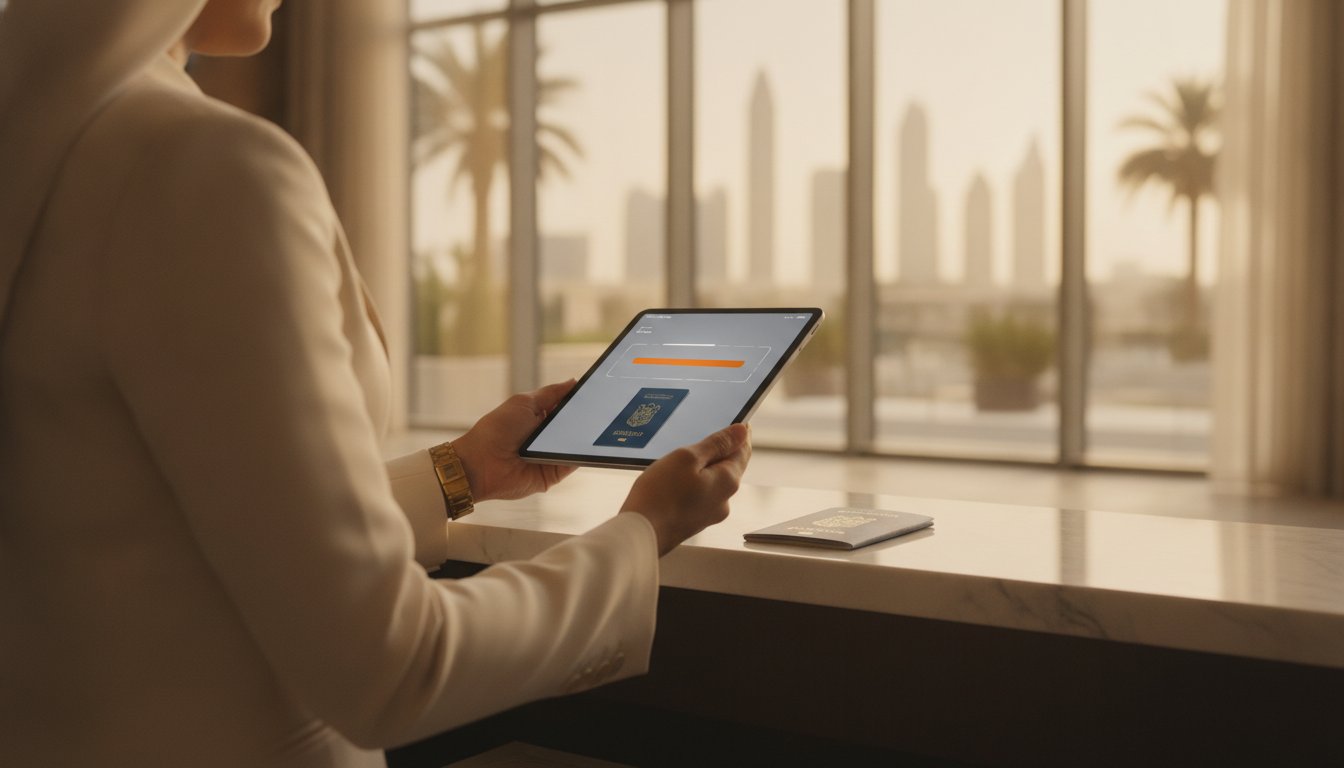
Guests in 2026 prioritize digital autonomy. This “Invisible Service” trend means many travelers prefer managing their stay through a screen rather than queuing at a desk. Hyper-personalization is the standard. By utilizing data from previous stays or preferences, properties can anticipate needs before a guest even articulates them. Whether it’s suggesting a specific spa treatment or pre-filling a dinner reservation, real-time responsiveness serves as a critical differentiator in the luxury segment. It fosters a sense of being understood, which is the cornerstone of long-term loyalty.
Operational Efficiency and Labour Optimisation
Labour shortages remain a persistent challenge for hotel operators across the region. Automated pre-arrival and check-in processes remove significant friction from the front desk, allowing lean teams to focus on complex guest interactions rather than administrative data entry. Task routing ensures that service requests reach the correct department instantly, eliminating the communication lag that often leads to service failures. Research indicates that AI-powered communication platforms can resolve up to 70% of front desk inquiries automatically. This efficiency isn’t just about cost reduction; it’s about maintaining service standards during peak periods. The hotel concierge mobile application functions as a central hub for guest-staff synchronisation, ensuring every request is tracked and fulfilled with surgical precision.
Core Functionalities to Evaluate in Your Selection Process
Selecting a hotel concierge mobile application requires a shift in focus from mere aesthetics to functional efficacy and measurable ROI. While a polished interface is necessary for guest adoption, the underlying architecture must support complex operational workflows. A premier solution prioritizes guest autonomy through modules like mobile keys and digital check-in, which are essential for streamlining hotel management with mobile apps. These features don’t just improve the guest journey; they liberate your team from repetitive administrative tasks. High-performance UI design ensures that these tools are accessible to all demographics, reducing the learning curve for your guests.
Many platforms overlook the staff experience. A robust system includes sophisticated staff-facing capabilities such as real-time ticket tracking and AI-driven assistance. For instance, the 1.AI module acts as a digital helper for hospitality staff, providing instant access to operational data and guest preferences. This ensures that even during high-occupancy periods, service quality remains consistent across all departments. By empowering lean teams with automated task routing, you can maintain a premium service standard without a proportional increase in headcount.
Guest Engagement and Communication Tools
Modern guests expect omnichannel communication. Your hotel concierge mobile application should integrate seamlessly with WhatsApp, SMS, and in-app chat to meet guests on their preferred platforms. AI-powered chatbots are no longer optional; they now handle up to 70% of hospitality-specific FAQs, ensuring 24/7 responsiveness. Strategic push notifications also play a vital role. When timed correctly, these alerts drive engagement without feeling intrusive, reminding guests of available services at the precise moment they’re most likely to book a spa treatment or a late check-out.
Revenue Generation and Upselling
The platform must serve as a high-conversion sales tool. Dynamic upselling modules analyze real-time availability to offer room upgrades at optimized price points. Integration with 1.Menu allows for digital F&B ordering, where guests can browse high-resolution images and place orders directly into the POS system. This reduces order errors and increases the average transaction value. By capturing guest data, you can create targeted promotional offers that resonate with specific traveler segments, turning a standard stay into a high-revenue experience. To see how these modules work in a unified ecosystem, you might consider how a modular hospitality suite can be tailored to your property’s specific needs.
Integration and Ecosystem: Ensuring a Unified Tech Stack
A siloed hotel concierge mobile application often becomes a liability rather than an asset. When guest data is trapped in a standalone tool, it creates friction for both the user and the operations team. True digital transformation requires a bi-directional sync between the Property Management System (PMS) and the mobile interface. This ensures that room availability, guest profiles, and billing information remain accurate in real-time. Without this connection, staff must manually reconcile data, which increases the risk of error and diminishes the guest experience.
Integration shouldn’t stop at the PMS. Connecting the application to the in-room 1.TV system creates a multi-screen environment where guests can move from browsing on their phone to ordering on the big screen. This level of interconnectivity ensures that the digital journey is continuous and frictionless. It allows for a cohesive experience where the guest feels supported throughout every stage of their stay.
The Power of Modular Interconnectivity
In a unified ecosystem, 1.Hotel acts as the “remote control” for the entire guest stay. This modular approach allows for seamless synchronization with 1.DSMM, ensuring that promotions viewed on a guest’s mobile device are mirrored on digital signage in physical spaces throughout the property. This consistency reinforces branding and increases the likelihood of conversion for ancillary services. By aligning these digital touchpoints, hotels create a cohesive narrative that guides the guest toward high-value experiences without redundant communication.
Data-Driven Decision Making
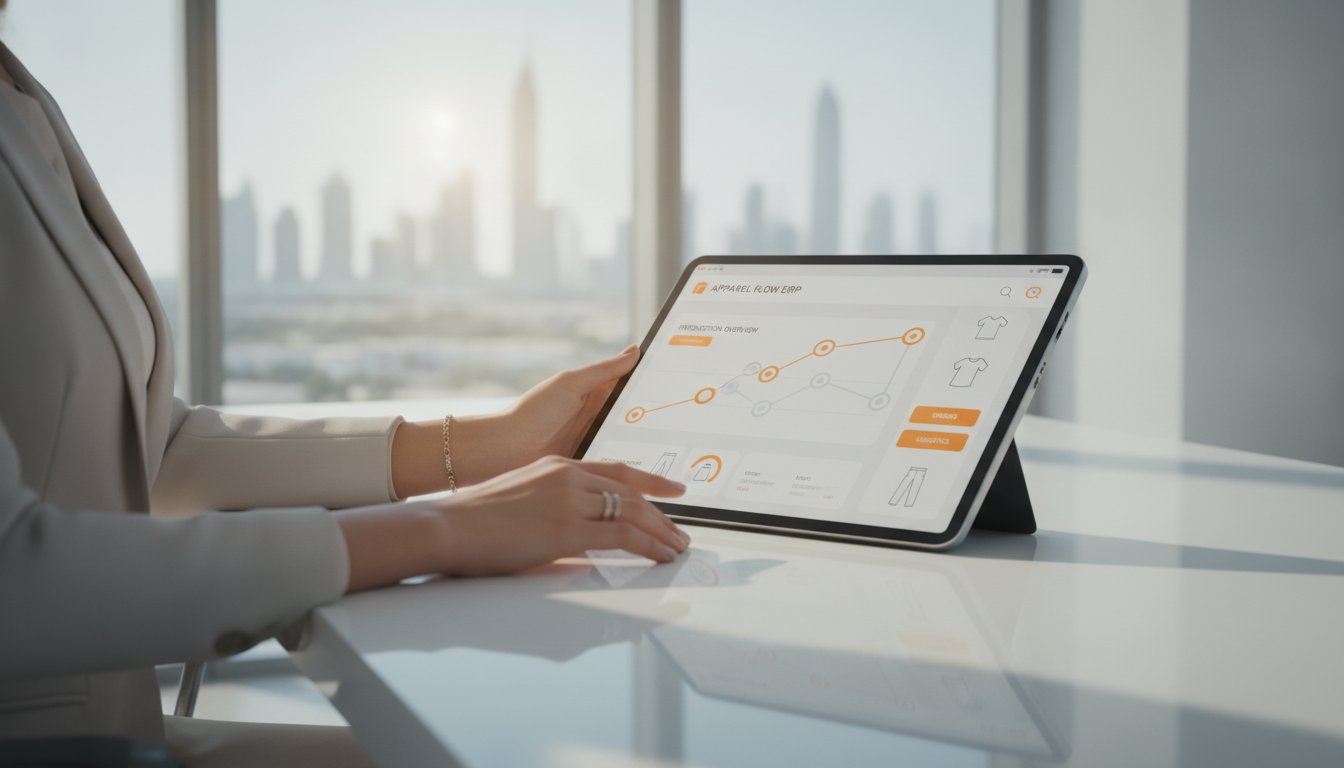
Centralizing guest preferences across all digital touchpoints enables a level of service that was previously unattainable. By monitoring request fulfillment times and staff performance through real-time analytics, management can identify operational bottlenecks before they impact the guest. Leveraging 1.AI allows the system to predict potential service failures, enabling proactive interventions that protect the property’s reputation. These insights aren’t just historical; they provide a forward-looking view of guest behavior and operational health.
Operating in a cloud-based environment necessitates a rigorous approach to data security and compliance. Protecting guest information isn’t just a legal requirement in the UAE; it’s a fundamental component of brand trust. Investing in a secure hotel concierge mobile application ensures that every interaction, from a room service order to a digital key request, is encrypted and handled with the highest level of integrity. This composed approach to security instills confidence in both the operator and the guest.
Implementation Roadmap: From Selection to Guest Adoption
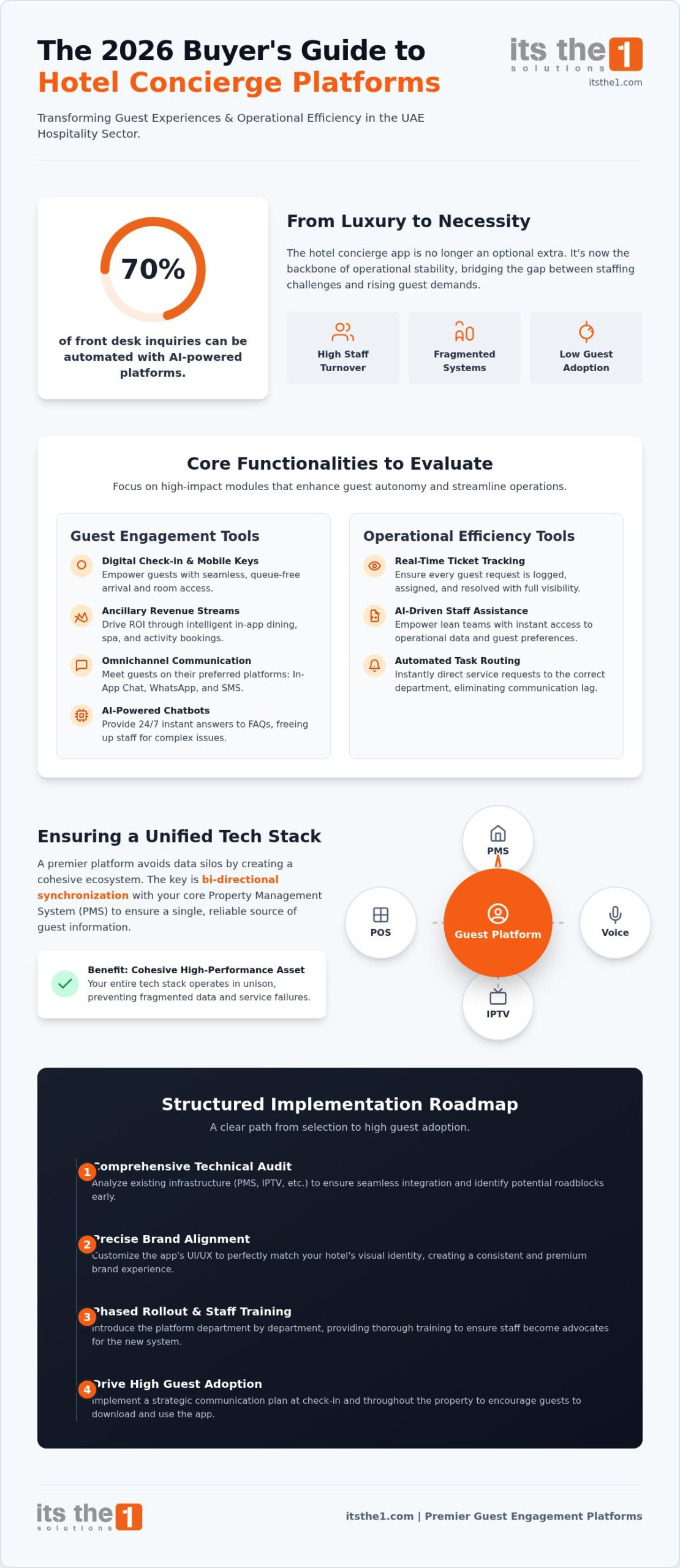
The deployment of a hotel concierge mobile application begins with a rigorous technical audit. We must assess infrastructure readiness, ensuring that Wi-Fi coverage is robust and that cloud-based security protocols align with UAE data protection standards. Once the technical foundation is secure, Phase 2 focuses on customization. Your digital interface should be a seamless extension of your brand identity, not a disconnected third-party tool. This alignment ensures that guests feel a sense of continuity from the moment they book until they check out.
Staff training and internal change management represent Phase 3. It’s vital to demonstrate how the platform reduces administrative friction for your team. Finally, the launch phase requires a multi-channel marketing strategy to drive guest adoption. This methodical progression ensures that the technology serves its intended purpose without disrupting existing workflows. To ensure your property is ready for this digital transition, you can consult with our digital transformation specialists to map out your specific infrastructure requirements.
Overcoming the “App Download” Hurdle
High download rates are achieved through strategic visibility. Placing QR codes on 1.DSMM digital signage and 1.TV screens allows for instant access without the friction of searching an app store. Incentivizing usage is equally effective. Offering “mobile-only” perks, such as a د.إ 50 credit for in-app dining or a priority late check-out, provides immediate value. The front desk team remains your most influential advocate; their ability to “sell” the app during the arrival experience is the primary driver of initial guest engagement. When guests understand that the app is the fastest route to service, adoption follows naturally.
Training and Staff Buy-In
Successful adoption requires staff to view the app as a partner rather than a burden. You should establish clear protocols for responding to digital guest requests to ensure no inquiry is missed. When the team sees that the system can automate a significant portion of standard queries, their buy-in increases. This allows them to focus on high-value guest interactions that require a human touch. Continuous improvement is maintained through guest feedback loops, allowing for modular updates that refine the user experience over time. By treating the app as an evolving asset, you ensure its long-term utility for both guests and staff.
Elevating Guest Experiences with ITSthe1 Solutions’ 1.Hotel Solution
ITSthe1 Solutions introduces 1.Hotel as a comprehensive guest and staff engagement platform that transcends the standard hotel concierge mobile application. Established in 1999, our organization brings decades of hospitality expertise and a significant global presence, including a strong footprint in the UAE, London, and Sri Lanka. We operate as a trusted advisor, guiding properties through the complexities of digital evolution with a focus on reliability and operational excellence. Our modular architecture allows you to deploy core concierge features today while maintaining the flexibility to integrate 1.TV for IPTV or 1.AI for intelligent automation as your operational needs evolve. This research-driven approach ensures that your digital transformation remains both cost-effective and strategically aligned with your overarching business goals.
AI-Powered Staff Assistance
1.AI supports your team by providing a consistent framework for expert-level service across all departments. This module acts as an intelligent helper for hospitality staff, offering instant access to guest data and preferences that would otherwise require manual retrieval. By automating complex ticketing and helpdesk requests through the 1.Support platform, we eliminate the risk of service delays and communication gaps. The synergy between human hospitality and intelligent automation allows your lean teams to maintain high standards even during the busiest seasons in the UAE. This technology doesn’t replace the human touch; it empowers your staff to deliver it more effectively by removing repetitive administrative burdens.
Partnering for Long-Term Success
Our commitment to your property extends far beyond the initial implementation phase. We provide managed IT support and ongoing professional consulting services to ensure your technology stack remains a high-performing asset. These tailored solutions are specifically designed for large-scale resorts and enterprise hotel groups that demand stability, security, and global scalability. We prioritize a philosophy of meticulous research and testing to ensure that every module within the 1.Hotel suite performs with surgical precision. Our established presence across multiple regions reinforces our status as a global player capable of supporting complex technical needs. If you’re ready to modernize your guest journey with a platform built for the future of hospitality, you can book a consultation to see 1.Hotel in action.
Future-Proofing Your Property with Integrated Guest Technology
Selecting a hotel concierge mobile application is a strategic decision that influences both operational efficiency and long-term guest loyalty. We’ve explored how a unified digital ecosystem replaces fragmented systems with a cohesive platform that automates routine interactions. By prioritizing bi-directional PMS integration and modular scalability, you ensure your property is equipped to handle the evolving demands of the 2026 traveler while reducing the administrative burden on your team.
ITSthe1 has been a trusted advisor for global hospitality brands since 1999. Our comprehensive 1.Hotel suite provides the technical foundation needed for national-scale digital transformation, offering seamless synergy between IPTV, AI, and mobile services. Our expert consultants are ready to guide you through every phase of the implementation roadmap to ensure a successful launch and high guest adoption. Explore our 1.Hotel guest engagement suite to begin your journey toward operational excellence. We’re committed to your long-term success in this dynamic digital landscape.
Frequently Asked Questions
What is the difference between a mobile concierge and a guest messaging app?
A mobile concierge is a comprehensive hospitality ecosystem, whereas a guest messaging app is strictly a communication channel. While messaging apps facilitate chat, a hotel concierge mobile application provides functional depth through features like digital check-in, mobile keys, and service automation. It acts as a centralized interface for the entire guest stay, integrating directly with operational workflows to manage requests beyond simple text-based inquiries.
Does a hotel concierge mobile application require guests to download software from an app store?
Not all platforms require a native app store download. Many modern solutions offer web-based access via QR codes, allowing guests to use features instantly on their mobile browsers. However, certain advanced functionalities, such as Bluetooth-enabled mobile keys, typically perform more reliably within a native application. Properties often provide both options to maximize guest adoption while maintaining a high standard of technical performance.
How does concierge software integrate with my existing Property Management System (PMS)?
Concierge software integrates with your Property Management System through a bi-directional API connection. This ensures that guest profiles, room assignments, and billing details are synchronized in real-time. When a guest makes an in-app purchase or requests a room upgrade, the data writes back to the PMS automatically. This synchronization eliminates manual data entry and prevents service discrepancies across your various digital touchpoints.
Can a concierge app help increase my hotel’s ancillary revenue?
A concierge app significantly boosts ancillary revenue by placing upselling opportunities directly in the guest’s hand. By integrating tools like 1.Menu for digital F&B ordering and automated spa booking modules, hotels can capture impulse purchases that might otherwise be lost. Targeted push notifications can also alert guests to time-sensitive offers, such as late check-outs or happy hour promotions, maximizing the yield from each room stay.
Is guest data secure when using a mobile concierge application?
Guest data is protected through enterprise-grade encryption and rigorous cloud security protocols. Solutions designed for the UAE market must comply with local data residency and privacy regulations to ensure guest information remains confidential. By utilizing a secure hotel concierge mobile application, properties mitigate the risks associated with manual data handling, ensuring that every transaction and personal preference is stored within a hardened, compliant environment.
How long does it typically take to implement a concierge app in a large-scale hotel?
Implementation typically spans a period of 4 to 8 weeks for large-scale hotels. This timeline accounts for the initial technical audit, PMS integration, and the customization of the user interface to align with your brand identity. Complex environments requiring extensive synchronization with IPTV systems like 1.TV or digital signage might require additional testing phases to ensure the entire ecosystem operates with the reliability expected of a premier property.
What happens if a guest chooses not to use the mobile application?
If a guest declines to use the digital platform, your property maintains its standard manual service protocols. The application is designed to complement, not replace, traditional hospitality. By migrating a significant portion of routine inquiries to the digital interface, your staff gains the capacity to provide more personalized, face-to-face attention to those guests who prefer human interaction. This hybrid approach ensures that service quality remains consistent for all demographics.
What staff training is required for a new concierge software rollout?
Staff training focuses on managing the backend dashboard and responding to automated ticket routing through platforms like 1.Support. Your team must understand how to interpret real-time analytics and utilize 1.AI assistants to resolve guest requests more efficiently. Training programs are structured to demonstrate how the technology reduces administrative burdens, ensuring that employees are confident in using the system to maintain operational excellence from the day of launch.