There is no single, blanket IT compliance test established as mandatory for every hotel in Dubai. Hotel IT compliance in UAE depends on the requirements that apply to each property and whether its systems and processes can demonstrate effective controls.
That distinction matters: the absence of one universal test does not remove the need to manage compliance risks across hotel operations. PMS permissions, revenue records, guest information and maintenance data all affect how well a hotel protects information and demonstrates its controls.
This article explains what the testing question means for Dubai hotels, how PMS access and reconciliation controls support compliance, and why UAE data residency and maintenance-data security warrant attention. It also covers how cyber security and cloud services can support a structured approach, without treating any specific test as a substitute for a hotel’s wider obligations.
Key Takeaways
- Separate a blanket compliance test from the controls and evidence your hotel needs to demonstrate across its operations.
- Review PMS access permissions and revenue records to identify control gaps before they complicate an audit.
- Assess where guest and maintenance data is stored, who can access it, and how it is protected.
- See how hospitality technology, including IPTV systems, fits into a broader approach to secure hotel operations.
Hotel property-management-system controls
A Dubai hotel’s PMS supports bookings and financial records. Review its access, revenue, and guest-data controls to identify operational gaps.
Hotel Cybersecurity Controls
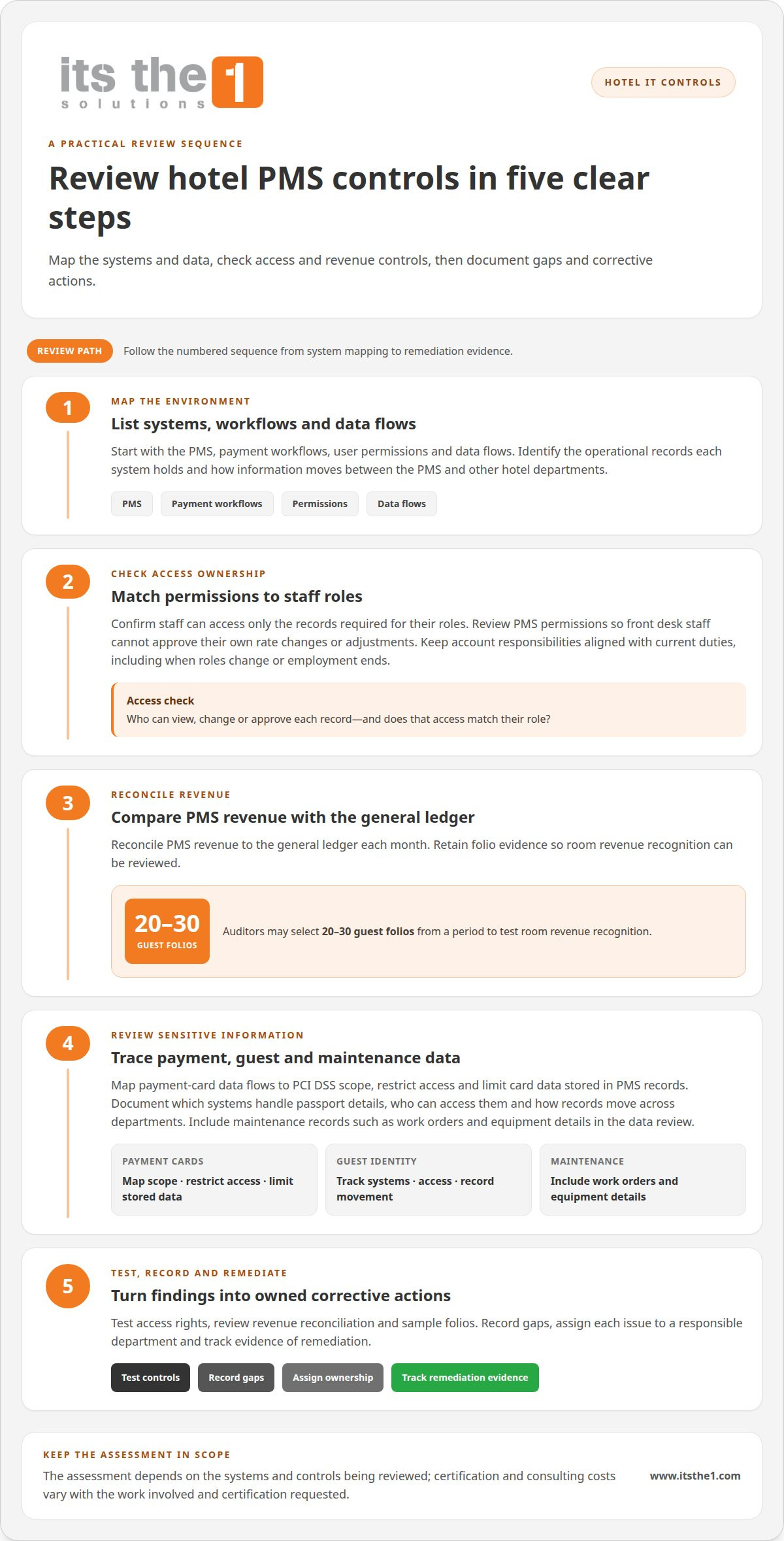
Cybersecurity controls protect hotel systems and the information they process. Review PMS permissions so front desk staff cannot approve their own rate changes or adjustments. Reconcile PMS revenue to the general ledger each month, and retain folio evidence: auditors may select 20-30 guest folios from a period to test room revenue recognition. For payment cards, map data flows to PCI DSS scope, restrict access, and limit card data stored in PMS records.
Guest Identity and Check-In Data
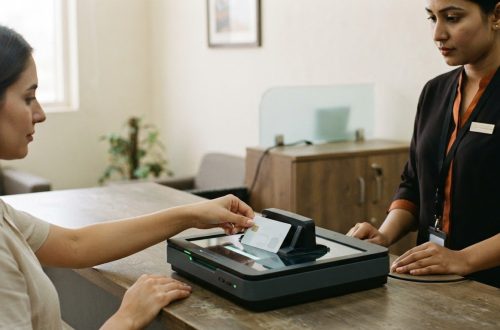
Guest identity and check-in data include personal records used during a stay. Dubai hotels must protect guest information, including passport and ID data, with secure systems. Apply access controls so staff can view only the records required for their roles, and keep check-in information within approved workflows. For effective oversight, document which systems handle passport details, who can access them, and how records move between the PMS and other hotel departments.
Compliance Assessment and Certification
A compliance assessment compares hotel systems and procedures with applicable controls, then records gaps and corrective actions. Start by mapping the PMS, payment workflows, user permissions and data flows. Test access rights, reconcile revenue and review sample folios. Assign each issue to a responsible department and track evidence of remediation. The scope of an assessment depends on the systems and controls being reviewed, while certification and consulting costs vary with the work involved and the certification requested. There is no single cost that fits every hotel.
UAE data residency and maintenance-data security
Hotel systems can hold guest records and operational data. Map where information is stored, accessed, and used across each property.
Data Residency Requirements
Data residency refers to where digital records are stored and accessed. Mapping these locations helps a hospitality business understand information flows and manage guest-data risks. For example, document whether a booking platform, backup or support connection processes guest preferences outside the hotel’s network. Restrict access to business needs, and include maintenance records such as work orders and equipment details in the same review.
Federal Hotel IT Regulations
Federal requirements can affect hotel operations and the staff processes connected to IT systems. UAE Federal Decree-Law No. 33 of 2021 regulates employment relationships, making clear staff access ownership important when roles change or employment ends. Keep account responsibilities aligned with current duties, and retain records showing who is responsible for operational systems. Guest information and payment details also need secure handling as digital hospitality services expand.
Emirate-Specific Compliance Rules
Hotel licensing and classification are administered through emirate-level authorities, so compliance records can vary by location. Dubai hotels must be licensed and classified by the Department of Tourism & Commerce Marketing; other emirates have equivalent bodies, such as DCT Abu Dhabi. A hotel group operating across emirates should map each property’s authority, permits, inspections, and evidence requirements. This helps keep IT records aligned with local operating processes, including restaurant, hygiene, and fire-safety documentation. For a focused review of digital safeguards, consider hotel cyber security support.
What UAE federal laws and regulations apply to hotel IT compliance?
Hotel compliance in the UAE draws on laws governing specific operations, not one universal IT test. The relevant controls depend on what hotel systems process, from employment records to food-safety documentation.
Federal Decree-Law No. 33 of 2021 regulates employment relationships. For hotel IT, this makes access governance relevant: align staff accounts with current roles, and remove access when duties change or employment ends. Keep responsibility for system accounts clear, especially where operational records include employee information.
Federal Law No. (10) of 2015 establishes the UAE food safety framework. Article 3 applies across all stages of the food chain, from primary production to final consumption. Article 5 mandates systems to manage and reduce food safety risks, while Article 6 requires health measures based on risk analysis and scientific evidence. Hotels can use digital records to support traceability, training documentation, and operational oversight.
Article 9, Clauses 5 & 6 requires food organisations to train and qualify personnel in food health and safety and ensure staff medical fitness. Article 11 gives UAE Ministry and competent authorities control and inspection powers. These provisions concern food safety, not a standalone hotel cybersecurity certification. Keep digital evidence accurate, controlled, and available for the relevant inspection.
For each system, identify the operational records it holds, the staff roles that use them, and the applicable legal process. Then document ownership, access, and evidence retention. This keeps compliance work connected to the law’s actual scope, rather than treating every hotel platform as subject to identical requirements. Review your hotel’s digital controls as part of that assessment.
ITSthe1 Solutions: 1.TV – IPTV for Enterprise & Hospitality
ITSthe1 Solutions provides hospitality technology that can form part of a hotel’s wider systems environment. 1.TV delivers IPTV for enterprise and hospitality, while 1.ID supports passport and ID scanning, and 1.Hotel provides an app for guests and staff.
These tools address different operational needs, but using them does not by itself establish regulatory compliance. When assessing a technology rollout, consider how each system handles information, who can access it, and how it fits existing security controls. For example, passport-scanning workflows require careful attention to access and identity-data protection. IPTV should be assessed as part of the hotel’s overall technology environment.
When planning hospitality systems or reviewing their role in hotel operations, contact ITSthe1 Solutions to discuss your requirements.
Make your next technology decision compliance-aware
Treat hotel IT compliance in UAE as an ongoing operational discipline, not a final sign-off before launch. Build compliance into project ownership, system changes and staff responsibilities from the outset. This gives your team a clearer basis for evaluating technology as operational needs evolve.
A thoughtful approach to hotel IT compliance in UAE also means connecting each proposed system to a defined business purpose and accountable owner. ITSthe1 Solutions offers 1.TV – IPTV for Enterprise & Hospitality, 1.DSMM – Digital Signage & Meeting Room, and 1.ID – Passport & ID Scanning. Each supports a different hospitality technology need, while compliance depends on the hotel’s own controls and obligations.
To discuss your hotel’s technology needs, contact ITSthe1 Solutions for IT advice. A considered next step can help your team move forward with greater clarity.
Frequently Asked Questions
Are compliance testing services mandatory for hotels in Dubai?
There is no blanket requirement established for every Dubai hotel to purchase a standalone IT compliance test. Hotels still face applicable licensing, classification and operational inspections. Their systems should support their specific obligations and produce reliable records when required. Distinguish regulatory inspections from voluntary assessments that help identify weaknesses in technology controls.
What penalties exist for non-compliance with Dubai hospitality regulations?
Hospitality compliance gaps can lead to closure orders, loss of star rating, and financial penalties. For example, operating a hotel establishment in Dubai without a licence incurs a stated fine of AED 50,000. That is a licensing penalty, not a universal fine for every IT or operational breach. The consequence depends on the rule involved.
What UAE data protection requirements apply to hotels handling guest data?
Hotels must protect guest information, including passport and ID data, with secure systems. Assign access according to staff responsibilities and limit unnecessary exposure of records during booking, check-in and guest services. Payment information and guest preferences also need protection as digital services expand. Keep procedures for handling and accessing these records clear for staff.
Do UAE hotels need to store guest data or personal information locally?
Don’t assume that the general duty to secure guest information means every record must be stored only in the UAE. Storage location and data security are separate considerations. Map where each system stores records, where backups reside and who can access them. Review these details for guest identity, payment and preference data against the rules that apply to each system.
What are the penalties for hotel data breaches or IT compliance violations in the UAE?
There is no single penalty that applies to every hotel data breach or IT violation. Consequences depend on the obligation breached and its circumstances; hospitality compliance gaps can involve financial penalties, legal liabilities, reputational harm, or closure consequences. The AED 50,000 fine relates to operating a Dubai hotel establishment without a licence, not to a data breach.