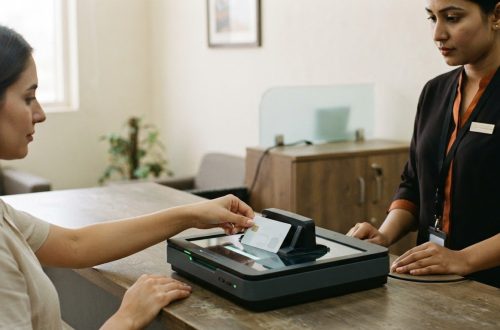
A hotel outage is rarely just an IT problem. There’s no universal cost per minute for the cost of IT downtime for a hotel. The impact depends on which system is affected, when the outage occurs, how long it lasts and what contingency arrangements are in place. In the UAE, the practical cost can include disrupted check-ins, delayed payments, lost staff time and a poorer guest experience, not just the work needed to restore technology.
It’s easy to focus on the visible technical fault, but wider operational effects can shape the true impact. This article explains how to assess downtime costs in AED, why outages happen and how they affect hotel teams and guests. It also explores how mapping system dependencies and planning for disruption can help hotels understand their exposure and strengthen operational resilience.
Key Takeaways
- Estimate outage exposure by considering lost revenue, disrupted staff work and recovery effort, not just the time required to restore a system.
- Assess security threats and user error alongside technical faults when identifying what could interrupt hotel systems.
- Map how essential services depend on connectivity, suppliers and staff devices to understand where a single failure could affect operations.
- Consider how interruptions to check-in, payments and guest-facing services can influence both daily operations and the guest experience.
How Much Does Hotel IT Downtime Actually Cost?
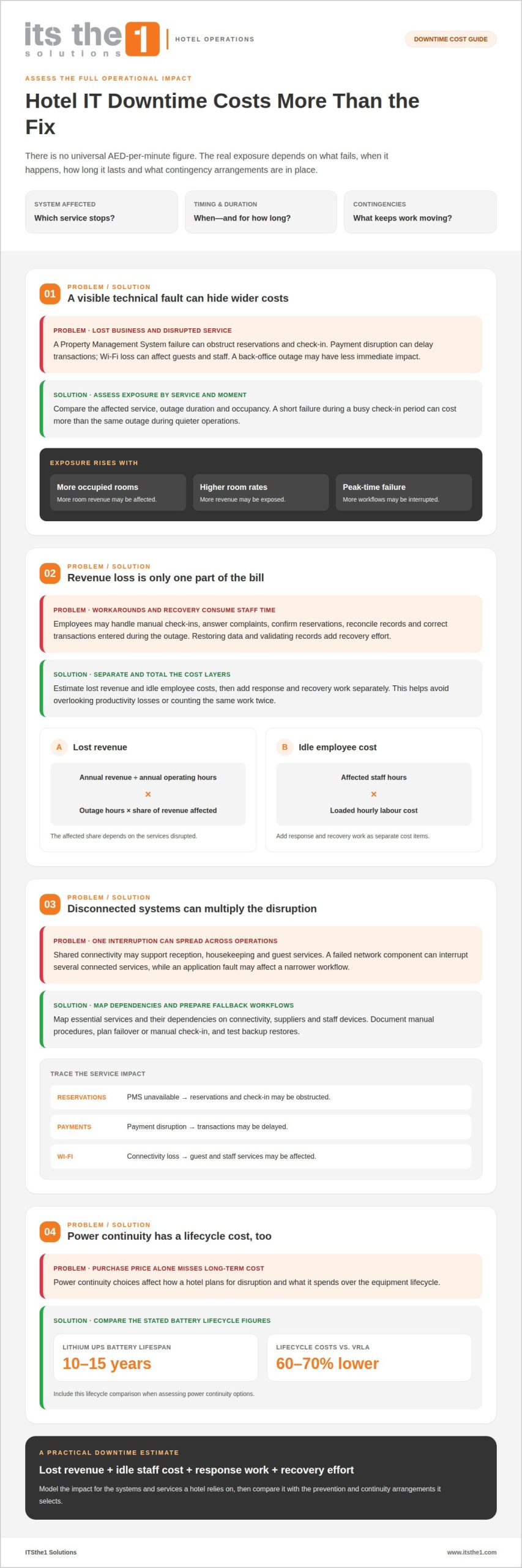
There is no universal AED-per-minute figure for hotel downtime. Compare prevention spending with potential revenue loss, idle staff time and recovery work, based on the affected systems and services.
Downtime Costs Across Industries and Hotel Systems
Downtime costs vary by industry because each outage interrupts different revenue and operations. For a hotel, a Property Management System failure can obstruct reservations and check-in; payment disruption can delay transactions, while Wi-Fi loss can affect guests and staff. A back-office system outage may have less immediate impact. Hotel size, occupancy and room rates shape exposure: more occupied rooms and higher rates mean more revenue may be affected during a disruption.
Revenue Losses and Outage Response Costs
Revenue losses include bookings or transactions that cannot be completed during the outage; response costs include staff time spent on manual workarounds and restoring service. A busy check-in period can make a short failure more costly than the same outage during quieter operations. Compare the affected services, outage duration and occupancy with the effort needed to resume normal work. Prevention costs depend on the systems, safeguards and continuity arrangements a hotel selects, so compare them with its own modeled outage impact.
Recovery, Compliance, Reputation, and Data-Loss Costs
Recovery can require restoring data from backup, validating records and correcting transactions entered manually. Missing or inconsistent guest and payment records can add staff workload and create service issues. An incident may also affect reputation if guests experience disrupted service; compliance-related exposure depends on the information and obligations involved. Lithium UPS batteries have a 10-15-year lifespan, and their lifecycle costs are 60-70% lower than VRLA batteries. Include that lifecycle comparison when assessing power continuity options.
Calculating Lost Revenue and Employee Idle Costs
Calculate lost revenue by dividing annual revenue by annual operating hours, then multiplying by outage hours and the share of revenue affected. Estimate idle employee costs by multiplying affected staff hours by their loaded hourly labour cost. Add response and recovery work separately to avoid overlooking productivity losses. Hotels can limit financial impact by mapping system dependencies, testing backup restores and planning failover or manual check-in procedures.
Security attacks and user error as causes of downtime
Hotel downtime can begin with a cyberattack, a staff mistake, an application failure or faulty hardware. ITIC reported that 84% of respondents ranked security attacks among the top causes of unplanned system and network downtime. It also found that 69% ranked user error among the top three causes. A mistaken configuration change, for example, can interrupt booking applications even when servers remain online.
Frequency varies across organizations, and uptime depends on both technology and operating practices. Forrester found that 41% of surveyed organizations experienced unexpected downtime every week or month. Acronis reported that cyberattacks caused 36% of instances of downtime. These figures describe surveyed organizations, not hotel-specific rates, but they show why reliability planning should include both security controls and routine change management.
Human error can also turn planned maintenance into an incident. Uptime Institute reported that human error accounted for 40% of significant outages over the last three years. Separately, it reported that 80% of data centres experienced at least one outage during the preceding three years. In a hotel, a failed network component may interrupt several connected services, while a single application fault may affect a narrower workflow. Duration depends on what failed, available backups and how quickly the affected service can be isolated and restored.
Reduce avoidable disruption by limiting access to critical systems, reviewing changes before deployment and keeping applications supported. Separate suspected security incidents from ordinary technical failures; recovery actions differ, and reconnecting compromised systems too early can extend the interruption. Hotels assessing cyber risks can explore cybersecurity support as part of a broader approach to protecting systems and maintaining service continuity.
Operational and guest impacts of hotel IT outages
A hotel outage affects more than system availability; it changes the guest experience and how employees deliver service. If the Property Management System becomes unavailable during arrivals, staff may need to record check-ins manually, coordinate room status by phone and reconcile records later. A payment interruption can delay checkout, while a Wi-Fi failure can leave guests unable to access digital services. The operational impact depends on which infrastructure fails and how long normal workflows remain disrupted.
Guest frustration can outlast the technical incident. The page states that 25% of customers will abandon a service after experiencing a single significant outage. For hotels, a failed booking or payment journey can weaken confidence and affect a guest’s willingness to return. About 40% of disruptions caused some form of brand reputation damage. These figures describe customer and organizational impacts generally, not hotel-specific averages.
During an unplanned outage, employees may spend time answering complaints, confirming reservations and correcting duplicate or incomplete transactions. That work reduces their ability to focus on service. The same disruption can affect several departments when shared connectivity supports reception, housekeeping and guest services. A short outage during a high-occupancy period can therefore create a different operational burden than a similar failure during a quieter period.
Hotels can limit disruption by mapping dependencies between critical services, documenting manual procedures and monitoring systems for early warning. Monitoring can help teams identify changes sooner, but it cannot prevent every incident. After service returns, review the incident, reconcile affected records and identify the infrastructure or process that failed. To strengthen guest-facing service continuity, explore hotel technology solutions suited to your operational needs.
ITSthe1 Solutions: 1.TV – IPTV for Enterprise & Hospitality
ITSthe1 Solutions offers 1.TV – IPTV for Enterprise & Hospitality for hotels reviewing their guest-facing television technology. After assessing how outages affect hotel services, consider whether IPTV, digital signage, passport and ID scanning, or a hospitality app for guests and staff fits your operational priorities.
These offerings address distinct parts of the hotel technology environment. 1.TV supports enterprise and hospitality IPTV, while 1.DSMM is for digital signage and meeting rooms. 1.ID supports passport and ID scanning, and 1.Hotel is a hospitality app for guests and staff. Identify which guest or staff workflows matter most before evaluating how these tools fit your technology plans.
Contact ITSthe1 Solutions to discuss your hotel’s technology requirements and operational priorities.
Make resilience part of the operating plan
Understanding the cost of IT downtime for a hotel is most useful when it informs decisions before the next disruption. Set a review point with operations and technology teams, identify which guest and staff journeys must remain workable, and assign ownership for maintaining fallback procedures. Then assess whether current systems and processes support those priorities. This turns outage planning from a technical exercise into an operational decision tied to guest service and how the property runs.
For hotels refining their technology environment, ITSthe1 Solutions offers hospitality-focused systems that can support guest-facing and operational requirements. A focused discussion can help connect your priorities with the appropriate technology scope and next steps. Contact ITSthe1 Solutions to discuss your hotel’s requirements. With a clear view of priorities and responsibilities, your team can plan the next stage with greater confidence.
Frequently Asked Questions
How Common Is Downtime Really?
Downtime recurs across organizations, but its frequency varies by system and operating environment. Forrester found that 41% of surveyed organizations experienced unexpected downtime every week or month. That survey result isn’t specific to hotels. For a property, incident records can show whether recurring problems cluster around particular applications, network connections, maintenance periods or supplier services.
What Happens When the PMS Is Unavailable?
Staff may need to manage arrivals and room changes without the normal reservation record. A practical fallback is to log each guest’s name, booking reference, room assignment and transaction status in a controlled record, then reconcile entries when the PMS returns. Clear handover notes between shifts help prevent duplicate room assignments and ensure outstanding changes are entered accurately.
What are the potential impacts of IT downtime on a business?
Beyond interrupted transactions, downtime can create follow-up work that continues after systems return. For example, employees may need to verify reservation changes, correct payment records and respond to delayed guest requests. Managers may also need to review incident logs and coordinate with suppliers. The resulting workload can affect service priorities even after technical access has been restored.
What is the average cost per hour of IT downtime for a hotel?
There is no single average that applies to every hotel. The cost of IT downtime for a hotel depends on the services affected, occupancy, room rates, outage timing and the availability of manual alternatives. A property can produce a more relevant estimate by comparing its own revenue and labour exposure across busy and quieter operating periods.
How do hotels calculate the cost of IT downtime?
Hotels can estimate the impact by combining revenue affected during the disruption with staff time spent waiting, using workarounds and restoring normal processes. Add direct response and recovery effort, then account for transactions that need follow-up. Keep assumptions clear, such as which departments were affected and what share of activity could continue, so later incident reviews can refine the estimate.