Deploying disconnected guest apps and point solutions doesn’t modernize a property; it creates operational friction. True digital transformation in the hospitality sector succeeds through unified infrastructure middleware rather than isolated platforms. You already know that guests expect frictionless contactless arrivals and interactive in-room entertainment, yet your teams shouldn’t have to battle fragmented legacy silos or escalating cybersecurity vulnerabilities to deliver them.
The central challenge is executing this transition without disrupting ongoing guest stays. In this guide, you’ll discover how modern hoteliers unify guest-facing technology and back-of-house operations into an integrated digital ecosystem. We examine the strategic architecture required to automate staff workflows, safeguard connected property management systems, and establish a cohesive guest journey from arrival to in-room entertainment.
Key Takeaways
- Successful digital transformation in the hospitality sector requires replacing isolated legacy tools with centralized middleware that connects front-of-house interactions to back-of-house operations.
- Modernizing physical infrastructure with high-performance cabling and enterprise wireless standards creates the necessary foundation for bandwidth-heavy guest services.
- Deploying modular interactive platforms like 1.TV middleware elevates in-room guest engagement while protecting personal privacy and brand integrity.
- Selecting an end-to-end technology partner guarantees turnkey deployment and native integration with your core property systems without interrupting daily operations.
Core Pillars of Digital Transformation in the Hospitality Sector
True digital transformation in the hospitality sector requires orchestrating on-property operations, guest touchpoints, and core administrative platforms into one responsive architecture. While traditional airline or corporate ERP systems focus heavily on high-level transactions, modern hotel environments demand physical and digital synergy across every department. The wider hospitality industry thrives on personal interaction, so technology must eliminate administrative friction rather than depersonalize service.
Hotels increasingly replace legacy, siloed applications with centralized middleware. This shift enables hoteliers to balance automated guest autonomy with intuitive staff support. When routine logistics run smoothly in the background, your teams can focus on high-touch guest care.
Bridging Front-of-House Experience and Operational Systems
Connecting arrival logistics, public spaces, and culinary operations requires synchronized front-line tools:
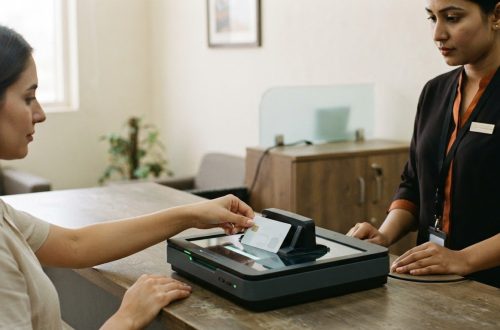
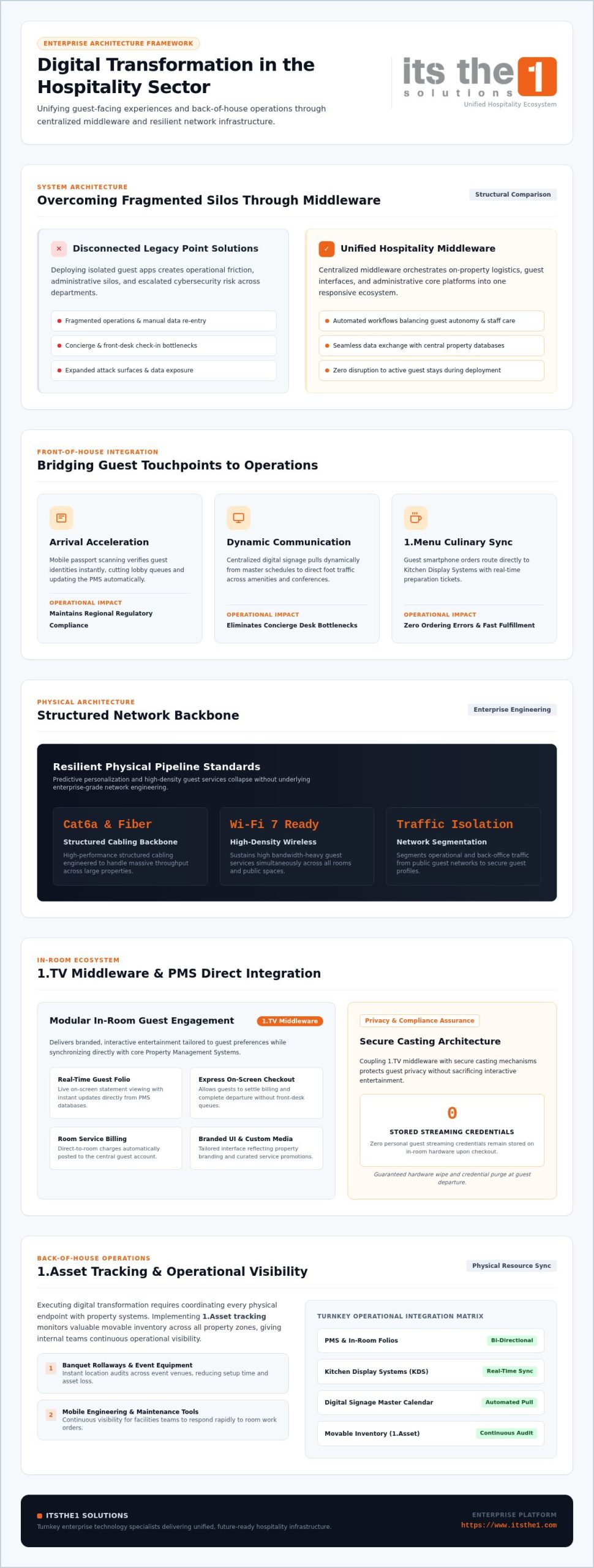
- Arrival Acceleration: Deploying mobile passport scanning for hotels cuts lobby queuing. Front-desk personnel verify identities instantly through automated property management system (PMS) updates that maintain regional regulatory compliance.
- Dynamic Communication: Integrated hotel digital signage software guides visitors across property amenities, conference rooms, and event schedules, dynamically pulling updates from central calendars to reduce concierge bottlenecks.
- Culinary Synchronization: Implementing 1.Menu digital dining tools links guest smartphone orders directly to kitchen display systems. Kitchen staff receive real-time preparation tickets, which eliminates ordering errors and accelerates room-service fulfillment.
Unifying these operational layers ensures that digital transformation in the hospitality sector strengthens daily operational efficiency while consistently elevating the guest experience.
Strategic Framework for Modernizing In-Room and Network Infrastructure
Modern guest experiences collapse without resilient network engineering. High-density hospitality environments require enterprise-grade structured Cat6a cabling and fiber backbones capable of sustaining Wi-Fi 7 throughput. On this underlying backbone, modular platforms like 1.TV middleware deliver branded, interactive entertainment tailored to guest preferences. Coupling this middleware with secure casting mechanisms ensures zero guest streaming credentials remain stored on in-room hardware upon checkout. Academic research into AI in Hospitality demonstrates that advanced predictive personalization always relies on such robust physical pipelines.
Executing Property Management System and Entertainment Integration
Bridging in-room hardware with core hotel software unlocks actionable guest insights and operational gains:
- Direct PMS Integration: By integrating IPTV with hotel PMS, properties display real-time personalized folios, manage room service billing, and offer express checkout directly on screen.
- Network and Data Protection: Expanded guest networks increase threat vectors. Deploying comprehensive cybersecurity services for enterprises keeps guest profiles secure while segmenting sensitive operational traffic from public wireless access.
- Connected Operations: Implementing 1.Asset tracking monitors valuable movable inventory, from banquet rollaways to mobile engineering tools, giving staff continuous operational visibility across the property.
Executing successful digital transformation in the hospitality sector requires coordinating every physical endpoint with central property databases. Hoteliers looking to modernize their network architecture often partner with turnkey enterprise technology specialists to implement unified, future-ready infrastructure without disturbing daily property operations.
Selecting an Enterprise Technology Partner for Unified Digital Evolution
Managing disparate vendors across television middleware, guest communications, and network cabling introduces costly operational friction. A strategic digital transformation in the hospitality sector demands single-point accountability rather than a patchwork of competing vendors. Hoteliers must evaluate enterprise partners based on genuine turnkey capabilities spanning initial architectural design, on-site deployment, and long-term lifecycle management. Scalable platforms should integrate natively with established property infrastructure, backed by defined service level agreements and dedicated annual maintenance contracts to ensure system stability.
Achieving Operational Synergy with the ITSthe1 Solutions Ecosystem
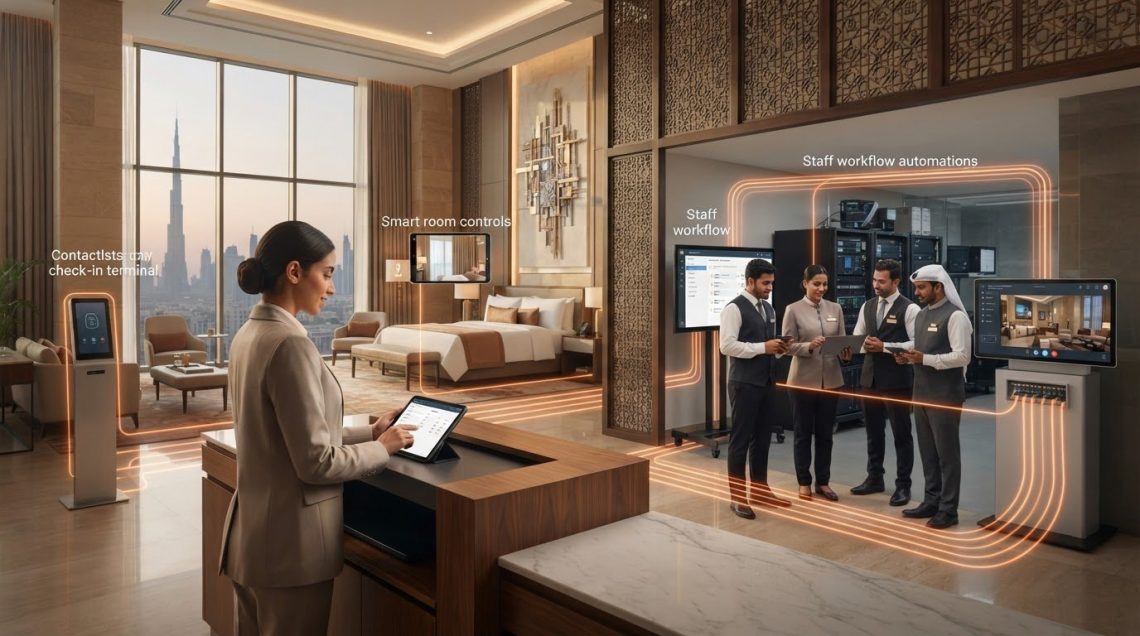
Synchronizing guest interaction with internal team workflows eliminates the communication gaps typical of fragmented operational stacks. Properties achieve this operational synergy by pairing the 1.Hotel mobile platform with the 1.Support ticketing engine. Guest requests for concierge services or room amenities instantly generate trackable work orders for housekeeping and engineering, ensuring rapid fulfillment and transparent staff accountability.
Established in 1999, ITSthe1 Solutions provides over twenty years of specialized IPTV engineering expertise and property technology deployment. By delivering modular software alongside unified backend tools, the ecosystem eliminates multi-vendor conflicts and simplifies technical administration. Hoteliers ready to solidify digital transformation in the hospitality sector can unify their properties with ITSthe1 Solutions, securing resilient operational foundations designed for continuous technological evolution.
Architecting a Resilient Hospitality Ecosystem for 2026
Meeting rising guest expectations requires moving past isolated digital patches. A successful digital transformation in the hospitality sector depends on integrating high-capacity network backbones with responsive middleware and core property management systems. When front-of-house interactions synchronize directly with back-of-house operational workflows, properties eliminate administrative bottlenecks while protecting sensitive guest records.
Established in 1999 with over 20 years of specialized hospitality IPTV expertise, ITSthe1 delivers a comprehensive portfolio spanning proprietary 1.TV middleware, digital signage, and guest applications. Choosing a single, proven partner gives your leadership team clarity and operational control across every property endpoint. Partner with ITSthe1 Solutions to modernize your hospitality technology stack and build an integrated infrastructure that scales effortlessly for years to come.
Frequently Asked Questions
What is digital transformation in the hospitality sector?
Digital transformation in the hospitality sector is the strategic integration of physical infrastructure, operational middleware, and guest-facing software into a unified digital ecosystem. Rather than merely adopting isolated apps, it connects property management databases directly with room entertainment, front-desk logistics, and back-of-house ticketing. This architectural cohesion eliminates technology silos, optimizes staff allocation, and creates seamless journeys across each guest stay.
How does integrating in-room IPTV with property management systems benefit hotels?
Connecting in-room IPTV with property management systems enables automated folio synchronization, direct on-screen dining charges, and rapid express checkout. When guests order room service through interactive displays, charges post immediately to their accounts without manual intervention. This synchronization cuts front-desk billing disputes, reduces reception lines during peak departure hours, and allows operators to promote high-margin on-property amenities dynamically.
Why is cybersecurity essential during hospitality technology upgrades?
Modern properties handle massive volumes of sensitive guest profiles, credit transactions, and identity documents across interconnected IoT networks. As digital transformation in the hospitality sector broadens wireless endpoints and smart devices, security architecture protects these entry points from unauthorized breaches. Implementing segmented enterprise networks and zero-credential casting protocols safeguards guest privacy while ensuring continuous compliance with regional personal data protection regulations.
How do self-service kiosks and digital ID scanning improve the guest arrival experience?
Self-service kiosks and digital ID scanning eliminate physical registration bottlenecks by processing passport details and issuing digital room keys within seconds. Front-desk personnel transition from manual document entry to welcoming guests and handling specialized inquiries. This automated intake reduces check-in friction, accelerates arrivals during high-volume periods, and securely registers guest verification credentials straight into core property databases.