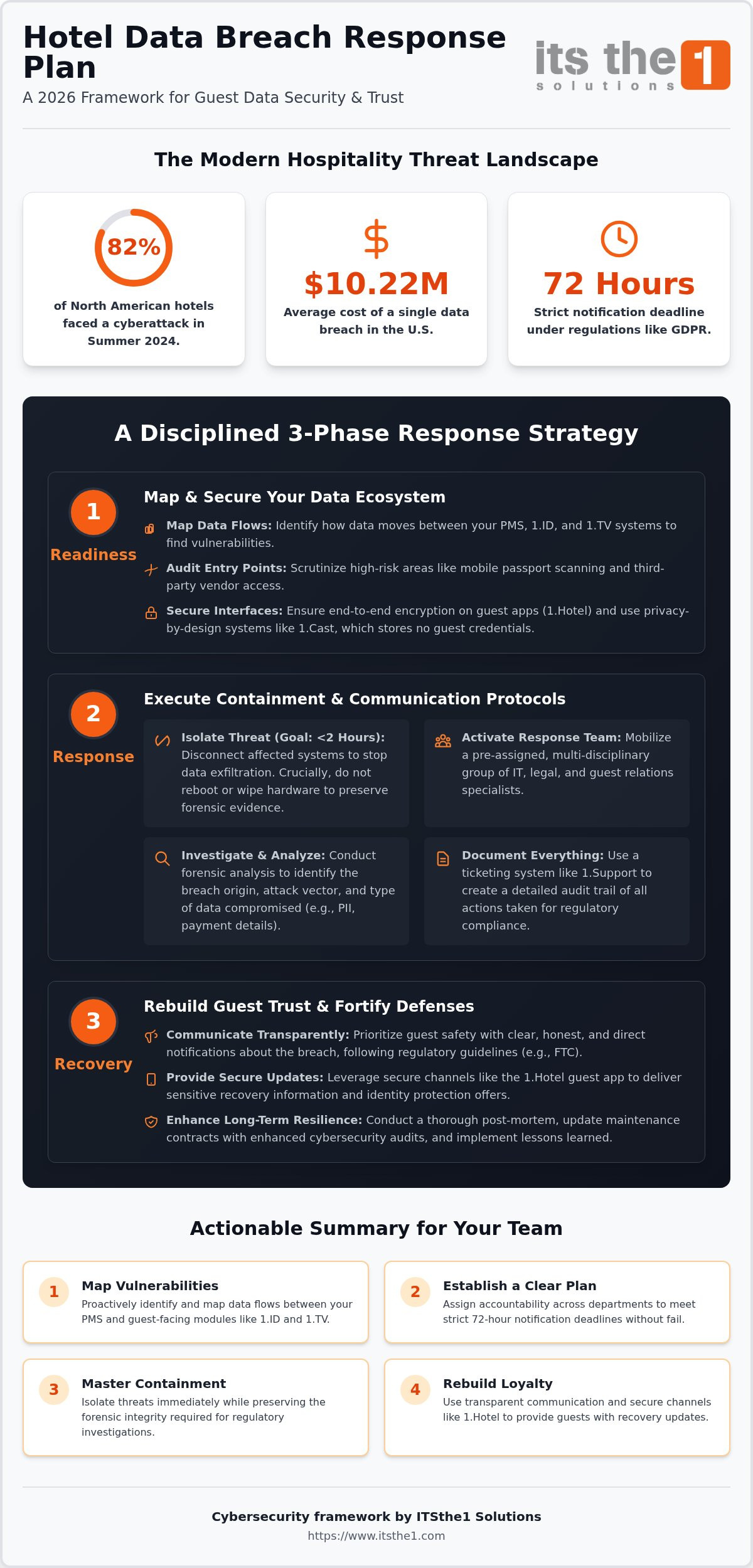
Did you know that 82% of North American hotels fell victim to a cyberattack in the summer of 2024? With the average cost of a U.S. breach now reaching $10.22 million, a robust hotel data breach response plan is no longer just a technical requirement; it’s a fundamental pillar of guest service recovery. We understand the anxiety that comes with managing complex hospitality tech stacks while facing the looming threat of massive GDPR fines or permanent brand damage. You need a strategy that prioritizes stability and clear action over panic.
In this guide, we’ll provide a comprehensive 2026 checklist designed to secure your guest data and protect your professional reputation. You’ll learn how to navigate the 72 hour notification window, ensure PCI DSS 4.0 compliance, and maintain operational continuity during a crisis. This framework transforms technical chaos into a disciplined, manageable process for your entire team.
Key Takeaways
- Identify vulnerabilities by mapping data flows between your PMS and guest-facing modules like 1.ID and 1.TV.
- Establish a clear hotel data breach response plan that assigns accountability across departments to meet strict 72 hour notification deadlines.
- Master immediate containment protocols that isolate threats while preserving the forensic integrity required for regulatory investigations.
- Rebuild brand loyalty through transparent communication, using 1.Hotel to provide guests with direct and secure recovery updates.
Mapping the Hospitality Data Ecosystem for Breach Readiness
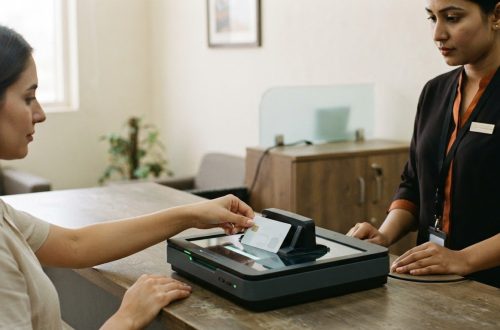
Identifying every point where guest information enters your network is the first step in creating a resilient hotel data breach response plan. In a fragmented hospitality environment, data doesn’t just sit in one place. It moves through various systems, from the initial booking to the final checkout. You must understand what is a data breach in the context of your specific infrastructure. ITSthe1 Solutions recommends starting with an audit of entry points, such as mobile passport scanning for hotels and 1.ID systems. These tools handle sensitive Personally Identifiable Information (PII) that requires rigorous oversight.
Once you’ve identified the entry points, analyze the internal data flows. Information often travels between the Property Management System (PMS) and interactive guest services like 1.TV. High-risk repositories, including guest profiles and loyalty program databases, are prime targets for exfiltration. Your hotel data breach response plan should also document third-party vendor access points. This creates a unified defense and ensures that external partners meet your security standards. It’s about closing visibility gaps before they’re exploited by external threats.
Securing Guest-Facing Interfaces
Your guest-facing tools are often the most visible interfaces in your digital ecosystem. Evaluate the security of engagement platforms like the 1.Hotel guest app to ensure end-to-end encryption for all interactions. ITSthe1 Solutions sets high standards for privacy, especially with casting solutions. For instance, 1.Cast is specifically configured to store no guest credentials or logs on the television system. This architectural choice limits the potential impact of a breach by ensuring that entertainment systems don’t become gateways to sensitive guest accounts. Maintaining this level of technical discipline is essential for long-term data integrity.
The 2026 Hotel Data Breach Response Checklist
Once a threat is detected, your hotel data breach response plan must transition immediately from a passive monitoring state to an active containment phase. The primary objective is to isolate compromised systems without destroying critical forensic evidence. Disconnecting affected servers from the network stops data exfiltration while keeping system logs available for subsequent analysis. You shouldn’t reboot or wipe hardware during this stage, as these actions often erase the digital breadcrumbs required to identify the attack vector.
With the threat isolated, you must activate a pre-assigned response team. This multidisciplinary group should include IT specialists for remediation, legal counsel for regulatory compliance, and guest relations to manage external messaging. For a comprehensive procedural framework, the FTC data breach response guide provides authoritative steps for securing operations and notifying affected parties. Your team will then conduct a forensic investigation to identify the breach origin and the specific data types exfiltrated, such as payment details or loyalty program credentials.
Containment and Communication Protocols
Managing the internal response workflow requires a disciplined approach to documentation. Use 1.Support ticketing systems to track every internal action, creating a reliable audit trail that demonstrates due diligence to regulators. This is also the time to verify the integrity of your cybersecurity services for enterprises to ensure that attackers haven’t established persistence elsewhere in the network. A successful containment strategy aims to secure the environment within a two hour window post-discovery. If you need to refine these protocols, ITSthe1 Solutions provides expert cybersecurity consultancy to help you navigate these high-stakes scenarios with confidence.
Post-Breach Recovery: Rebuilding Guest Trust and Resilience
Restoring guest confidence is the final and most critical phase of any hotel data breach response plan. Once you’ve contained the technical threat, you must execute a transparent notification strategy that prioritizes guest safety over corporate image. Clear communication mitigates the risk of permanent brand damage. Following the FTC Data Breach Response Guide ensures your messaging meets regulatory standards while addressing guest concerns professionally.
Leverage secure channels like 1.Hotel and other hotel guest engagement apps to provide direct, secure updates to affected patrons. These platforms allow for the encrypted delivery of sensitive information, such as identity protection offers or specific password reset instructions. For long-term resilience, update your Annual Maintenance Contract (AMC) to include enhanced cybersecurity audits and continuous monitoring. You should also conduct a thorough post-mortem to integrate lessons learned into your hotel digital signage software. This turns back-of-house displays into active staff training tools for real-time privacy alerts.
Strategic Long-Term Digital Transformation
True resilience requires moving beyond reactive measures. Consult with ITSthe1 specialists to migrate legacy on-premise data to secure cloud hosting environments such as AWS, Azure, or Google Cloud. This shift provides superior encryption and data redundancy. To maintain this high standard, implement 1.AI helper tools to monitor staff adherence to new privacy protocols. These intelligent modules act as a steady guide, ensuring your team remains disciplined in executing your hotel data breach response plan during future operations. This proactive stance transforms a crisis into a catalyst for operational excellence.
Fortifying Your Digital Resilience
A robust hotel data breach response plan is a strategic asset that preserves guest trust and ensures long-term operational stability. Success depends on mapping your technical ecosystem, maintaining a disciplined containment strategy, and embracing transparent recovery protocols. Transitioning from legacy systems to secure cloud environments provides the necessary foundation for modern data protection. Your brand’s reputation relies on this meticulous preparation and a commitment to operational excellence.
ITSthe1 Solutions offers over 20 years of hospitality technology expertise as a one-stop partner for IT, telecom, and hospitality needs. With a global presence spanning the United Arab Emirates, the United Kingdom, and Sri Lanka, we provide the stability required to manage complex technical landscapes. Secure your hospitality infrastructure with ITSthe1 Solutions Cybersecurity Consultancy to protect your brand from evolving threats. Taking these proactive steps today ensures your property remains a safe, trusted destination for every guest.
Frequently Asked Questions
What is the first thing a hotel should do after discovering a data breach?
The primary action is immediate containment to stop ongoing data exfiltration. You must isolate compromised servers or network segments while ensuring that forensic evidence remains intact for later investigation. It’s vital you don’t reboot or wipe systems; this can erase critical logs needed to understand the breach’s scope. This initial step is the foundation of any effective hotel data breach response plan.
How does a hotel data breach response plan differ from a general IT policy?
While a general IT policy focuses on routine maintenance and system uptime, a hotel data breach response plan is a specialized crisis management framework. It defines specific roles across legal, guest relations, and technical departments to ensure a coordinated recovery. This plan specifically addresses the unique complexities of hospitality tech stacks, focusing on guest data protection and regulatory compliance rather than just hardware functionality.
Are hotels in the UAE and UK required by law to notify guests of a data breach?
Yes, legal mandates in both the UAE and the UK require timely notification if a breach poses a risk to guest rights. Under the UK GDPR, you must notify the relevant authority within 72 hours of discovery. Similarly, the UAE’s federal data protection laws require organizations to report incidents that impact personal data. Failure to comply can result in significant financial penalties and permanent brand damage.
How can integrated hospitality technology like 1.Hotel help in breach recovery?
Integrated solutions like 1.Hotel facilitate secure, direct communication with your guests during the recovery phase. By using a proprietary app, you’ll provide encrypted updates and recovery instructions without relying on compromised email servers. Additionally, tools like 1.Support provide a centralized ticketing system to track every remediation action, ensuring a clear audit trail that demonstrates your commitment to guest data protection and operational transparency.