Automation should handle routine tasks without leaving guests unsure where to turn. An AI assistant for hotel staff can answer common questions, support straightforward requests and pass complex or sensitive matters to a team member. A clear handoff is essential for making the experience useful to both guests and staff.
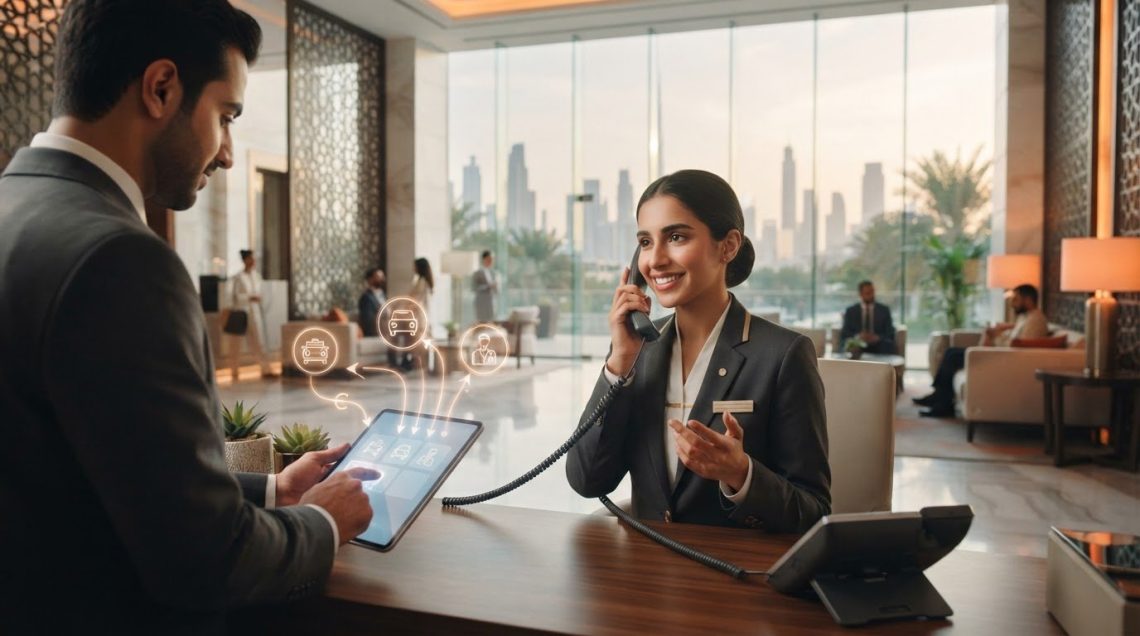
Hotel teams need to respond clearly while balancing calls with front-desk and operational work. An AI phone assistant can answer common questions, support routine workflows and transfer requests that need human attention. The key is to tailor it to hotel information and processes, then consider how it should connect with existing systems.
Key Takeaways
- Map the assistant to your booking engine and property management system so guest conversations fit existing reservation workflows.
- Prioritise frequent hotel questions and routine requests when deciding what the assistant should handle.
- Set clear handoff routes so staff can take over requests that need judgement, personal attention or operational follow-up.
- Consider how guest-facing hotel technology can work alongside phone support to create a more coordinated service experience.
What can the AI Phone Assistant do for Hotels?
A hotel phone assistant can answer booking questions, help with reservations and route requests that need staff attention. Its usefulness depends on how well guest conversations connect with hotel systems and service workflows.
Assistant Options and Comparisons
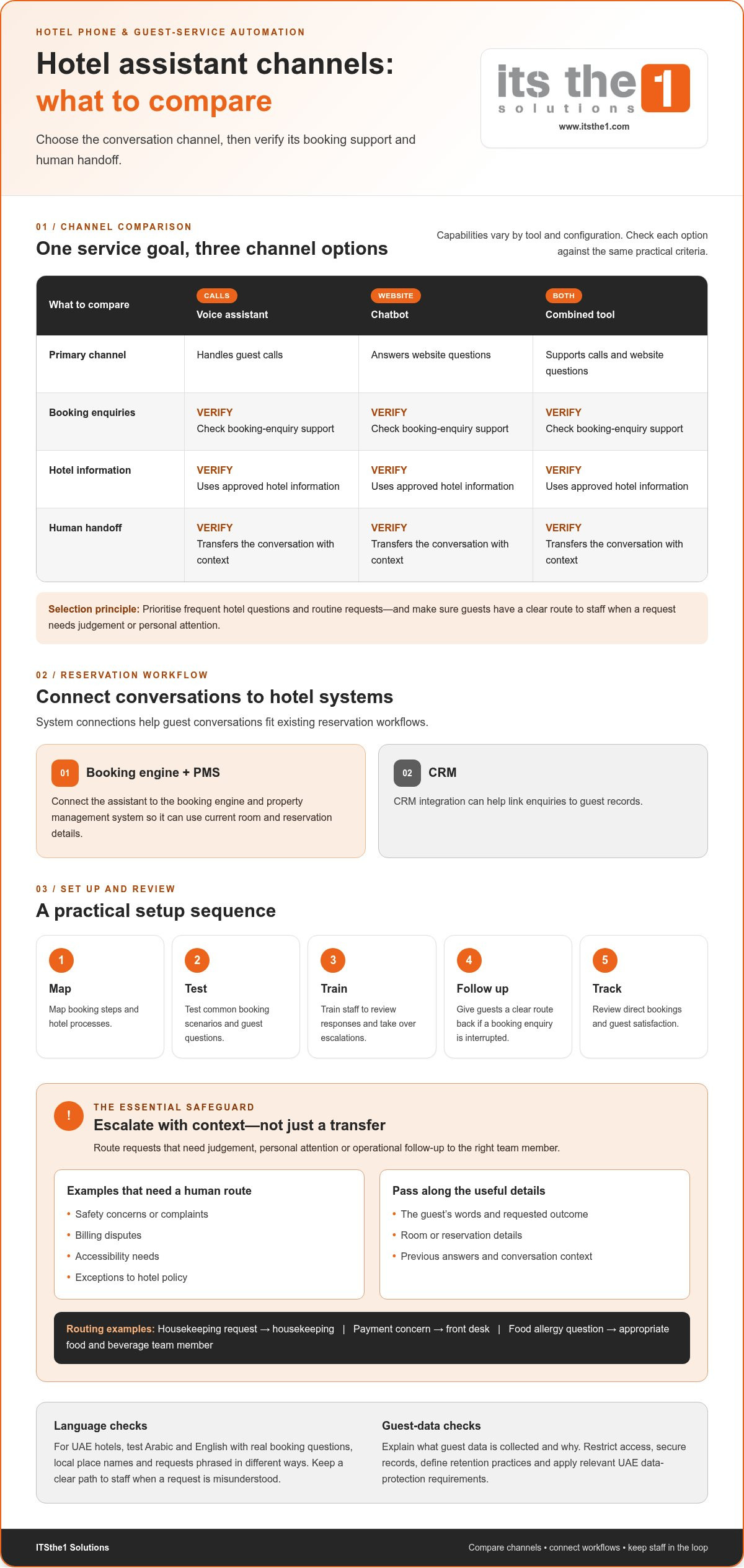
Hotels can choose a voice assistant for calls, a chatbot for website questions, or a tool that combines both channels. Compare options by checking whether they use approved hotel information, support booking enquiries and transfer conversations with context.
For reservations, connect the assistant to the booking engine and property management system (PMS) so it can use current room and reservation details. CRM integration can help link enquiries to guest records. Map the booking steps, test common scenarios, then train staff to review responses and take over escalations.
To recover interrupted booking enquiries, use follow-up messages that give guests a clear route back to the booking process. Track direct bookings and guest satisfaction to understand whether the assistant is helping the guest journey.
Language Support and Limitations
Arabic and English support depends on the assistant and its configuration. For UAE hotels, test both languages with real booking questions, local place names and requests expressed in different ways. A poorly understood request can produce an irrelevant response, so provide a clear path to staff.
For privacy and security, explain what guest data the assistant collects and why. Restrict access, secure records and define retention practices. Apply the UAE data-protection requirements relevant to the hotel’s operations and data flows. Assistants can misunderstand unusual requests or lack current information, so staff should review escalations and keep hotel content accurate.
Hospitality-specific FAQs and automated workflows
Hotel automation works best when answers lead to clear actions and departmental workflows. A well-designed assistant can support calls and messages while leaving service decisions with staff.
Automated FAQs and Staff Workload
Hotel chatbots can handle 80% of routine guest inquiries without human intervention. Build the FAQ around practical questions about WiFi, checkout times, restaurant hours, directions and hotel services. Voice AI can answer these questions over the phone, while chatbots support written conversations in the guest’s preferred languages. To measure impact, compare staff workload, average handling time and guest satisfaction before and after deployment. Track response patterns to identify unanswered questions and improve recommendations.
Housekeeping and Maintenance Requests
For housekeeping, an assistant can collect a towel request, room number and preferred delivery timing, then pass the details into the hotel’s task workflow. For maintenance, it can capture the room, reported issue and urgency, such as a leaking tap or faulty air conditioning. Integrations should send each request to the right team and make its status visible, helping prevent repeated messages and missed handoffs.
Department Workflows
Front desk teams can use voice AI and call-center automation for routine enquiries; housekeeping can receive guest requests, and food and beverage teams can handle restaurant-hour or menu questions. These departments can share consistent communication while retaining distinct task queues. An AI assistant for hotel staff should also preserve a fast route to a person when a conversation needs judgement. Hotels can review workload, response time and satisfaction together to assess operational effects. For hospitality teams planning these workflows, AI support for hospitality staff can be a relevant next step.
What privacy, security, and data protection rules apply to AI assistants in UAE hotels?
Explain what guest data the assistant collects and why. Restrict access, secure records and define retention practices. Apply the UAE data-protection requirements relevant to the hotel’s operations and data flows.
Escalating complex requests to hotel staff
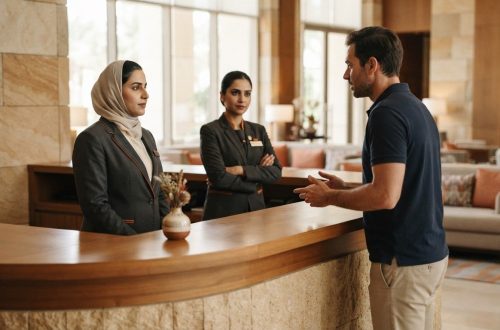
An AI assistant is most useful when it recognizes the limits of its answers and transfers conversations with context. Requests involving safety, complaints, billing disputes, accessibility needs or exceptions to hotel policy need a clear route to a human agent.
Set escalation triggers before launch. For example, transfer a guest who reports a room fault affecting comfort, disputes a charge or repeats a question after an unclear answer. The assistant should pass along the guest’s words, room or reservation details, previous answers and requested outcome. This saves staff from making the guest repeat everything across digital and phone channels.
Routing matters as much as detecting an issue. Send a housekeeping request to housekeeping, a payment concern to the front desk and a food allergy question to the appropriate food and beverage team member. If that team is unavailable, give the guest a clear next step, such as recording the request for follow-up or directing an urgent issue to the relevant on-duty contact. Keep the status visible to the agents responsible for resolution.
At Spa Resort Geinberg, 14% of webchat enquiries were passed to the team. That example illustrates why escalation is part of the workflow, not a failure of automation. Review transferred interactions for recurring unanswered questions, slow handoffs and guest satisfaction. Update approved answers and routing rules when the same issue repeatedly reaches staff.
For a seamless guest journey, test handoffs across each channel, including after a guest changes topics mid-conversation. Define who owns each request and how staff record its resolution. Hotels planning these workflows can explore AI support for hospitality staff as a practical next step.
ITSthe1 Solutions: 1.TV – IPTV for Enterprise & Hospitality
ITSthe1 Solutions offers hospitality technology for hotels aligning guest-facing services with daily operations. Its 1.TV – IPTV for Enterprise & Hospitality supports in-room television, while 1.Hotel – Hospitality App for Guests and Staff and 1.AI – AI Helper for Hospitality Staff address other parts of the guest and staff experience.
When planning guest information and staff workflows, consider how your systems should work together. A hotel reviewing how it handles phone requests can also assess how guests access services during their stay and how staff coordinate responses. The right combination depends on the hotel’s priorities and the role each system needs to play.
To discuss hospitality technology for your hotel, contact ITSthe1 Solutions or visit www.itsthe1.com.
Plan the Next Stage of Hotel Service
Start by defining where an AI assistant for hotel staff fits within your hotel’s service model. Identify the guest touchpoints to improve, the requests that need staff ownership and how digital services should connect with daily operations. This gives your team a practical basis for deciding what to implement first and how to assess the workflow.
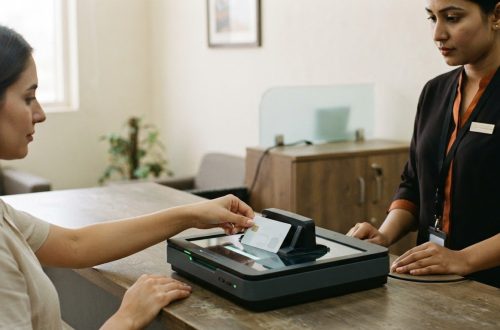
ITSthe1 Solutions offers hospitality technology that can support different parts of the guest experience. Its 1.TV – IPTV for Enterprise & Hospitality provides in-room television, while 1.DSMM – Digital Signage & Meeting Room supports signage and meeting-room needs. 1.ID – Passport & ID Scanning addresses passport and identification scanning. Consider how these offerings relate to your hotel’s priorities and existing processes.
For a discussion about hospitality technology and your operational requirements, contact ITSthe1 Solutions. A clear plan can help your team move forward with confidence.
Frequently Asked Questions
Can It Access the Data That Actually Matters?
Yes, provided the assistant connects to approved hotel data sources with appropriate access. Separate information guests need, such as current amenities, from operational records that require restricted access. A static answer can explain parking options, for example, while a live room-status response requires an authorised system connection and current data.
How Are Complex Situations Escalated?
Escalation should follow clear rules for urgency and responsibility. A guest reporting a safety concern needs a different response path from someone asking for a restaurant recommendation. Define who receives each type of request, what the assistant tells the guest during the transfer and how supervisors can review unresolved handoffs.
What Is an AI Chatbot for Hotels?
An AI chatbot is a conversational tool that responds to guest questions through a digital interface, such as a hotel website or messaging channel. Unlike a fixed menu of buttons, it can interpret natural-language questions. Hotels can provide approved information and set boundaries, then review conversations to find gaps or answers that need refinement.
How can AI assistants help hotel employees with guest requests and daily tasks?
An AI assistant for hotel staff can help employees find internal guidance, organise incoming requests and prepare concise handover notes. For example, a new team member could use it to find the hotel’s procedure for reporting a lost item. Staff remain responsible for decisions, exceptions and personal service that requires judgement.
How do AI assistants integrate with hotel property management systems and booking platforms?
Integration connects the assistant with selected PMS or booking-platform functions through supported interfaces. Define what information it can read and which actions it can initiate. A hotel might, for example, allow reservation details to inform an answer but require staff approval before changes are made. Test permissions, error handling and record consistency before launch.