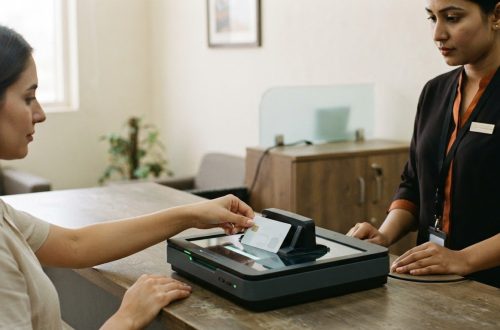
A disruption rarely affects one hotel system in isolation. If the property management system, network or payment services become unavailable, guest check-in and staff workflows may depend on manual processes. The priority is not simply to restore everything. It is to bring back the services that matter most, in the right order. A hotel IT disaster recovery plan defines those priorities and actions before pressure rises.
To make the plan useful, identify which systems support essential hotel operations, who owns each recovery step and how backups fit into business continuity. This guide explains how to map system dependencies, set recovery priorities, assign responsibilities and validate restored services. It also provides a practical approach to backup and recovery planning that reflects your hotel’s actual operations.
Key Takeaways
- Start a hotel IT disaster recovery plan by identifying how system failures could affect guest services and essential hotel workflows.
- Assess risks and system dependencies to establish a recovery order based on operational impact.
- Document recovery owners, backup scope and communication steps, then validate procedures through testing.
- Coordinate backup and recovery, cloud hosting, cybersecurity and network maintenance with the hotel’s recovery priorities.
Why a Hotel IT Disaster Recovery Plan Must Start with Operational Impact
A hotel IT disaster recovery plan is a documented set of steps for restoring essential technology after a disruption. Its purpose is not just to bring servers or applications back online. It is to restore the services guests and staff rely on, with priorities based on operational impact, system dependencies and agreed business needs.
The effects of an outage can spread across departments. If a reservation platform is unavailable, staff may have difficulty confirming bookings. If front-desk systems or network access fail, check-in workflows and internal communications may be interrupted. A disruption to payment services can complicate transactions. As the overview of IT disaster recovery explains, restoring IT is distinct from the wider work of maintaining business continuity. Emergency response focuses on people and immediate safety. IT recovery focuses on technology, while continuity planning addresses how essential operations continue.
How to identify a hotel’s most critical IT dependencies
Map each essential service to the applications, devices, network connections and external services it relies on. For example, a front-desk workflow may depend on access to reservation information and a functioning network. Record the actual dependencies in your hotel’s environment instead of relying on a generic list.
Department leads can help identify what matters most. Ask front-desk, reservations and other relevant teams which activities stop during an outage, which can continue manually, and what must be available before normal work resumes. Record their answers alongside the system dependencies:
- Which guest or staff service is affected?
- What technology does it depend on?
- What operational impact follows if that technology is unavailable?
Use these answers to set recovery priorities. For each service, note the impact of downtime, any workable manual process and the technology that must be restored first. This helps teams distinguish operational requirements from assumptions about which system should come first.
Build a Hotel IT Disaster Recovery Plan with Clear Priorities and Tests
A hotel IT disaster recovery plan becomes usable when responsibilities and actions are documented before an incident. Build it around the property’s actual systems and operational priorities. Then test whether staff can follow the procedures and identify where the plan needs improvement.
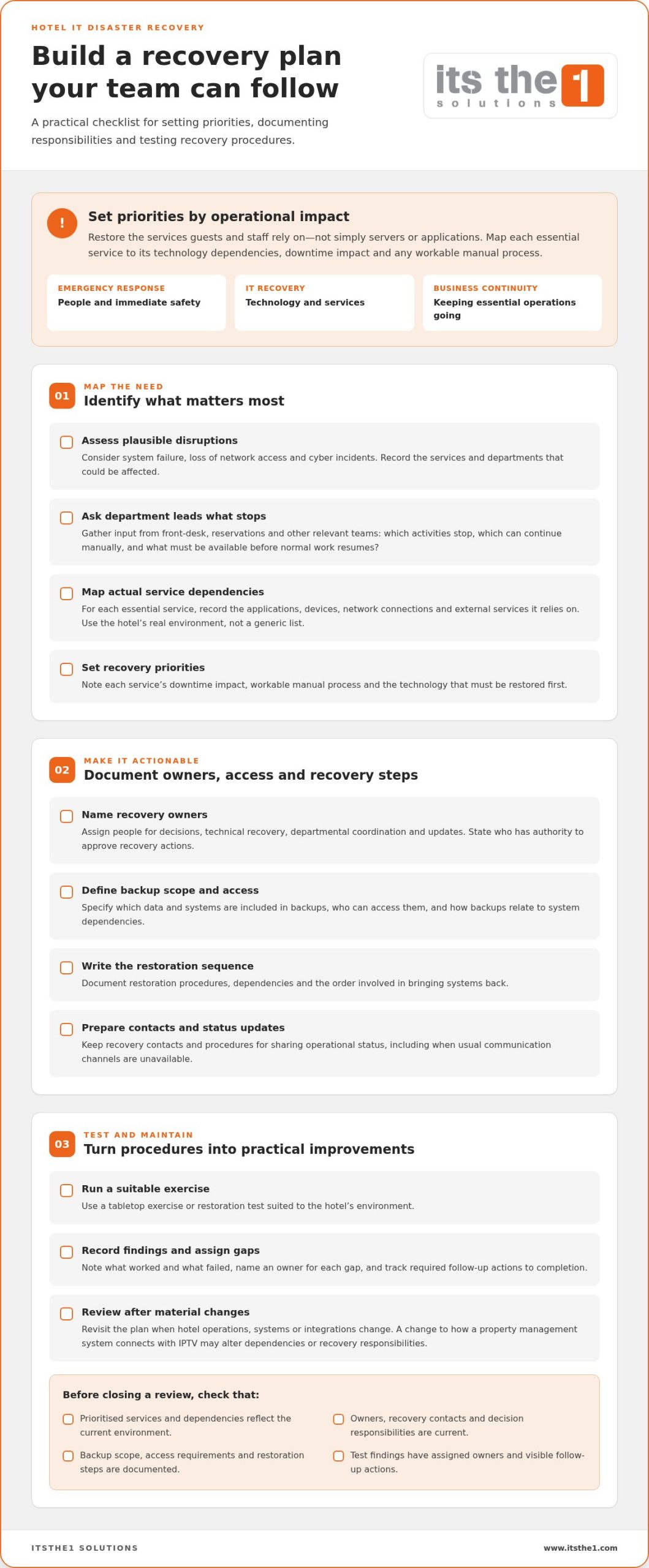
- Assess risks. Consider plausible disruptions, including system failure, loss of network access and cyber incidents. Record which services and departments could be affected.
- Identify critical services. Use department input to rank the technology that supports essential work. Note which applications, systems or connections each service depends on.
- Assign owners. Name the people responsible for decisions, technical recovery, departmental coordination and updates. Document who has authority to approve recovery actions.
- Document recovery steps. Specify which data and systems are included in backups, who can access them, and the dependencies and sequence involved in restoration. Include contact details and procedures for sharing operational status.
- Validate the plan. Run a tabletop exercise or restoration test suited to the hotel’s environment. Record what worked, what failed, who owns each gap and what follow-up action is required.
What should a hotel document before an IT disruption?
Keep an accessible record of system owners, recovery contacts, dependencies, decision-making responsibilities, backup scope, restoration procedures and access requirements. Explain how teams will communicate status if their usual channels are unavailable. Treat this as operational guidance, not a substitute for wider emergency procedures. Enterprise cybersecurity guidance can also help address risks that may affect recovery readiness.
A useful test produces practical improvements, not just a completed checklist. Update procedures when system dependencies or responsibilities change, and track follow-up actions until they are addressed. Connect documented priorities with the relevant IT and telecom support arrangements. Explore ITSthe1 Solutions’ IT and telecom solutions as part of your planning.
Put the Hotel IT Recovery Plan into Practice with Ongoing Support
A recovery plan needs to reflect the hotel’s technology environment. ITSthe1’s Data Backup, Storage & Recovery Solutions can support a plan built around documented priorities, with backup scope and recovery procedures matched to the systems the hotel has identified as essential. The plan should also explain how backups relate to system dependencies and who is responsible for making recovery decisions.
Other capabilities can support the wider planning approach. Cloud Hosting (AWS, Azure, Google), Cyber Security Consultancy and Solutions, and an Annual IT Network Maintenance Contract (AMC) with Service Level Agreements (SLA) can be incorporated into the hotel’s infrastructure, security and support planning. Document each capability’s role alongside the systems, responsibilities and procedures it supports.
How to keep recovery procedures usable as hotel systems change
Review the plan after material changes to hotel operations, systems or integrations. For example, a change to how a property management system connects with IPTV may alter dependencies or recovery responsibilities. Keep procedures aligned with current operations, and use a relevant hotel PMS and IPTV integration guide to inform that review.
After each exercise, record the findings, assign an owner to every gap and track follow-up actions to completion. Before closing a review, check that:
- Prioritised services and their dependencies reflect the current environment.
- Named owners, recovery contacts and decision responsibilities are current.
- Backup scope, access requirements and restoration steps are documented.
- Test findings have assigned owners and visible follow-up actions.
Regular reviews help keep the hotel IT disaster recovery plan practical as requirements evolve. To discuss how IT and telecom solutions can fit your recovery priorities, explore ITSthe1’s relevant solutions.
Make Recovery Readiness Part of Hotel Operations
A recovery plan is most useful when it reflects how the hotel operates, rather than sitting apart as an IT document. Treat it as a shared management responsibility: involve the teams who understand daily service demands, keep decision-makers aligned and revisit priorities as the property’s needs evolve. This makes readiness an ongoing discipline instead of a one-time exercise.
For a hotel IT disaster recovery plan, align operational priorities with practical technology support. ITSthe1’s Data Backup, Storage & Recovery Solutions and Annual IT Network Maintenance Contract (AMC) with Service Level Agreements (SLA) can form part of that planning, alongside clearly assigned recovery roles and tested procedures.
Discuss your hotel’s IT and recovery requirements with ITSthe1 to plan technology support around your operational priorities.
Frequently Asked Questions
Is a disaster recovery plan different from a business continuity plan?
Yes. A business continuity plan sets out how the hotel keeps priority activities operating during disruption, potentially through temporary manual procedures or adjusted services. A hotel IT disaster recovery plan addresses the technology needed to restore those activities. For example, continuity guidance may explain how staff record arrivals if a booking system is unavailable, while IT recovery covers restoring that system and confirming it works. Coordinate both plans.
How often should a hotel test its IT disaster recovery plan?
There is no single testing interval that suits every hotel. Set a schedule based on system criticality and how often technology or responsibilities change. Re-test affected procedures after a major application update, supplier change or network redesign, and include a broader exercise in the hotel’s risk planning cycle. A test should confirm that teams can access required recovery resources and determine whether restored services support actual work. Use the results to adjust priorities and procedures.
Can cloud backup alone protect a hotel from IT disruption?
No. Cloud backup alone cannot address every cause of IT disruption or prove that systems can return to service. A backup may be available while the hotel lacks access to the required account, network, application dependencies or staff procedures. Include cloud copies in a broader recovery design, define who can retrieve them and test restoration in a controlled way. Confirm that restored data and services are usable, not just that a backup exists.
What do RTO and RPO mean in a hotel IT recovery plan?
RTO (Recovery Time Objective) is the target maximum period a service can remain unavailable after disruption. RPO (Recovery Point Objective) defines how much recent data the hotel can afford to lose, expressed as a period before the disruption. Set these objectives for each service because losing recent reservation changes may have a different operational effect from losing less time-sensitive records. Compare the objectives with documented recovery capabilities and validate them through testing.