What if updating a menu could be simpler without making the guest experience less personal? Printed menus take time to revise when prices, availability or daily specials change. Keeping information consistent wherever guests see it also requires coordination. The benefits of digital menus in restaurants depend on how well they address these practical needs, not simply on replacing paper with a screen.
A digital menu can make menu information easier to update and help guests review current offerings. Its value depends on the restaurant’s workflow, the way guests access the menu and who is responsible for maintaining it. This guide covers practical benefits, how to assess an application and where digital menus fit within hospitality technology. ITSthe1 Solutions offers Digital Menus through 1.Menu, its Restaurant Digital Menu Application.
Key Takeaways
- Assess menu flexibility and guest clarity when considering the benefits of digital menus in restaurants. Do not assume a digital format will automatically increase sales or reduce costs.
- Distinguish a digital menu application from a digital menu board to find the format that suits your restaurant’s needs.
- Review menu updates, guest touchpoints, staff workflows and content ownership before adopting a digital approach.
- Consider ITSthe1’s 1.Menu, a restaurant-focused digital menu application, as part of your technology evaluation.
What Benefits Can Digital Menus Bring to Restaurants?
A digital menu presents food and drink information through a digital interface or screen instead of relying only on printed pages. Its practical value depends on how the restaurant manages the content and where guests need to see it. The benefits of digital menus in restaurants can include more flexibility when menu information changes and a clear way to present current offerings. The results depend on the setup and the process for keeping content accurate.
If a dish becomes unavailable or a daily special changes, a digital format may let staff revise the relevant information without replacing printed copies. This can be useful when menus change between meal periods or across locations. It still takes a defined process to review and publish updates so guests see options the kitchen can serve.
Well-organized, up-to-date information can help guests compare dishes and make choices. Clear item descriptions and prices reduce avoidable uncertainty, while accurate availability information helps set expectations. A digital menu does not guarantee faster decisions or a better experience for every guest. Consider how it will work alongside staff guidance and other ways of viewing the menu.
Digital menu application or digital menu board: what is the difference?
A digital menu application presents menu information in a digital environment. A digital menu board is a screen-based display that shows menu options to guests, often before they order. The terms describe different things: an application is the menu tool, while a board is one way of displaying menu information.
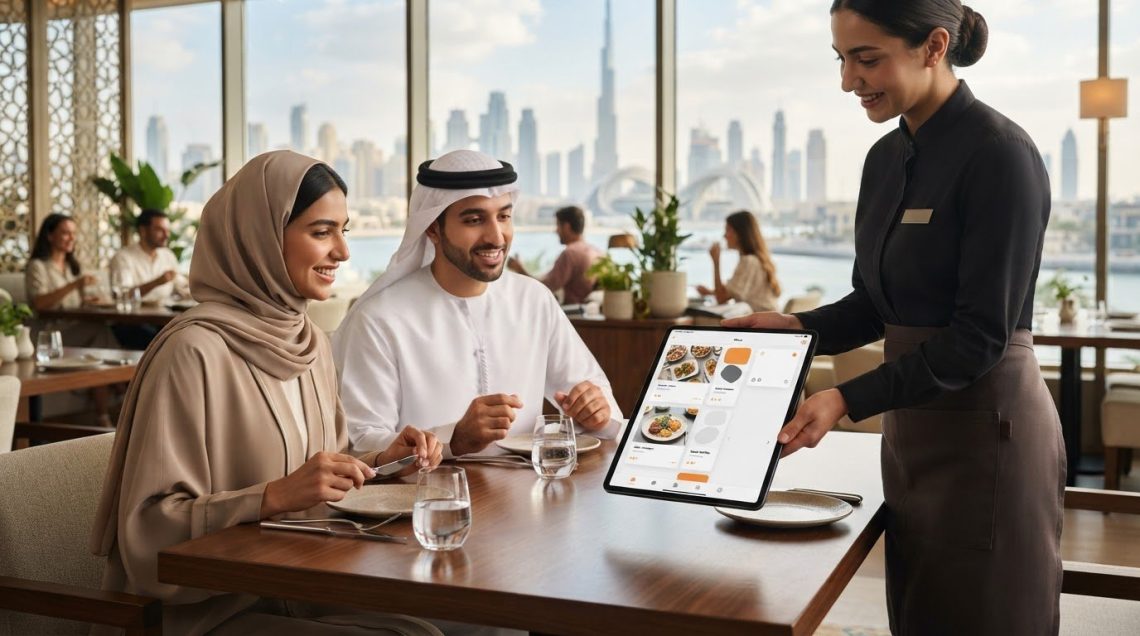
Choose a format based on when and where guests need to see the menu. They might review options before joining a queue, while waiting to order or at the table. Map those points in the service journey, then consider which format makes the information easy to access. The menu’s placement and update process should fit the restaurant’s workflow.
How to Evaluate Digital Menu Benefits Against Your Restaurant’s Needs
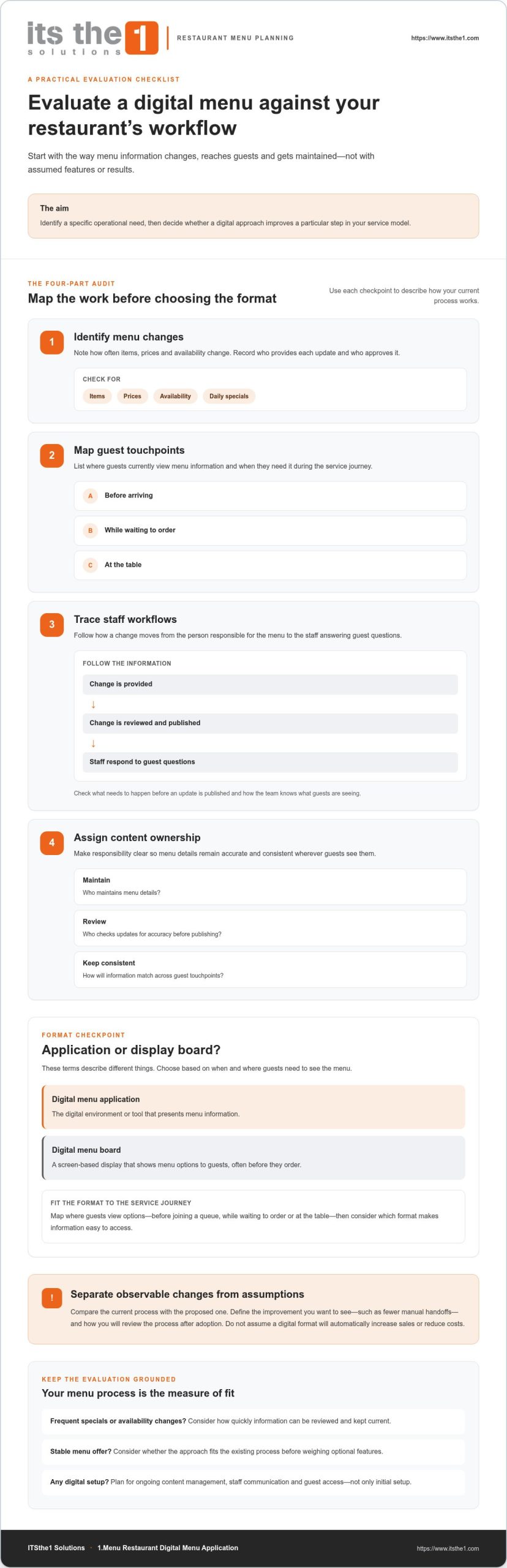
The benefits of digital menus in restaurants are easiest to assess when they address a specific operational need. Start by documenting how your team handles menu information today. Then consider whether a digital approach would improve a particular step. This grounds the decision in your restaurant’s service model rather than assumed features or results.
- Identify menu changes. Note how often items, prices and availability change, and who provides and approves each update.
- Map guest touchpoints. List where guests currently view menu information, such as before arriving, while waiting or at the table.
- Trace staff workflows. Follow how a change moves from the person responsible for the menu to the staff answering guest questions.
- Assign ownership. Decide who will maintain the menu, review updates and check that information is consistent wherever guests see it.
Which restaurant workflows should a digital menu support?
Start with the pace of your operation. A restaurant with frequent specials or changes in availability has different menu-management needs from one with a stable offer. Trace how information moves from the person approving a change to the places guests see it. The approach you choose should fit those steps before you weigh optional features.
Compare the existing process with the proposed one. Consider how staff will make a change, what checks are needed before it is published and how the team will know which information guests are seeing. Separate observable changes, such as fewer manual handoffs, from assumptions about savings or sales. Define what improvement you want to see and how you will review the process after adoption.
Menu technology also requires ongoing content management, not just an initial setup. Restaurants reviewing their wider technology needs can explore ITSthe1’s hospitality technology solutions while keeping their own workflows and priorities at the centre of the decision.
Making Digital Menus Work in Practice: Considerations and Next Steps
The benefits of digital menus in restaurants depend on more than the format. Guests need practical access to menu information, and staff need a clear way to keep it accurate. Set an objective and assign responsibilities before deciding whether a digital menu fits your service model.
How can a restaurant introduce digital menus thoughtfully?
Begin with a specific objective, such as making menu information easier to maintain or helping guests find current details. Map the work required to keep content accurate and let staff know about changes. Consider where guests will view the menu, whether a non-digital option suits your service and who will review updates before they are published.
Agree on practical responsibilities before implementation:
- Content ownership: Assign responsibility for maintaining menu details and checking them for accuracy.
- Staff processes: Decide how the team will communicate changes and respond to guest questions.
- Customer access: Consider where guests encounter the menu and what alternatives fit your service approach.
Digital menus serve a different purpose from other hospitality display technology. A restaurant menu presents food and drink choices, while hotel digital signage software relates to displays in hotel environments. Choose an approach according to the information you need to present and where people need to see it.
ITSthe1 offers Digital Menus through 1.Menu, a Restaurant Digital Menu Application. Assess it against your objectives, staff workflows and content responsibilities, just as you would any menu solution. A clear review of these needs helps establish whether a digital menu is a practical fit for your operation.
Turn Your Menu Priorities into a Practical Next Step
Use your restaurant’s menu priorities to guide a practical technology decision. Identify the operational need a digital menu should address and decide how your team will keep information accurate over time. This connects the benefits of digital menus in restaurants to your service model instead of relying on assumptions about what technology will deliver.
ITSthe1 offers Digital Menus as 1.Menu, a Restaurant Digital Menu Application. Consider how it could fit your menu process, guest touchpoints and wider hospitality technology needs.
Explore ITSthe1’s 1.Menu digital menu solution and consider how it could support your restaurant’s menu priorities.
Frequently Asked Questions
What are the main benefits of digital menus in restaurants?
The main benefits of digital menus in restaurants can include presenting item details in a consistent format, organizing choices for easier comparison and updating menu content as offerings change. Clear descriptions, prices and availability help guests understand their options. These benefits depend on accurate information and a layout that is easy for guests to use.
Do digital menus increase restaurant sales?
A digital menu does not guarantee higher sales. Results depend on factors such as demand, pricing, menu design, food availability and the service journey. To assess the impact of a menu change, a restaurant can compare a relevant measure, such as orders of a featured dish, before and after the change while considering other influences.
Are digital menus better than printed menus?
Neither format is right for every restaurant. Printed menus may suit guests who prefer paper or do not want to use a phone, while digital menus can be useful when information changes often. Some restaurants may use both, choosing the format that fits each service setting and guest touchpoint.
What should a restaurant consider before adopting a digital menu?
Consider how guests will access the menu, whether its text and layout are easy to read on the intended screen, and how staff will check information for accuracy. Think about guests who cannot or prefer not to use a digital device, too. Walking through the proposed customer journey can help identify practical issues before wider adoption.