What if a hotel offer felt like a useful next step rather than a promotion? Poorly timed or irrelevant offers can feel intrusive, and disconnected systems can make it harder for teams to coordinate each interaction. Effective upselling and cross-selling techniques for hotels using technology start with guest context, not a blanket campaign.
This article explains how to identify suitable moments for room upgrades and complementary services, choose a guest-facing touchpoint, and assess how technology fits with existing hotel systems. It also considers how 1.Hotel, 1.TV, and 1.Menu can support a coordinated guest experience, with attentive hospitality at its centre.
Key Takeaways
- Distinguish upgrades from complementary services so offers reflect guest needs and protect service quality and trust.
- Use upselling and cross-selling techniques for hotels using technology to match a relevant offer with an appropriate moment and guest-facing touchpoint.
- Consider 1.Hotel, 1.TV, and 1.Menu as potential channels, and define each one’s role in the guest journey.
- Set a clear guest-experience objective, assign ownership, and plan integration with hotel systems such as PMS, HSIA, IPTV, and Digital Access Key.
How Hotel Upselling and Cross-Selling Technology Can Improve the Guest Journey
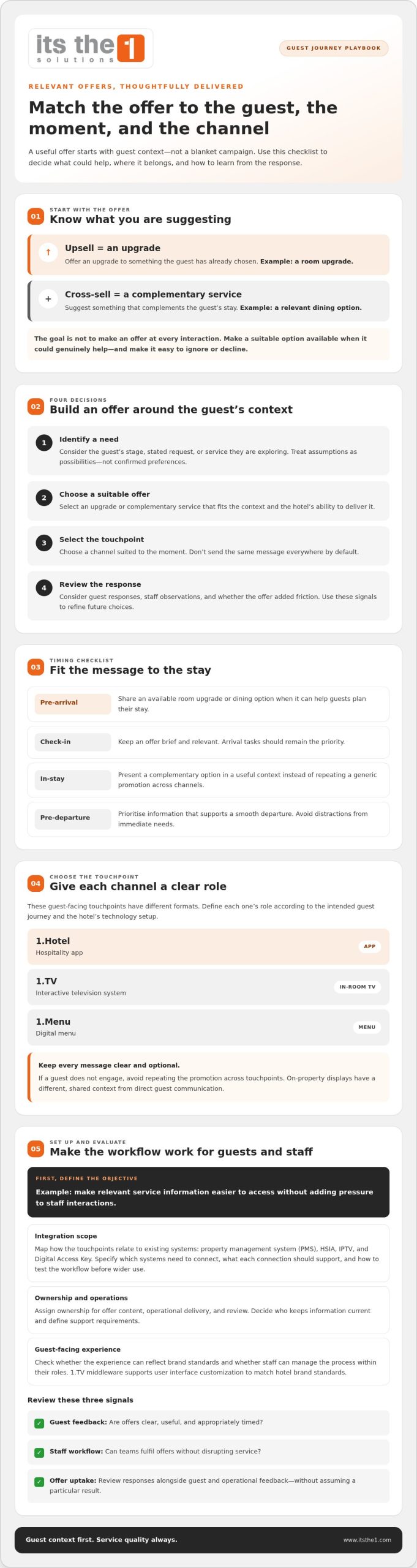
Hotels can use offers to make a stay more convenient or enjoyable while protecting service quality and guest trust. The distinction is straightforward: an upsell offers an upgrade to something the guest has already chosen, while a cross-sell suggests a complementary product or service. A room upgrade is an upsell; a relevant dining option is a cross-sell. The Upselling overview provides useful background on the terms, but applying them well takes attention to context. The goal is not to present an offer at every interaction. It is to make a suitable option available when it could genuinely help the guest.
Where offers fit across the hotel guest journey
Map potential offers to the guest journey, and make it easy for guests to ignore or decline them:
- Pre-arrival: Share an available room upgrade or dining option when it can help guests plan their stay.
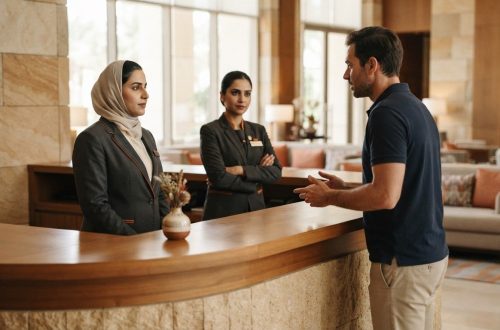
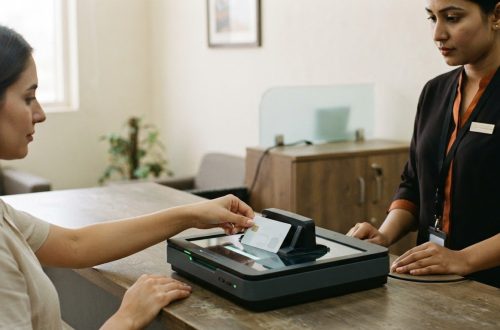
- Check-in: Keep an offer brief and relevant. A room upgrade may suit a guest looking for a different room experience, but arrival tasks should remain the priority.
- In-stay: Present a complementary dining option in a context where it is useful, rather than repeating a generic promotion across channels.
- Pre-departure: Prioritise information that supports a smooth departure. Avoid offers that distract from the guest’s immediate needs.
Digital touchpoints can make options accessible without requiring staff to initiate every sales conversation, while attentive service remains central. The hotel guest engagement app guide explores how guest-facing applications fit into hotel communication. A journey map gives teams a practical way to decide which moments warrant an offer, which channel suits it, and when no offer is the better choice.
How to Match Hotel Offers, Technology Channels, and Guest Needs
A useful offer plan connects four decisions: what the guest may need, which service could help, where to present it, and how to review the response. Relevance comes from matching an offer to the guest’s context and a service the hotel can deliver. This keeps upselling and cross-selling techniques for hotels using technology focused on useful choices instead of message volume.
- Identify a need. Consider the guest’s stage, stated request, or service they are exploring. Treat assumptions as possibilities, not confirmed preferences.
- Choose an offer. Select an upgrade or complementary service that fits the context and the hotel’s ability to deliver it.
- Select a touchpoint. Choose a channel suited to the moment. Avoid sending the same message everywhere by default.
- Review feedback. Consider guest responses, staff observations, and whether the offer added friction. Use these signals to refine future choices.
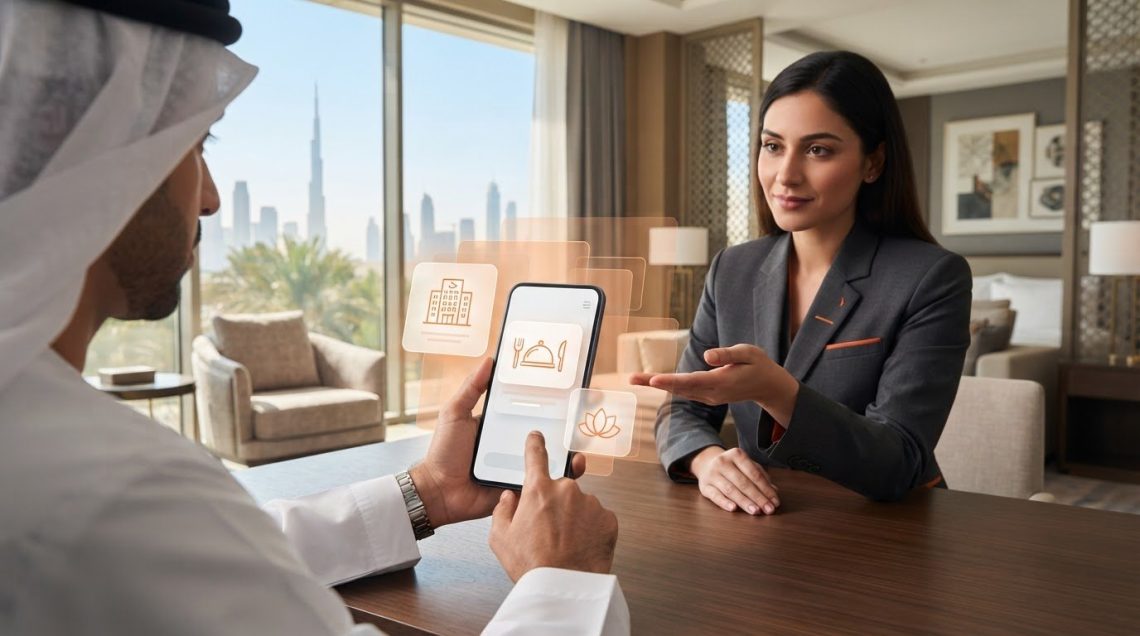
1.Hotel, 1.TV, and 1.Menu can each be considered as guest-facing touchpoints: a hospitality app, interactive television system, and digital menu. Define the role of each according to the hotel’s intended guest journey and technology setup. Do not assume every channel supports the same offer or interaction.
Choosing a channel without overwhelming the guest
Match the channel to the activity. A guest planning a stay may welcome a clear, optional recommendation. Someone checking in may need a concise message that does not interrupt arrival. During the stay, keep information relevant to the guest’s current context. As departure approaches, prioritise practical details. On-property displays have a different, shared context from direct guest communication; the hotel digital signage software guide discusses that environment.
Keep each message clear and optional. If a guest does not engage, avoid repeating the promotion across touchpoints. ITSthe1’s hospitality technology portfolio includes guest-facing technology for hotels.
How Hotels Can Integrate and Evaluate Technology for Guest Offers
Start with a defined guest-experience objective, such as making relevant service information easier to access without adding pressure to staff interactions. Select touchpoints that support that objective, then assign ownership for offer content, operational delivery, and review. This gives the team a practical basis for choosing technology and assessing how it fits the intended workflow.
Plan integration around the project’s needs. Map how the proposed touchpoints relate to existing systems, including the property management system (PMS), HSIA, IPTV, and Digital Access Key. Specify which systems need to connect, what each connection should support, and how the hotel will test the workflow before wider use. ITSthe1’s hospitality solutions can integrate with existing hotel subsystems, with integration scoped to project requirements. A defined scope helps teams assess technology in the context of actual operations.
A practical evaluation checklist for hotel teams
Assess the proposed setup against the hotel’s service goals, not just its feature list. Consider whether the guest-facing experience can reflect brand standards, whether the technology can integrate with relevant existing systems, and whether staff can manage the process within their roles. For example, 1.TV middleware supports user interface customization to match hotel brand standards. Also assign responsibility for keeping offer information current and define the support requirements.
- Guest feedback: Note whether offers are clear, useful, and appropriately timed.
- Staff workflow: Review whether teams can fulfil offers without disrupting service.
- Offer uptake: Review responses alongside guest and operational feedback, without assuming a particular result.
ITSthe1’s hospitality portfolio includes guest-facing technology such as 1.Hotel, 1.TV, and 1.Menu. These tools can support a coordinated approach, while the offer, delivery, and guest context shape the outcome. The ITSthe1 website provides information about its hospitality technology solutions.
Turn Guest-Experience Goals into a Practical Next Step
A considered approach to upselling and cross-selling techniques for hotels using technology starts with one clear opportunity to improve a guest interaction. Define what a useful experience should look like, assign responsibility, and decide how guest feedback and staff experience will guide refinements. This keeps technology in service of hospitality rather than making promotion the goal.
With more than 20 years of expertise in IPTV and related hospitality technologies, ITSthe1 helps hotels plan how guest-facing solutions fit within their wider environment. Its solutions can integrate with existing hotel subsystems, including PMS, HSIA, IPTV, and Digital Access Key, with integration scoped to project requirements.
Use guest-experience goals, system requirements, and staff workflows to shape a measured approach to more relevant guest interactions.
Frequently Asked Questions
What is the difference between upselling and cross-selling in a hotel?
Upselling moves a guest to a higher-value version of a choice they have already made, while cross-selling introduces a separate, complementary service. If a guest has booked a standard room, offering an available room category with additional features is an upsell. Suggesting a spa treatment alongside that stay is a cross-sell. The distinction helps teams classify offers and keep recommendations relevant.
How can hotels use technology to upsell without annoying guests?
Use upselling and cross-selling techniques for hotels using technology to make offers discreet, limited, and easy to decline. For example, present one room upgrade option during a relevant planning interaction, then avoid further prompts if the guest dismisses it. Keep the message factual, ensure the service can be delivered, and avoid sending the same promotion through several channels.
Which hotel technologies can support cross-selling?
Guest-facing applications, interactive television systems, and digital menus can provide places to make complementary services visible. For instance, 1.Menu is a digital menu, while 1.Hotel and 1.TV are other potential guest-facing touchpoints. The hotel should define each channel’s role in its service journey rather than assuming every system has the same functions.
How should a hotel measure whether technology-led offers are working?
Review offer uptake alongside service quality, rather than treating acceptance as the only measure. If records are available, compare accepted offers with offers presented, then consider guest comments, declines, and fulfilment issues for context. A low response may point to poor timing or unclear wording. Staff feedback can also show whether an offer added work or affected the guest experience.
To discuss how ITSthe1’s hospitality technology could fit your guest-experience objectives, explore ITSthe1 hospitality technology solutions.