A hotel’s technology problems rarely stay confined to the server room. A network interruption or disconnected system can slow staff workflows and disrupt guest services at the same time. The most useful hotel IT infrastructure best practices treat connectivity, security, and integration as one operational framework, rather than a series of separate purchases.
Planning these priorities together can feel complex, particularly when established hotel systems must keep working as requirements evolve. A practical approach starts with an inventory of networks, platforms, and dependencies, then uses that picture to guide security, upgrades, and support. This guide explains how to assess infrastructure, plan reliable connectivity, and connect guest-facing and operational systems around existing technology. It also covers maintenance and support, so the environment stays manageable as the property changes.
Key Takeaways
- Use hotel IT infrastructure best practices to plan connectivity, security, servers, and hotel systems as one operational foundation.
- Assess system connections methodically: identify platforms, map data flows, assign responsibilities, and record dependencies.
- Include cybersecurity, backup, storage, and recovery planning in the infrastructure assessment.
- Build a phased roadmap that prioritizes dependencies, tests changes, and establishes ongoing maintenance and support.
Hotel IT infrastructure best practices start with a reliable network foundation
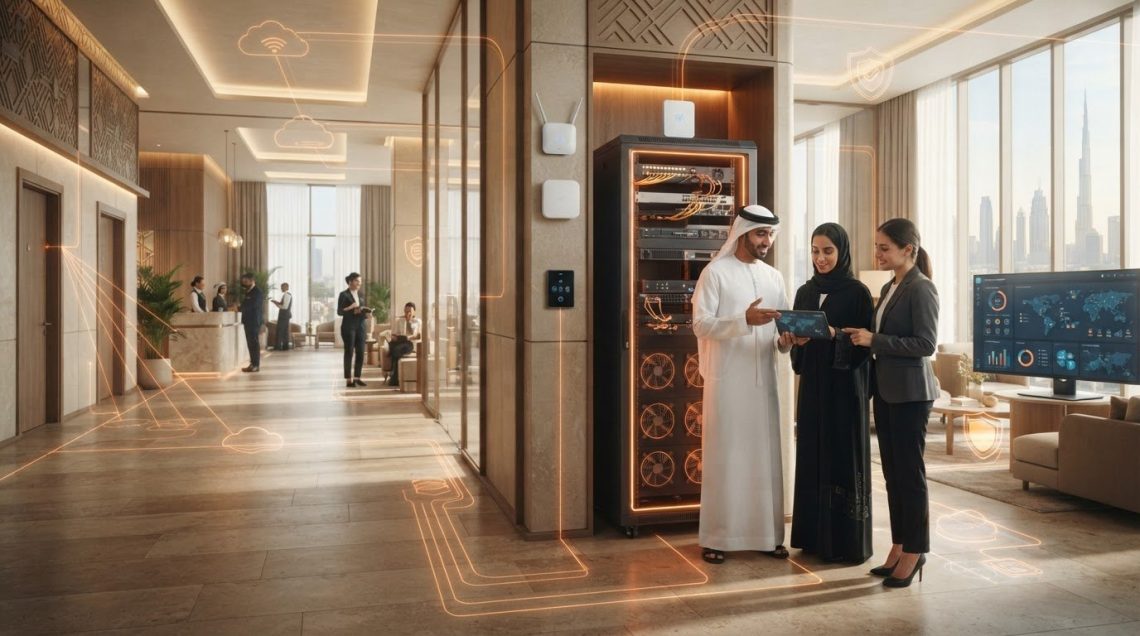
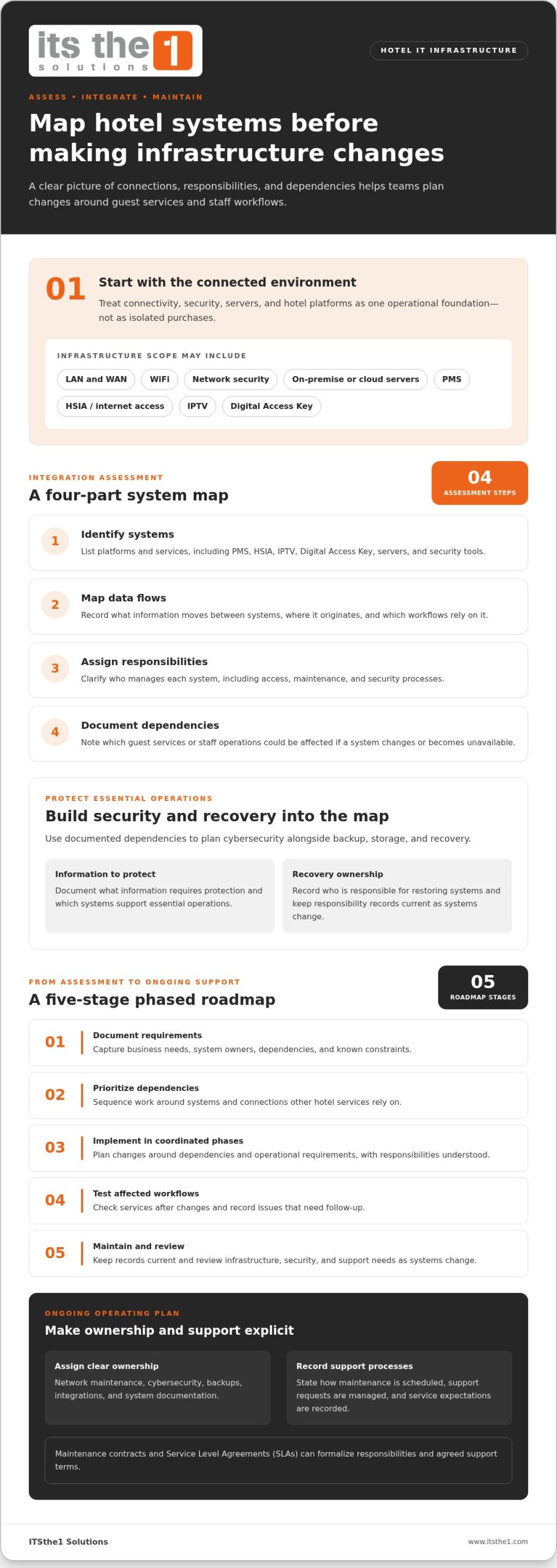
Plan infrastructure as a connected operational environment, not a collection of devices. Its scope may include local and wide area networks (LAN and WAN), WiFi, network security, on-premise or cloud servers, and hotel systems such as the property management system (PMS), IPTV, internet access, and digital access keys.
Hotel IT infrastructure connects systems, users, and services across property operations, providing the foundation for guest experiences and staff workflows. A guest using in-room entertainment, a receptionist accessing reservation details, and a team member updating a room’s status all rely on technology that needs to work together.
Set requirements by user and purpose before making design decisions. Guest connectivity, staff applications, and operational systems have different access needs and different consequences if interrupted. Record who needs access to each system, what the system supports, and which workflows depend on it. This makes it easier to plan connectivity and security around actual use, rather than assume one setup will suit every property.
How should hotels assess network and WiFi requirements?
Begin with workflows. Map where guests use WiFi and where staff depend on digital tools, from reception and housekeeping to food and beverage operations. For each area, note the services that need connectivity, the users who need access, and any coverage gaps or recurring problems. Use these findings to define capacity and access requirements before selecting or changing equipment.
Next, inventory the existing environment: LAN and WAN connections, WiFi equipment, switches, routers, cabling, and server environments. Record which systems each component supports and identify dependencies that could affect guest services or staff work if a connection fails. Include the building layout, current equipment, services, and planned changes in the assessment. These details provide a practical basis for prioritising upgrades without relying on generic benchmarks or unverified configurations.
Apply hotel IT infrastructure best practices to security and system integration
Security and integration planning should start with a clear picture of how hotel systems exchange information and support daily operations. Use a consistent assessment sequence:
- Identify systems: List platforms and services, including the PMS, HSIA, IPTV, Digital Access Key, servers, and security tools.
- Map data flows: Record what information moves between systems, where it originates, and which workflows depend on it.
- Assign responsibilities: Clarify who manages each system, its access, maintenance, and security processes.
- Document dependencies: Note connections that could affect guest services or staff operations if a system changes or becomes unavailable.
Integration planning is not simply an inventory of separate technologies; it is a map of how those technologies work together to support the property. Use that map to plan cybersecurity alongside backup, storage, and recovery. Document what information requires protection, which systems support essential operations, and who is responsible for restoring them. Review how those responsibilities fit existing processes, then keep the records current as systems change.
How can hotels connect existing systems without disrupting operations?
Map dependencies among the PMS, HSIA, IPTV, and Digital Access Key before planning an integration. For each connection, record which guest or staff workflow relies on it, what information is involved, and who owns the systems at either end. Then plan changes around those dependencies and the property’s operational requirements, and test affected workflows after implementation. ITSthe1 Solutions integrates solutions with existing hotel subsystems, including PMS, HSIA, IPTV, and Digital Access Key. For more detail, see this hotel PMS and IPTV integration guide.
For hotels planning network, telecom, and hospitality technology as a coordinated programme, ITSthe1 Solutions’ hotel technology solutions bring related capabilities together through consultancy, implementation, and ongoing support.
Make hotel IT infrastructure best practices sustainable with support and a phased plan
A practical roadmap turns assessment into manageable work. Set out clear stages so teams can coordinate changes with operational priorities:
- Document requirements: Record business needs, system owners, current dependencies, and known constraints.
- Prioritize dependencies: Sequence work around systems and connections that other hotel services rely on.
- Implement: Deliver planned changes in coordinated phases, with responsibilities understood by the teams involved.
- Test: Check affected services and workflows after changes, and record issues that need follow-up.
- Maintain: Keep system records current and schedule reviews of infrastructure, security, and support needs.
What should a hotel include in its long-term IT operating plan?
Assign clear ownership for network maintenance, cybersecurity, backups, integrations, and system documentation. The operating plan should state how maintenance is scheduled, how support requests are managed, and how service expectations are recorded. Maintenance contracts and Service Level Agreements (SLAs) can formalize responsibilities and agreed support terms. ITSthe1 offers an Annual IT Network Maintenance Contract with Service Level Agreements as part of its support model.
For more detail on security planning, read this enterprise cybersecurity planning guide. A structured operating model helps hotel IT infrastructure best practices remain useful beyond an initial upgrade, as systems and operational needs change. Review the plan when systems are added or workflows change, and update ownership and dependency records at the same time.
For hotels aligning network, telecom, and hospitality technology requirements, ITSthe1’s consultancy and turnkey implementation support a coordinated approach from planning through delivery. Explore IT and hospitality technology solutions to see how these requirements can be brought together.
Build a stronger foundation for hotel operations
Reliable hotel technology depends on more than a stable network. The hotel IT infrastructure best practices covered here bring connectivity, system integration, security, and ongoing support into one coordinated plan. Start by documenting requirements and dependencies, then phase implementation, test changes, and assign clear ownership for maintenance.
ITSthe1, founded in 1999, brings more than 20 years of expertise in IPTV and related hospitality technology. Its support spans consultancy, turnkey implementation, maintenance contracts, and ongoing support, helping hotels plan around existing systems and operational needs.
Explore ITSthe1’s hospitality technology and infrastructure solutions to plan a coordinated approach for your property. Contact ITSthe1 to discuss your hotel’s network, IPTV, and hospitality technology requirements.
Frequently Asked Questions
What does hotel IT infrastructure include?
Hotel IT infrastructure includes the networks, connectivity, servers, security, and technology systems that support guest services and staff operations. This can cover LAN and WAN connections, WiFi, switches, routers, cabling, on-premise or cloud servers, and hotel platforms such as a property management system, IPTV, internet access, and digital access keys. Its scope depends on the property’s systems and workflows.
How can a hotel improve its IT infrastructure?
Start by assessing how guests and staff use technology, then inventory existing equipment and systems. Identify dependencies, document coverage and access requirements, and prioritize changes according to operational needs. Apply hotel IT infrastructure best practices through a phased plan: implement changes, test affected services, maintain documentation, and assign ownership for ongoing network, cybersecurity, and backup responsibilities.
Why is network security important for hotel IT infrastructure?
Network security helps protect the systems and information involved in hotel operations, including guest-facing services and staff workflows. A security issue can affect connected platforms and their dependencies, so hotels should understand which systems exchange data, who is responsible for them, and how backups and recovery are planned. Cybersecurity should be treated as an ongoing operational responsibility, not a one-time technology purchase.
How should hotels integrate new technology with existing systems?
Map how current systems connect before introducing new technology. For example, document dependencies among the property management system, HSIA, IPTV, and Digital Access Key, along with the workflows and data involved. Assign owners, plan implementation around operational needs, and test connections after changes. ITSthe1 integrates solutions with existing hotel subsystems, including PMS, HSIA, IPTV, and Digital Access Key.