With 82% of hotels reporting successful cyber incidents during peak travel seasons, the vulnerability of the hospitality sector is a pressing reality. You’re likely finding it difficult to balance modern guest conveniences with the rising sophistication of AI-driven phishing and the strict requirements of PCI DSS v4.0.1. It’s a complex task to secure fragmented legacy systems while maintaining the seamless experience your guests expect. We understand that stability and trust are the foundations of your reputation.
This guide demonstrates how to safeguard guest data through a unified approach to hospitality cybersecurity and managed IT solutions. You’ll discover a clear roadmap for preventing hotel IT security breaches by leveraging privacy-first technologies such as 1.Cast and 1.ID. We’ll preview how automated monitoring and network segmentation reduce financial risk and ensure compliance with regional data protection standards. This methodical strategy provides the technical clarity needed to lead your property through its digital evolution with confidence.
Key Takeaways
- Identify how AI-driven social engineering and unsecured IoT devices have expanded the modern hospitality attack surface, requiring a shift in defensive strategy.
- Establish a robust framework for preventing hotel IT security breaches by conducting comprehensive audits and deploying multi-factor authentication across all digital touchpoints.
- Enhance operational resilience by shifting from reactive troubleshooting to proactive protection through structured Annual Maintenance Contracts and Service Level Agreements.
- Align technical infrastructure with global privacy standards to safeguard guest data without compromising the high-tech conveniences modern travelers expect.
The Evolving Landscape of Hotel Cyber Threats in 2026
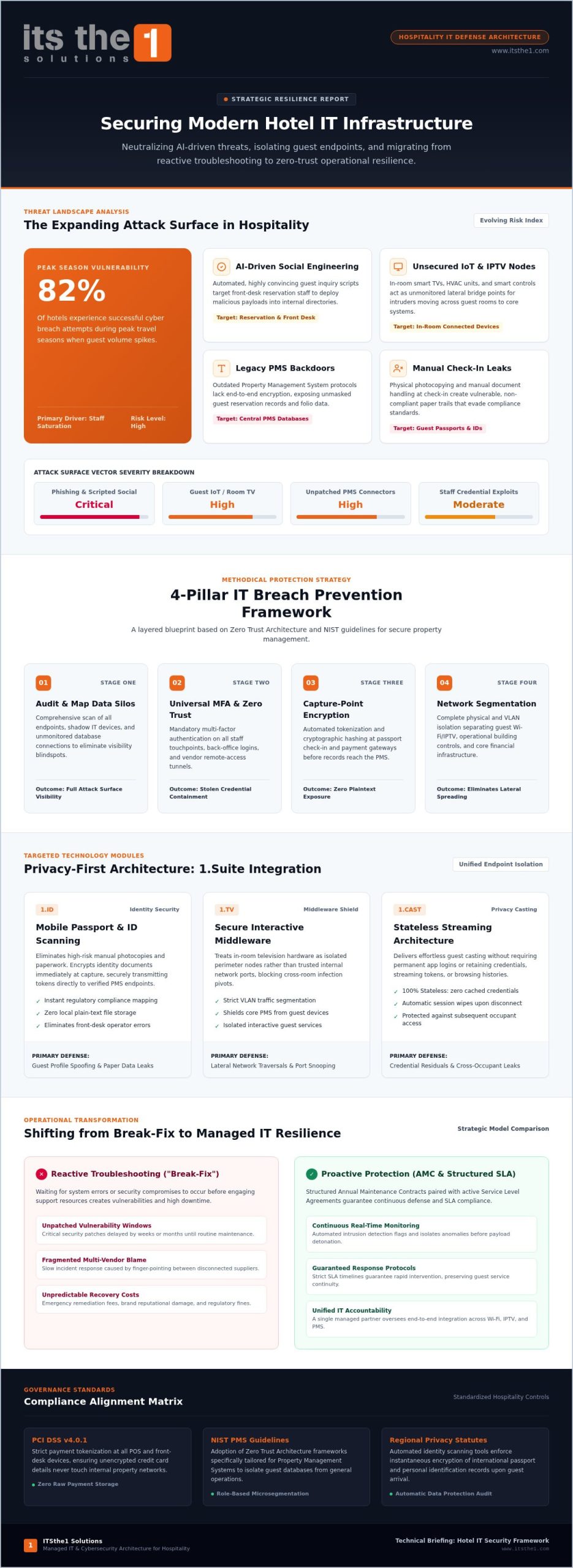
The threat environment in 2026 is defined by hyper-targeted, AI-driven social engineering. Attackers now use sophisticated automated scripts to mimic legitimate guest inquiries, tricking reservation staff into engaging with malicious payloads. These initial breaches often facilitate ransomware that spreads through unsecured IoT devices, including connected HVAC systems and smart room controls. Historically, campaigns like the DarkHotel cyber attack campaign proved that hotels are high-value targets for advanced persistent threats. Today, legacy Property Management System (PMS) integrations are frequently the weakest link. Their outdated protocols often lack the robust encryption required to resist modern penetration, creating “backdoor” access to sensitive guest records.
In 2026, hospitality attack surfaces represent the entire ecosystem of digital touchpoints where guest data intersects with operational infrastructure. This includes everything from the lobby scanner to the in-room tablet. Relying on a fragmented vendor list often leads to these security gaps. A unified approach from a single technology partner ensures every component is vetted for compatibility, which is vital for preventing hotel IT security breaches and maintaining brand reputation.
Vulnerabilities in Guest-Facing Technology (IPTV and IoT)
Modern interactive television systems act as active network nodes. If left unsecured, they serve as entry points for lateral movement across your entire facility. Implementing secure middleware like 1.TV is a critical defensive measure. It isolates guest traffic from core management systems, ensuring that a breach in one room doesn’t compromise the whole hotel. To further protect guest privacy, 1.Cast provides a stateless casting experience. It’s designed so that no personal credentials or browsing histories are ever stored on the TV system, effectively preventing hotel IT security breaches from previous occupants’ data leaks.
A Strategic Framework for Preventing Hotel IT Security Breaches
Securing a modern hotel requires a transition from fragmented security patches to a unified, multi-layered framework. The first step involves conducting a comprehensive cybersecurity audit to identify siloed data sets that often escape standard monitoring. This visibility is the cornerstone of preventing hotel IT security breaches before they impact guest trust. Once these gaps are mapped, implementing multi-factor authentication (MFA) across all staff access points and guest applications becomes mandatory. This layer of protection ensures that stolen credentials can’t be easily exploited to gain system-wide access.
Encryption must occur at the point of capture to be truly effective. By using automated, compliant scanning tools, you remove the risk of manual data handling. To maintain long-term stability, hotels should establish real-time network monitoring combined with automated response protocols. These measures align with the NIST guidelines for securing property management systems, focusing on zero trust architecture and tokenization. Adopting such a structured approach is a reliable method for preventing hotel IT security breaches in an era of sophisticated threats.
Securing Guest Identity with 1.ID and Automated Scanning
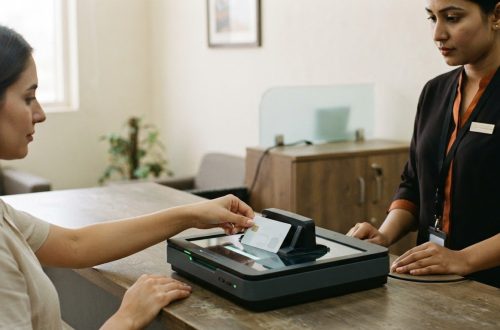
Traditional check-in processes are often prone to manual errors that lead to data leaks. Utilizing mobile passport scanning through 1.ID streamlines this workflow while enhancing security. This automated capture ensures that sensitive information is encrypted immediately, helping properties stay compliant with national data protection regulations. By securing the identity verification stage, you prevent unauthorized access to guest profiles and loyalty accounts, preserving the trust your brand has built over decades. For properties seeking to modernize their infrastructure, exploring comprehensive cybersecurity services can provide the necessary foundation for operational excellence.
Operational Resilience through Managed IT Services and Audits
Transitioning from a reactive “break-fix” model to proactive protection is essential for operational stability. Annual Maintenance Contracts (AMC) provide a structured foundation for this shift, ensuring that systems are monitored and patched before vulnerabilities are exploited. Service Level Agreements (SLA) play a critical role here, guaranteeing that guest services and security protocols remain uninterrupted. For high-traffic properties, implementing cybersecurity services for enterprises ensures that defenses are specifically tuned to the hospitality environment’s unique demands. This tailored approach is a primary factor in preventing hotel IT security breaches by addressing the specific risks of high-density guest networks.
Effective resilience also requires a disciplined response mechanism. Integrating a centralized ticketing system like 1.Support allows IT teams to track and resolve security incidents with precision. Rapid remediation is vital to contain potential threats and minimize downtime. Following a structured FTC data breach response framework provides a clear path for investigating systems and remediating vulnerabilities during an active incident. These combined efforts create a robust defense that protects both financial assets and brand reputation.
The Role of ITSthe1 as Your Unified Technology Partner
With a history dating back to 1999, ITSthe1 Solutions offers over 20 years of expertise in designing bespoke, turnkey IT and telecom solutions. Acting as a “One-Stop” technology partner, the firm streamlines the complexities of managing network, WiFi, and hospitality-grade hardware under a single point of accountability. This unified model is instrumental in preventing hotel IT security breaches by eliminating the blind spots common in multi-vendor environments. The company’s research-led philosophy ensures that properties across the MENA and UK regions receive state-of-the-art protection that evolves alongside the digital landscape.
Future-Proofing Your Hospitality Infrastructure
The digital environment of 2026 demands a shift from reactive repairs to a philosophy of proactive resilience. By integrating automated scanning and secure middleware, you create a defensive layer that protects both your guests and your reputation. A unified strategy is the most effective method for preventing hotel IT security breaches across complex, multi-regional operations. ITSthe1 Solutions brings over 20 years of expertise to this challenge, offering turnkey technology from secure 1.TV systems to automated 1.ID scanning. Since our founding in 1999, we’ve served as a trusted advisor across the MENA region, the UK, and the Indian Ocean. Our research-led approach ensures your property remains stable and compliant in an evolving threat landscape. Secure your property with ITSthe1’s expert cybersecurity solutions and lead your digital evolution with confidence.
Frequently Asked Questions
What is the most common IT security breach in hotels?
Phishing and social engineering targeting front-desk staff remain the most frequent entry points. Attackers often use deceptive emails or calls to compromise Property Management Systems (PMS) or payment gateways. These incidents frequently lead to credential theft and unauthorized access to guest databases. Implementing rigorous training and multi-factor authentication is essential for preventing hotel IT security breaches originating from human error.
How does automated passport scanning via 1.ID improve data security?
Automated scanning via 1.ID reduces the risk of data leaks by eliminating manual transcription and physical document handling. This proprietary solution encrypts guest information at the point of capture, ensuring sensitive data is transmitted directly to secure management systems. It helps properties maintain compliance with regional data protection standards while preventing unauthorized personnel from accessing or duplicating guest identity records during the check-in process.
Why is IPTV considered a potential security risk for hotels?
Unsecured IPTV systems act as network nodes that can be exploited for lateral movement across a hotel’s digital infrastructure. If the system lacks robust middleware, an attacker might pivot from a guest room television into the broader property network. Using secure middleware like 1.TV isolates these entertainment systems, effectively preventing hotel IT security breaches by creating a dedicated, secure environment for guest-facing content.
What should be included in a hospitality cybersecurity audit?
A comprehensive audit should evaluate every digital touchpoint, including Wi-Fi networks, Point-of-Sale (POS) systems, and IoT devices. It’s vital to assess the security of third-party integrations and legacy hardware that may lack modern encryption. The process should also review staff access protocols and data storage policies to ensure they align with current global standards like PCI DSS v4.0.1 and regional privacy regulations.